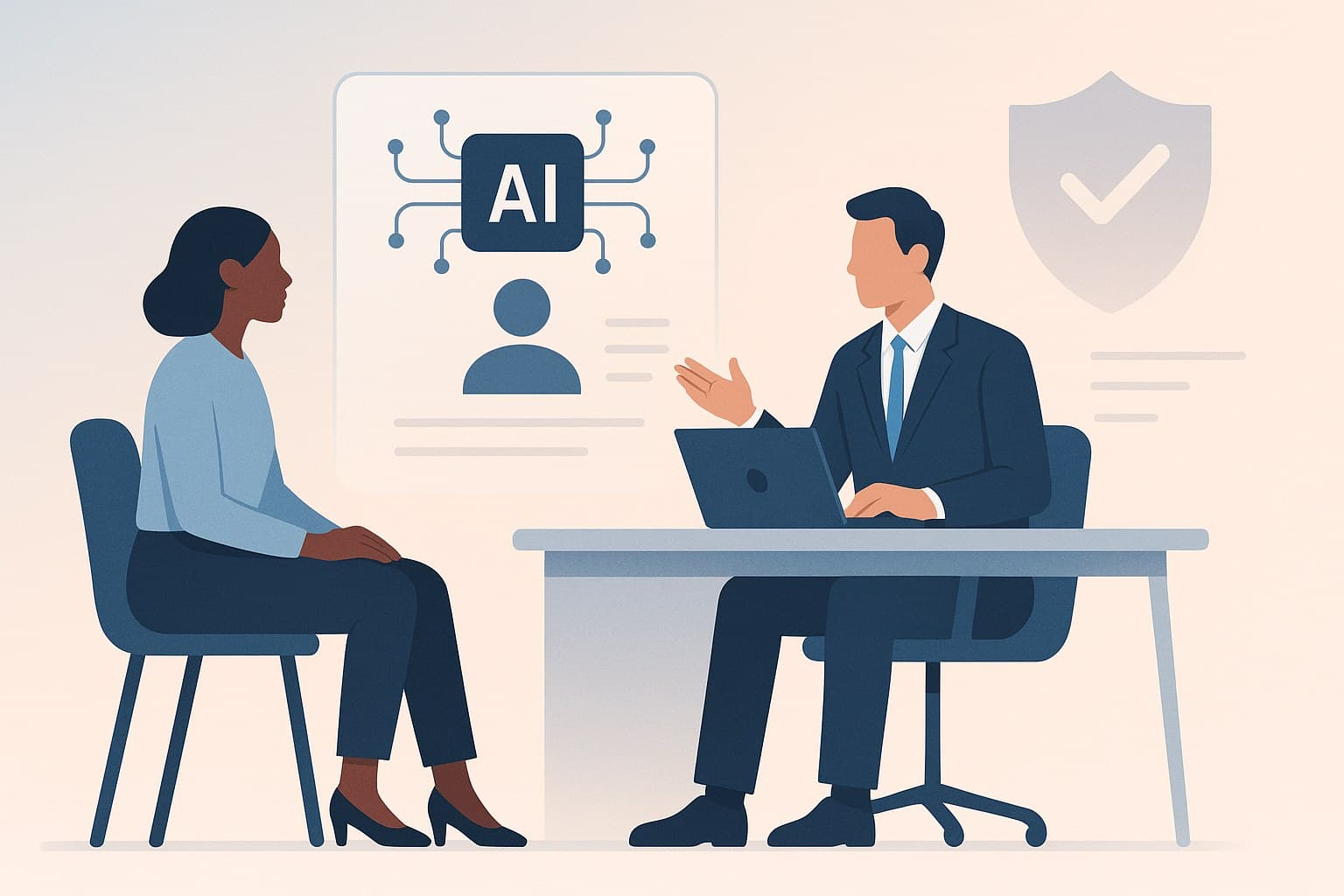
Title: The Validity of AI in Interviews: A Comprehensive Guide for Business Decision-Makers and HR Leaders
In today's rapidly advancing technological landscape, artificial intelligence (AI) has begun to play a pivotal role in various domains, including human resources. One of the most intriguing applications of AI in HR is its use in the hiring process, specifically in conducting interviews. As business decision-makers and HR leaders, understanding the validity and implications of AI-driven interviews is crucial for making informed decisions that can significantly impact organizational success.
Understanding AI in Interviews
AI-driven interviews leverage machine learning algorithms and natural language processing (NLP) to assess candidates. These systems can analyze verbal responses, facial expressions, and even psychological cues to evaluate a candidate's suitability for a role. The primary objective is to enhance the efficiency, consistency, and objectivity of the hiring process.
AI interviews are designed to eliminate human biases that often cloud judgment. They can evaluate large volumes of candidates quickly, providing a scalable solution for organizations that receive hundreds or thousands of applications. However, the effectiveness of AI in this context hinges on the validity of the technology—its ability to produce accurate, reliable, and fair assessments.
Evaluating the Validity of AI in Interviews
-
Reliability and Consistency
For AI interviews to be valid, they must produce consistent results across different contexts and candidate pools. Reliability in AI interviews means that the assessments should remain stable over time and across various candidates with similar qualifications. AI systems are typically trained on vast datasets, which helps in achieving a high degree of reliability. However, the quality and diversity of the training data are critical factors. Without a representative dataset, AI systems may inadvertently favor certain demographics over others, leading to inconsistent outcomes.
-
Accuracy and Predictive Validity
Predictive validity refers to how well the AI interview outcomes correlate with actual job performance. An AI system should be able to accurately predict which candidates will succeed in a given role based on their interview performance. This requires sophisticated algorithms capable of analyzing complex human behaviors and translating them into meaningful insights. Organizations must continually validate AI predictions against real-world performance data to ensure that the system remains accurate and relevant.
-
Bias and Fairness
One of the most significant concerns regarding AI in interviews is the potential for algorithmic bias. AI systems can inadvertently perpetuate existing biases present in their training data, leading to unfair treatment of certain groups. Ensuring fairness requires ongoing scrutiny and refinement of AI algorithms. Organizations should conduct regular audits and incorporate diverse data sets to minimize biases. Additionally, transparency in how AI systems make decisions is crucial for building trust among candidates and stakeholders.
Implications for Business Decision-Makers and HR Leaders
-
Strategic Integration
Successfully integrating AI into the hiring process requires a strategic approach. Decision-makers must evaluate whether AI interviews align with their organizational goals and values. This involves understanding the specific needs of the organization and identifying roles where AI can add the most value. It is also essential to balance AI tools with human judgment to ensure a holistic evaluation of candidates.
-
Investment in Technology and Training
Implementing AI-driven interviews requires an initial investment in technology and ongoing training for HR personnel. Decision-makers must allocate resources for acquiring state-of-the-art AI systems and ensure that HR teams are well-versed in using these tools. Continuous education and training will empower HR professionals to leverage AI effectively and make informed decisions.
-
Compliance and Ethical Considerations
As AI technology evolves, so too do the regulatory and ethical landscapes. Organizations must stay informed about legal requirements related to AI in hiring, including data privacy and anti-discrimination laws. Ensuring compliance is not only a legal obligation but also an ethical imperative to foster a fair and inclusive workplace.
-
Monitoring and Continuous Improvement
AI systems are not static; they require ongoing monitoring and refinement. Organizations should establish feedback loops to assess the performance of AI interviews continually. This involves gathering input from candidates and hiring managers to identify areas for improvement. By fostering a culture of continuous improvement, organizations can ensure that their AI systems remain effective and aligned with their evolving needs.
Conclusion
The validity of AI in interviews is a multifaceted issue that requires careful consideration by business decision-makers and HR leaders. While AI offers significant advantages in terms of efficiency, consistency, and objectivity, its successful implementation depends on addressing challenges related to reliability, accuracy, bias, and fairness.
By strategically integrating AI into the hiring process, investing in technology and training, ensuring compliance with legal standards, and fostering a culture of continuous improvement, organizations can harness the power of AI to make better hiring decisions and drive organizational success. As we move towards an increasingly digital future, the role of AI in interviews will undoubtedly continue to grow, presenting both opportunities and challenges that require thoughtful navigation by HR professionals and business leaders alike.
Frequently Asked Questions
Key questions often raised by business leaders and HR teams:
What is AI-driven interviewing?
AI-driven interviewing uses algorithms to assess candidates based on their verbal and non-verbal responses during interviews.
How can AI improve the hiring process?
AI can enhance efficiency, consistency, and objectivity in hiring by quickly evaluating large volumes of candidates.
What are the risks of using AI in interviews?
The main risks include potential algorithmic bias and the need for continuous monitoring to ensure fairness and accuracy.
How can organizations ensure AI fairness?
Organizations should conduct regular audits of AI systems and use diverse datasets to minimize biases.
What investments are needed for AI in hiring?
Investments in technology and ongoing training for HR personnel are essential for effective AI integration.