
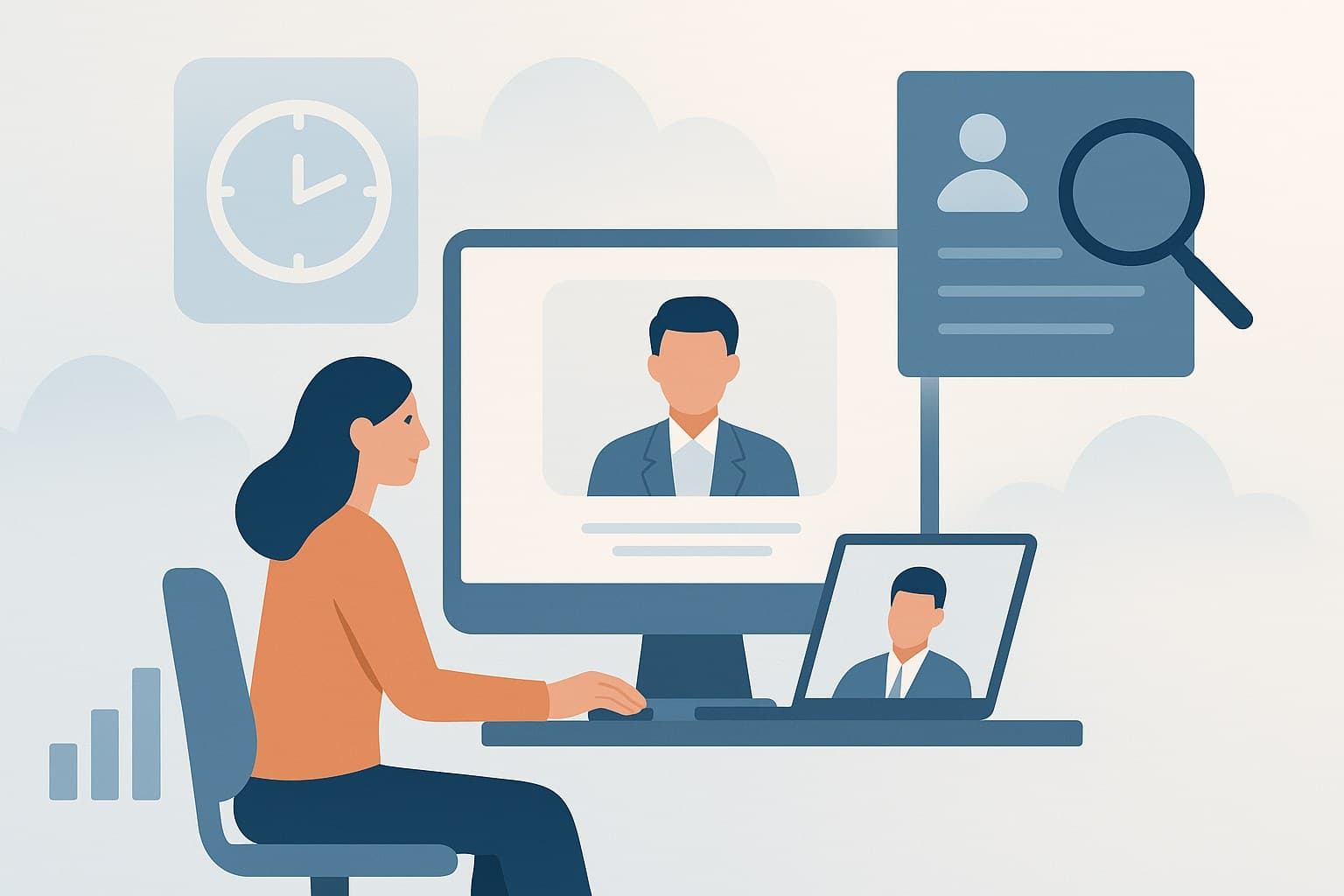
AI Interview Replay Calibration: Revolutionizing the Hiring Process
The hiring process can be a daunting and time-consuming task for both employers and job seekers. With the rise of technology, companies are now turning to Artificial Intelligence (AI) to streamline their recruitment process. AI-powered interviews have become increasingly popular as they save time and resources while providing accurate insights on candidates. However, with the ever-changing job market and evolving technology, it is crucial to ensure that AI interviews are calibrated correctly to provide accurate results.
In this article, we will dive into the world of AI interview replay calibration, its importance, and how it can revolutionize the hiring process.
What is AI Interview Replay Calibration?
AI interview replay calibration is the process of fine-tuning and optimizing AI models used in the recruitment process. It involves analyzing and adjusting the algorithms used to evaluate candidates' responses and behaviors during interviews. The goal of calibration is to make AI models more accurate and effective in predicting job performance and potential cultural fit.
The Importance of Calibration in AI Interviews
The use of AI in interviews has been a game-changer for many companies. It has significantly reduced the time and resources spent on the recruitment process. However, without proper calibration, AI models may produce biased results, leading to inaccurate hiring decisions. Calibration helps eliminate any bias and ensures that AI models are consistently evaluating candidates based on their skills and qualifications.
Moreover, calibration also improves the overall candidate experience. A poorly calibrated AI model may result in irrelevant questions or technical glitches, leading to a frustrating experience for candidates. This can negatively impact a company's employer brand and deter top talent from applying in the future.
The Process of AI Interview Replay Calibration
The calibration process involves four essential steps:
Step 1: Collecting Data
The first step in calibration is collecting data. This includes the interview questions and candidate responses recorded during AI interviews, as well as any additional data points such as resume and job application information. The more data collected, the more accurate the calibration will be.
Step 2: Identifying Biases
The next step is to identify any biases in the data. This can include gender, race, or educational background biases. By analyzing the data, employers can identify any potential biases and take necessary steps to eliminate them.
Step 3: Adjusting Algorithms
Once the biases have been identified, the next step is to adjust the algorithms used in the AI model. This can involve tweaking the weight given to certain data points or removing any irrelevant factors that may lead to biased results.
Step 4: Analyzing and Calibrating Your AI Models
Calibration is where the rubber meets the road. It is crucial to analyze the data and adjust the algorithms continuously. This will ensure that the AI model is consistently producing accurate and unbiased results.
The Impact of AI Interview Replay Calibration on the Hiring Process
Calibrating AI interview replays not only eliminates biases but also improves the overall efficiency and effectiveness of the hiring process. By providing accurate insights on candidates, employers can make more informed hiring decisions. This results in better cultural fit, improved job performance, and increased employee retention rates.
Moreover, calibrated AI models can help employers screen a larger pool of candidates in a shorter amount of time. This is especially beneficial for high-volume recruitment, where time is of the essence. It also reduces the chances of human error, resulting in a more objective evaluation of candidates.
Real-Life Examples of Successful AI Interview Replay Calibration
Several companies have successfully implemented AI interview replay calibration in their hiring process, resulting in significant improvements. One such company is Milo, a California-based startup that provides AI-powered interviews for customer service roles. By calibrating their AI models, they saw a 95% reduction in false positives and a 76% reduction in false negatives. This significantly improved their accuracy in predicting job performance and cultural fit.
Another example is Insight7, a company that provides AI-powered interviews for sales and customer service roles. By calibrating their AI models, they saw a 90% increase in candidate response rates and an 80% reduction in time-to-hire. This resulted in significant cost savings for their clients and improved the overall candidate experience.
Conclusion: The Future of AI Interview Replay Calibration
As the job market continues to evolve, it is essential for companies to optimize their recruitment process by embracing technology. AI interview replay calibration is a crucial step in ensuring that companies are making informed and unbiased hiring decisions. By analyzing and adjusting AI models, employers can improve the overall candidate experience, increase efficiency, and accuracy in hiring, and ultimately, save time and resources.
With the right calibration, AI interviews have the potential to revolutionize the hiring process and lead to a more diverse and inclusive workforce. It is up to companies to embrace this technology and continuously calibrate their AI models to stay ahead in the competitive job market.
Sources:
Frequently Asked Questions
Key questions often raised by business leaders and HR teams:
What is AI interview replay calibration?
AI interview replay calibration is the process of fine-tuning AI models used in recruitment to ensure accurate candidate evaluation.
Why is calibration important in AI interviews?
Calibration is crucial to eliminate biases and improve the accuracy of hiring decisions, leading to better cultural fit and job performance.
What are the steps involved in calibrating AI interviews?
The steps include collecting data, identifying biases, adjusting algorithms, and continuously analyzing the AI models.
How does calibration benefit the candidate experience?
Proper calibration ensures relevant questions and smooth technical performance, enhancing the overall experience for candidates.
Can you provide examples of successful AI interview calibration?
Yes, companies like Milo and Insight7 have seen significant improvements in hiring accuracy and candidate response rates after calibration.