The AI Interview Process: How Artificial Intelligence is Revolutionizing Recruitment
In today's job market, technology plays a vital role in every aspect of the recruitment process. From job searching to resume screening, companies are increasingly turning to artificial intelligence (AI) to streamline and improve their hiring processes. This includes the use of AI in conducting interviews, a process that has traditionally been done in person or over the phone. In this article, we will dive into the world of AI interviews and discuss how this innovative technology is changing the way we hire.
Understanding the AI Interview Process
The use of AI in interviews is not a new concept, but it has gained significant traction in recent years. This approach has been carefully formulated by a diverse team of recruiters and psychometric specialists to successfully capture different personal traits and behaviors of candidates. By using AI, companies can gather a wealth of data points and insights that traditional interviews may not uncover. This data is then analyzed and used to make informed decisions about a candidate's fit for a particular role.
According to research conducted by PwC, 72% of business leaders believe that AI will be fundamental in the future for how their companies operate. This includes the recruitment process, where AI can help identify top talent and make hiring decisions more efficiently. The AI interview process is a win-win for both employers and candidates, as it can save time and resources for companies while providing a more objective and comprehensive evaluation for candidates.
What the AI Interview Process Actually Looks Like
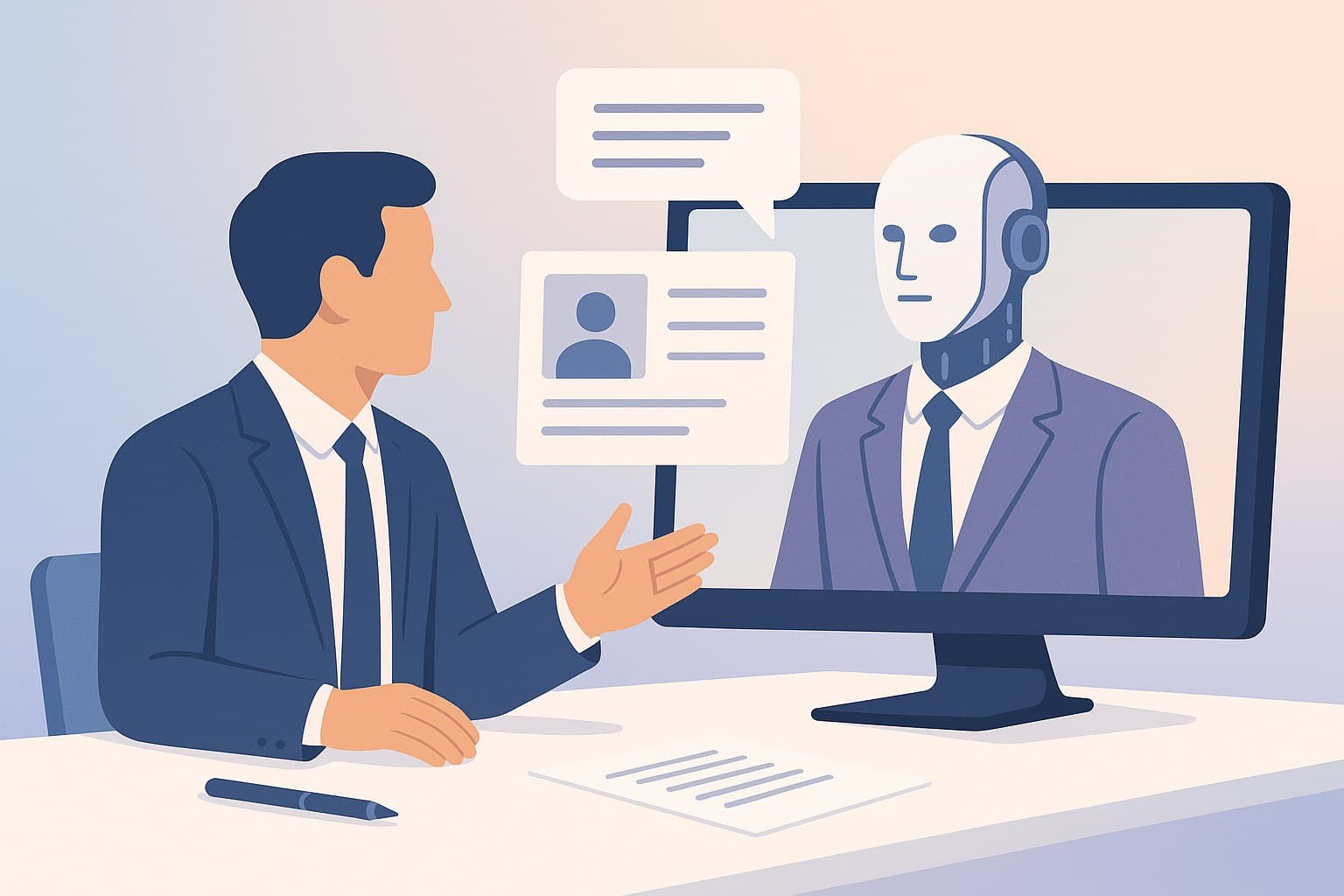
So, how does an AI interview work? Typically, candidates are invited to participate in a video or voice interview through a platform specifically designed for AI interviews. These platforms use machine learning algorithms to analyze a candidate's responses, facial expressions, and body language. The algorithms are designed to identify patterns and correlations between a candidate's responses and their potential job performance. This data is then compared to the ideal profile for the role, as determined by the hiring company.
One of the key benefits of AI interviews is that they are not limited by time or location. Candidates can complete the interview at their convenience, and recruiters can review the responses at any time. This eliminates the need for scheduling conflicts and allows for more flexibility in the hiring process.
Another advantage of AI interviews is the ability to conduct a structured and standardized interview. Traditional interviews can be influenced by biases, both conscious and unconscious, which can affect the hiring decision. With AI, all candidates are asked the same set of questions, and their responses are evaluated objectively based on predetermined criteria. This ensures a fair and consistent evaluation for all candidates.
The Role of AI in Candidate Evaluation
AI interviews are not meant to replace human recruiters entirely. Instead, they are designed to enhance the recruitment process by providing valuable insights into a candidate's skills, personality, and potential fit for a role. The data gathered from AI interviews can be used to supplement traditional interviews, resume screenings, and reference checks.
For example, AI can analyze a candidate's language patterns and word choice to assess their communication skills. It can also pick up on non-verbal cues such as hesitation or confidence in responses, providing insights into a candidate's level of self-assurance. These are factors that may be difficult to assess in a traditional interview setting.
Additionally, AI can also evaluate a candidate's cultural fit for a company. By analyzing a candidate's responses to certain questions, AI can identify whether their values and beliefs align with the company's culture. This is crucial for long-term employee retention and job satisfaction.
Challenges and Controversies Surrounding AI Interviews
While the use of AI in interviews has many benefits, it is not without its challenges and controversies. One of the main concerns is the potential for bias in the algorithms used to assess candidates. If the data used to train the algorithms is biased, then the results will also be biased. This can lead to discrimination against certain groups of candidates and reinforce existing societal biases.
Another concern is the lack of human interaction in AI interviews. Some argue that the absence of a human interviewer can make the process feel impersonal and intimidating for candidates. This can also lead to a lack of transparency in the hiring process, as candidates may not know how their responses are being evaluated.
To address these concerns, it is crucial for companies to carefully select and train the AI algorithms used in interviews. They must also ensure that the data used to train these algorithms is diverse and free from biases. Additionally, companies should always provide feedback and transparency to candidates about the AI interview process to create a more positive candidate experience.
The Future of AI Interviews
As technology continues to advance, we can expect to see even more developments in the AI interview process. With the rise of natural language processing and facial recognition technology, AI interviews can become even more sophisticated in evaluating candidates. This can lead to more accurate and efficient hiring decisions, benefiting both employers and candidates.
Additionally, companies are also exploring the use of AI in onboarding and employee training. By analyzing a candidate's responses and personality traits, AI can create personalized training programs and provide insights on how to effectively manage and motivate each employee. This can lead to increased employee satisfaction and retention, ultimately benefiting the company's bottom line.
Final Thoughts
The use of AI in interviews is an exciting development in the recruitment industry. It has the potential to revolutionize the way we hire and make the process more efficient, fair, and objective. However, it is crucial for companies to use this technology responsibly and address any potential biases. With proper training and implementation, AI interviews can help companies find the best candidates for their roles, leading to stronger teams and better business outcomes. So, let's embrace the AI interview process and get ready for a more streamlined and data-driven recruitment future.
Frequently Asked Questions
Key questions often raised by business leaders and HR teams:
What is the AI interview process?
The AI interview process uses machine learning algorithms to analyze candidates' responses, facial expressions, and body language during interviews.
What are the benefits of AI interviews?
AI interviews provide objective evaluations, save time, and allow candidates to interview at their convenience, reducing scheduling conflicts.
Are AI interviews biased?
AI interviews can be biased if the training data is not diverse. It's essential for companies to ensure fairness and transparency in the process.
How does AI assess cultural fit?
AI analyzes candidates' responses to determine if their values align with the company's culture, which is important for employee retention.
What is the future of AI interviews?
The future includes advancements in natural language processing and facial recognition, leading to even more accurate hiring decisions.