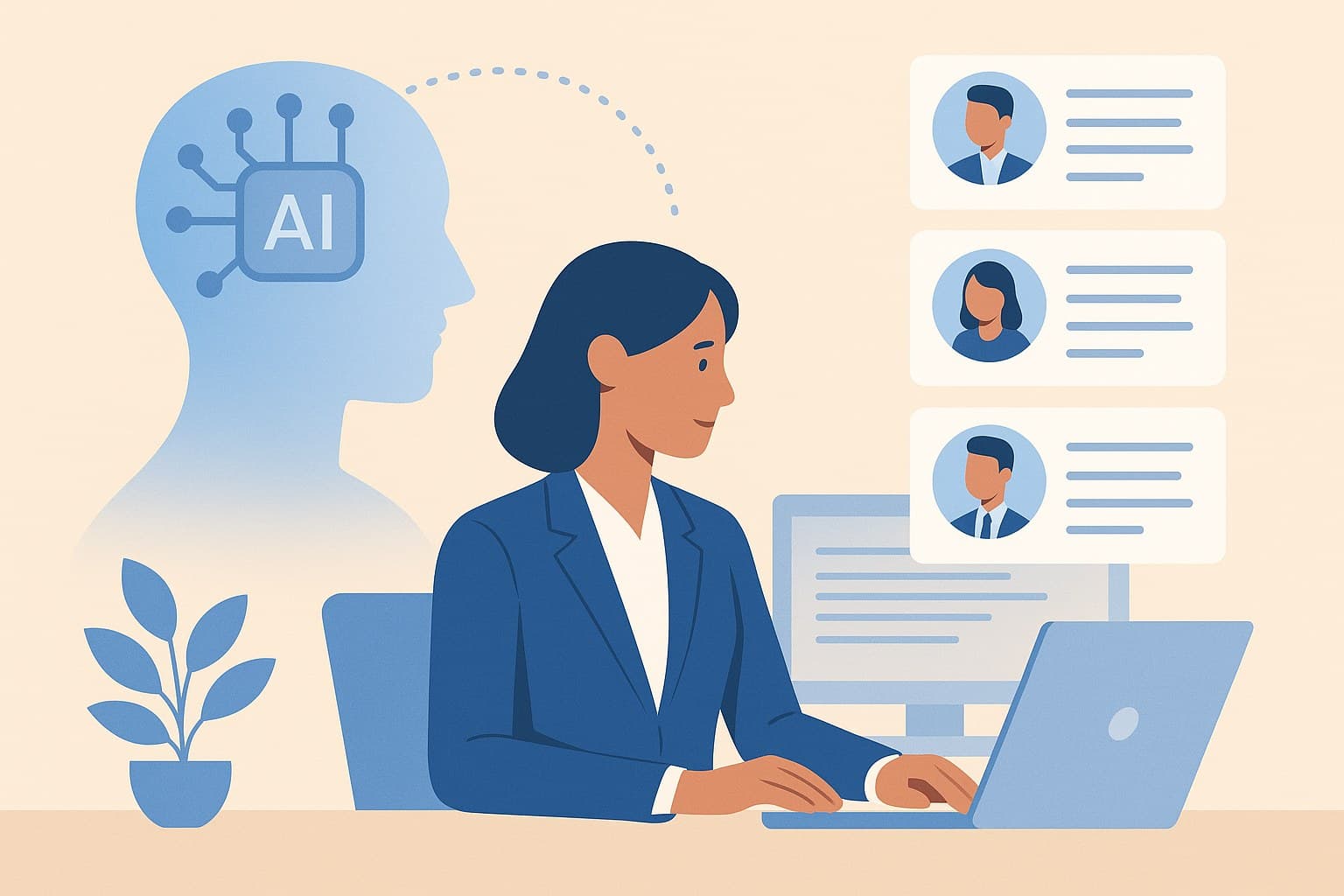
Harnessing AI in the Interview Process: A Guide for Business Decision Makers and HR Leaders
In today's rapidly evolving business landscape, the integration of artificial intelligence (AI) into various facets of corporate operations is not just an advantage but a necessity. One area where AI has shown significant promise is in the interview process. For business decision-makers and HR leaders, understanding how to effectively leverage AI can lead to more efficient hiring, improved candidate experiences, and ultimately, better organizational outcomes.
The Evolution of AI in Recruitment
The use of AI in recruitment has evolved from simple algorithms to sophisticated systems capable of handling complex tasks. Initially, AI was employed for resume screening and basic data management. Today, AI tools can conduct interviews, assess candidate responses, and even predict future job performance based on historical data.
AI's role in recruitment is becoming increasingly critical as organizations face challenges such as high turnover rates, the demand for diverse hiring, and the need for swift recruitment processes. With AI, companies can streamline these processes, ensuring they attract and retain top talent efficiently.
Advantages of AI in the Interview Process
-
Efficiency and Speed: Traditional recruitment processes can be time-consuming, often taking weeks or even months to complete. AI algorithms can quickly analyze vast amounts of data, drastically reducing the time needed to screen candidates. This speed is crucial in competitive markets where top candidates may receive multiple offers.
-
Enhanced Candidate Experience: AI can provide a more engaging and interactive experience for candidates. Chatbots, for instance, can answer candidate queries in real-time, ensuring they remain informed and engaged throughout the process.
-
Objective Decision-Making: Human biases are an inherent risk in recruitment. AI systems can minimize these biases by evaluating candidates based on data rather than subjective judgment. This objectivity can lead to more diverse and inclusive hiring outcomes.
-
Predictive Analytics: AI can analyze patterns from previous hiring processes to predict which candidates are likely to succeed in specific roles. This predictive capability allows HR leaders to make more informed hiring decisions, reducing turnover and enhancing employee satisfaction.
Implementing AI in Your Interview Process
For organizations considering the integration of AI into their interview processes, several steps can ensure a smooth transition:
-
Define Clear Objectives: Before implementing AI, it's crucial to define what you hope to achieve. Whether it's reducing time-to-hire, improving candidate quality, or enhancing diversity, having clear objectives will guide the selection of appropriate AI tools.
-
Choose the Right Tools: There are numerous AI tools available, each with its strengths and weaknesses. HR leaders should evaluate these tools based on their specific needs, budget, and existing recruitment processes.
-
Train Your Team: AI is not a replacement for human recruiters but a tool to enhance their capabilities. Training your HR team to work alongside AI will maximize its effectiveness and ensure a seamless integration into your existing processes.
-
Monitor and Evaluate: Like any technology, AI requires regular monitoring and evaluation. Collect feedback from candidates and hiring managers to identify areas for improvement and ensure the system is achieving its intended goals.
Challenges and Considerations
Despite its advantages, the use of AI in recruitment is not without challenges. Privacy concerns, for instance, are paramount. AI systems handle vast amounts of personal data, and organizations must ensure compliance with data protection regulations.
Another consideration is the risk of perpetuating existing biases. While AI can reduce human bias, it can also replicate it if the underlying data is biased. Therefore, it's essential to regularly audit AI systems to ensure fairness and equity.
The Future of AI in Recruitment
The future of AI in recruitment looks promising with advancements in natural language processing, machine learning, and data analytics. These technologies will continue to refine AI's capabilities, making it an even more integral part of the recruitment process.
As AI becomes more sophisticated, we can expect more personalized candidate experiences, where AI systems tailor interactions based on individual preferences and behaviors. Additionally, AI will likely play a larger role in employee retention, using data to predict potential turnover and suggest interventions.
Conclusion
For business decision-makers and HR leaders, the integration of AI into the interview process offers a strategic advantage. By enhancing efficiency, objectivity, and candidate experience, AI can transform recruitment from a reactive process to a proactive strategy.
However, successful implementation requires careful planning, ongoing evaluation, and a commitment to ethical considerations. By navigating these challenges thoughtfully, organizations can harness the full potential of AI, securing top talent and driving long-term success.
Frequently Asked Questions
Key questions often raised by business leaders and HR teams:
What are the benefits of using AI in the interview process?
AI improves efficiency, enhances candidate experience, and promotes objective decision-making by minimizing biases.
How can organizations implement AI in their hiring processes?
Organizations should define clear objectives, choose appropriate AI tools, train their HR teams, and monitor the AI systems regularly.
What challenges does AI face in recruitment?
Challenges include privacy concerns regarding personal data and the risk of perpetuating biases present in the underlying data.
Will AI replace human recruiters?
No, AI is designed to enhance the capabilities of human recruiters, not replace them. It serves as a tool for better decision-making.
What does the future hold for AI in recruitment?
The future of AI in recruitment looks promising, with advancements likely to lead to more personalized candidate experiences and improved employee retention strategies.