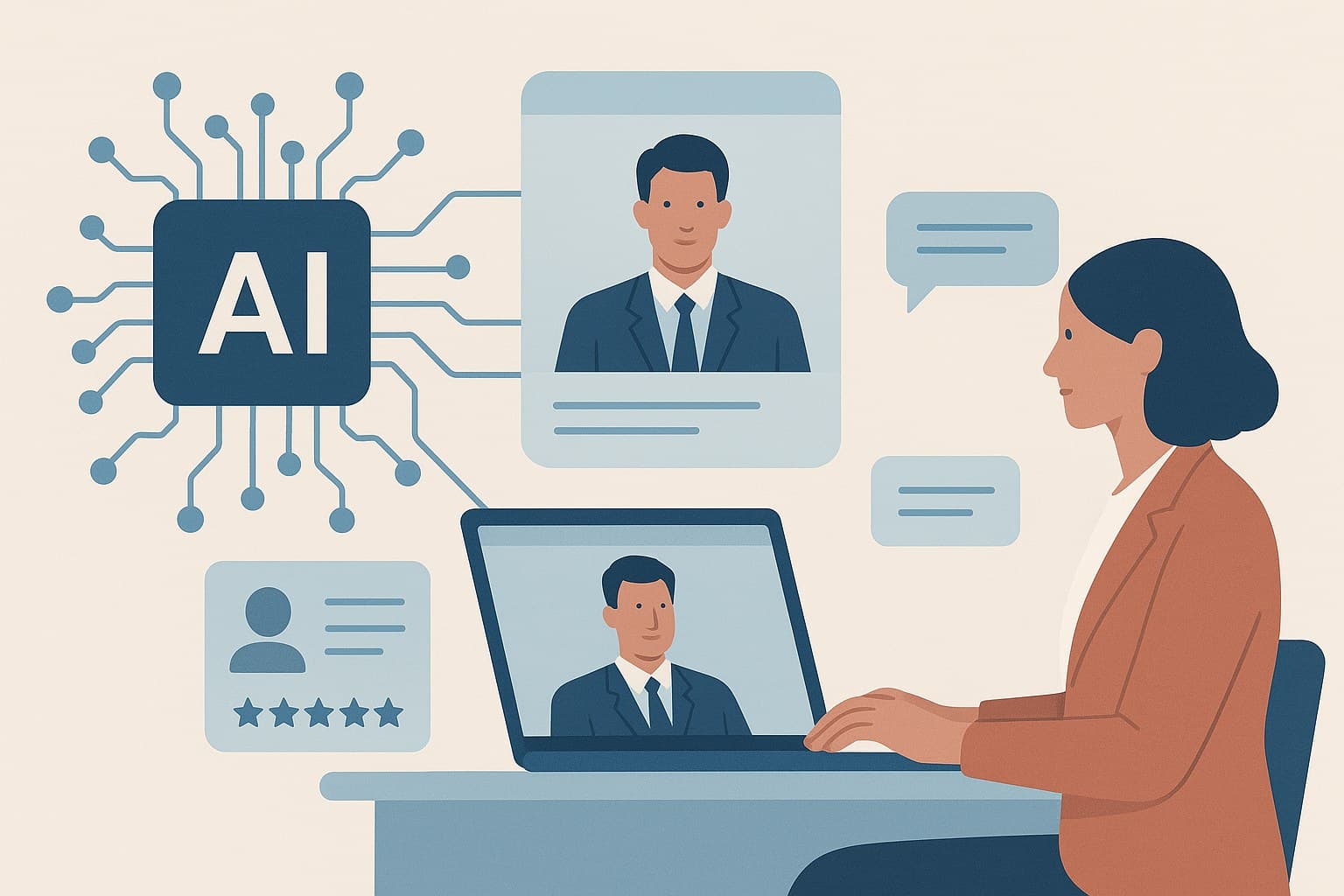
AI Interview Tool: Revolutionizing the Hiring Process
The hiring process has always been a time-consuming and tedious task for both employers and candidates. With the advancement of technology, companies are now turning to AI interview tools to streamline their recruitment process. This innovative tool uses artificial intelligence to evaluate candidates and provide real-time feedback, saving time and resources for both parties.
The Rise of AI Interview Tools
According to a survey by LinkedIn, 76% of recruiters believe that AI has the potential to transform the hiring process. Unlike traditional methods where candidates are evaluated based on their resumes and qualifications, AI interview tools use advanced algorithms to assess a candidate's skills, personality, and potential fit for the job.
These tools are gaining popularity among companies of all sizes, from startups to Fortune 500 companies. In fact, 67% of HR professionals are already using some form of AI in their hiring process, and this number is expected to increase in the coming years.
How AI Interview Tools Work
AI interview tools come in various forms, from generic AI tools to specialized ones for specific industries or job roles. These tools use natural language processing (NLP) and machine learning algorithms to analyze a candidate's responses to interview questions.
Some tools provide pre-recorded questions for candidates to answer, while others offer live sessions where candidates can interact with the AI and receive real-time feedback. These tools also use facial and vocal analysis to assess a candidate's emotions and confidence level during the interview.
Benefits of Using AI Interview Tools
One of the main advantages of using AI interview tools is speed. These tools can quickly evaluate hundreds of candidates in a fraction of the time it would take a human recruiter. This allows companies to speed up their hiring process and fill vacancies faster, which is crucial in today's competitive job market.
Moreover, AI interview tools eliminate human bias and provide a fair and objective evaluation of candidates based on their skills and qualifications. This helps companies to make unbiased hiring decisions and create a diverse and inclusive workplace.
Choosing the Right AI Interview Tool
With the growing popularity of AI interview tools, there is an abundance of options available in the market. It can be overwhelming for companies to choose the right tool that fits their needs. Here are some key factors to consider when selecting an AI interview tool:
- Specialization: Some tools are designed for specific industries or job roles, such as data analytics, IT support, or UX design. Consider your company's needs and choose a tool that aligns with your hiring requirements.
- Features: Look for tools that offer a variety of features, such as pre-recorded and live interviews, real-time feedback, and specialized assessments. This will provide a comprehensive evaluation of candidates.
- User-friendliness: The tool should be easy to use for both employers and candidates. A complicated interface can cause more harm than good, leading to a negative candidate experience.
- Accuracy: The tool should provide accurate and reliable results. Look for tools that have a high success rate and are constantly improving their algorithms.
- Cost: AI interview tools can range from free to expensive, depending on the features and level of customization. Consider your budget and choose a tool that offers the best value for money.
Pros and Cons of AI Interview Tools
While AI interview tools have many benefits, they also have some limitations. Let's take a look at the pros and cons of using AI interview tools:
Pros:
- Efficiency: AI interview tools can evaluate candidates at a much faster rate than humans, saving time and resources for companies.
- Unbiased Evaluation: These tools eliminate human bias and provide a fair evaluation of candidates based on their skills and qualifications.
- Real-time Feedback: Candidates receive instant feedback, allowing them to improve their answers and performance in real-time.
- Improved Candidate Experience: AI interview tools provide a smooth and convenient interview experience for candidates, improving their overall impression of the company.
Cons:
- Lack of Human Interaction: Some candidates may prefer interacting with a human interviewer, and the absence of this may affect their performance.
- Limited Assessment: AI interview tools can only assess a candidate's verbal and non-verbal communication skills and cannot evaluate other factors, such as body language or cultural fit.
- Cost: Some AI interview tools can be expensive, making it difficult for small companies to afford them.
Conclusion
AI interview tools have revolutionized the hiring process, making it faster, fairer, and more efficient. These tools not only benefit companies but also provide a better experience for candidates. However, it is essential to choose the right tool that aligns with your hiring requirements and budget.
Remember, an interview is not just an opportunity for companies to evaluate candidates, but also for candidates to learn about the potential employer. With the help of AI interview tools, companies can make data-driven hiring decisions and create a diverse and inclusive workplace.
So, if you are looking to streamline your hiring process and find the best talent for your company, consider investing in an AI interview tool. It may just be the game-changer you need to stay ahead of the competition.
Frequently Asked Questions
Key questions often raised by business leaders and HR teams:
What are AI interview tools?
AI interview tools use artificial intelligence to evaluate candidates during the hiring process, providing real-time feedback and eliminating human bias.
How do AI interview tools work?
These tools analyze candidates' responses using natural language processing and machine learning algorithms, assessing skills and personality.
What are the benefits of using AI interview tools?
They offer faster evaluations, unbiased assessments, real-time feedback, and an improved candidate experience.
Are there any drawbacks to AI interview tools?
Yes, they may lack human interaction and can be costly for smaller companies, while also having limitations in assessing certain soft skills.
How do I choose the right AI interview tool?
Consider factors like specialization, features, user-friendliness, accuracy, and cost to find a tool that fits your company's hiring needs.