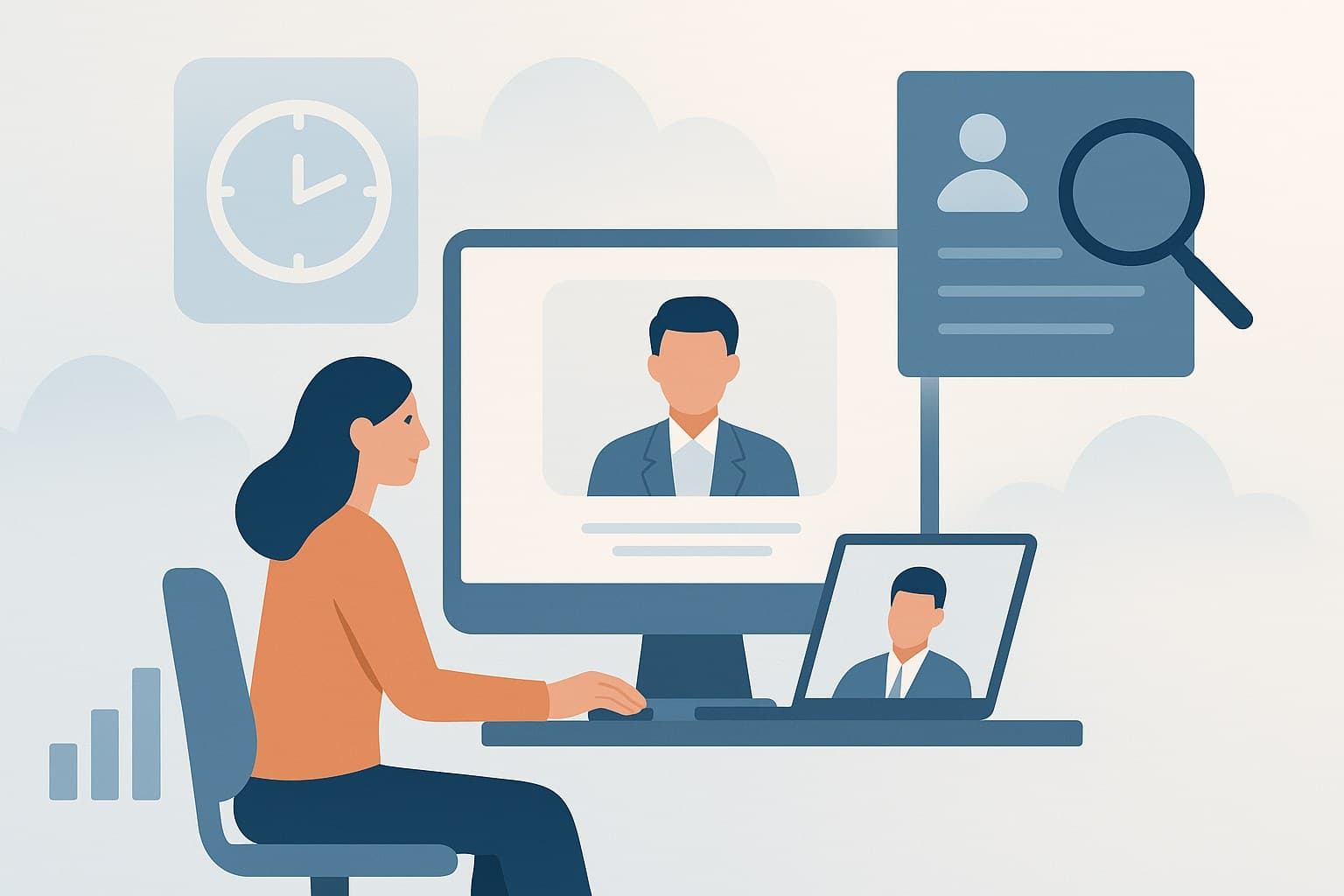
AI Interviews Internal Mobility: Revolutionizing the Hiring Process
In today's fast-paced and ever-changing business landscape, internal mobility has become a crucial aspect for organizations looking to stay competitive. The traditional hiring process, which involves posting job listings and conducting interviews, may no longer be efficient in finding the right candidates for internal job openings. This is where Artificial Intelligence (AI) comes in, with its ability to streamline and improve the internal hiring process. In this article, we will dive deep into the world of AI interviews for internal mobility and explore how it is revolutionizing the hiring process.
The Rise of AI in Internal Mobility
According to a recent report by McKinsey, up to 375 million workers will need to switch occupations and learn new skills by 2030 due to automation and AI. This shift in the job market has made internal mobility a top priority for organizations, as it allows them to fill critical roles quickly and retain their top talent. However, traditional internal hiring processes can be time-consuming, and often result in a mismatch between job requirements and employee skills. This is where AI comes in, with its ability to analyze vast amounts of data and provide valuable insights for the hiring process.
AI interviews for internal mobility involve using advanced algorithms and natural language processing (NLP) to screen and evaluate candidates. These interviews can be conducted through various mediums such as chatbots, video interviews, and even virtual reality simulations. By analyzing the candidate's responses, facial expressions, and body language, AI can provide valuable insights, such as their communication skills, problem-solving abilities, and cultural fit. This not only saves time but also ensures that the right candidates are selected for the job.
The Benefits of AI Interviews for Internal Mobility
The use of AI in internal mobility has several benefits for both organizations and employees. Let's take a look at some of them.
Improved Match Quality
Traditional hiring processes rely on resumes and interviews, which may not give a complete picture of a candidate's skills and abilities. AI interviews, on the other hand, use data-driven insights to match candidates with the right job roles. By analyzing a candidate's skills, experience, and even their social media presence, AI can identify the best fit for a particular role. This not only improves the match quality but also reduces the risk of hiring the wrong candidate.
Faster and More Efficient Hiring Process
With AI interviews, the hiring process becomes faster and more efficient. Since AI can analyze and evaluate candidates at a much faster pace than humans, it saves time for both the organization and the candidates. This also reduces the burden on HR teams, allowing them to focus on other critical tasks. Additionally, AI interviews can be conducted remotely, making it convenient for both the organization and the candidates.
Improved Candidate Experience
The use of AI interviews can also improve the candidate experience. Traditional interviews can be stressful and time-consuming, leading to a negative experience for candidates. AI interviews, on the other hand, can be more engaging and interactive, providing candidates with a better experience. It also allows them to showcase their skills and abilities in a more natural and comfortable environment.
Best Practices for AI Interviews in Internal Mobility
To reap the benefits of AI interviews for internal mobility, organizations need to follow some best practices. Here are some key considerations to keep in mind.
Define Job Requirements Clearly
For AI to make an accurate match, it is essential to define job requirements clearly. This includes not only technical skills but also soft skills and cultural fit. By providing detailed job descriptions, organizations can ensure that AI selects the best candidates for the job.
Train the AI Model
AI is only as good as the data it is trained on. Therefore, it is crucial to train the AI model with data that is relevant to the organization's needs. This will ensure that the AI model provides accurate and useful insights for the hiring process.
Use Multiple Platforms
AI interviews can be conducted through various platforms, such as chatbots, video interviews, and virtual reality simulations. It is essential to use multiple platforms to assess different skills and abilities of candidates. This will help in getting a well-rounded view of the candidate, resulting in a better match.
Key Questions for AI Interviews in Internal Mobility
While the use of AI interviews can significantly improve the hiring process, it is essential to ask the right questions. Here are some key questions to consider when conducting AI interviews for internal mobility.
- What are your long-term career goals?
- How do you handle change and challenges?
- Can you provide an example of a time when you had to adapt to a new role or project?
- How do you handle conflicts with team members?
- Can you explain a time when you took initiative and made a significant impact in your current role?
Conclusion: Embracing AI for Internal Mobility
The use of AI interviews in internal mobility is still in its early stages, but the potential for its growth and impact is immense. With the rise of automation and AI, organizations need to embrace technology to stay ahead of the competition. By implementing AI interviews, organizations can improve match quality, save time and resources, and provide a better experience for candidates. However, it is essential to remember that AI is only a tool, and human intervention and decision-making are still crucial for the hiring process. By combining the power of AI with human expertise, organizations can revolutionize their internal hiring process and create a more agile and resilient workforce.
Frequently Asked Questions
Key questions often raised by business leaders and HR teams:
What are AI interviews?
AI interviews use advanced algorithms to evaluate candidates through various mediums, providing insights into their skills and fit for the role.
How do AI interviews improve the hiring process?
They streamline the process by quickly analyzing candidate data, improving match quality, and enhancing the overall candidate experience.
What best practices should organizations follow for AI interviews?
Organizations should clearly define job requirements, train AI models with relevant data, and utilize multiple platforms for assessments.
Can AI interviews replace human recruiters?
No, AI is a tool to assist in the hiring process, but human expertise and decision-making remain essential.
What are the benefits of using AI in internal mobility?
AI improves match quality, speeds up the hiring process, and enhances the candidate experience, making it a valuable asset for organizations.