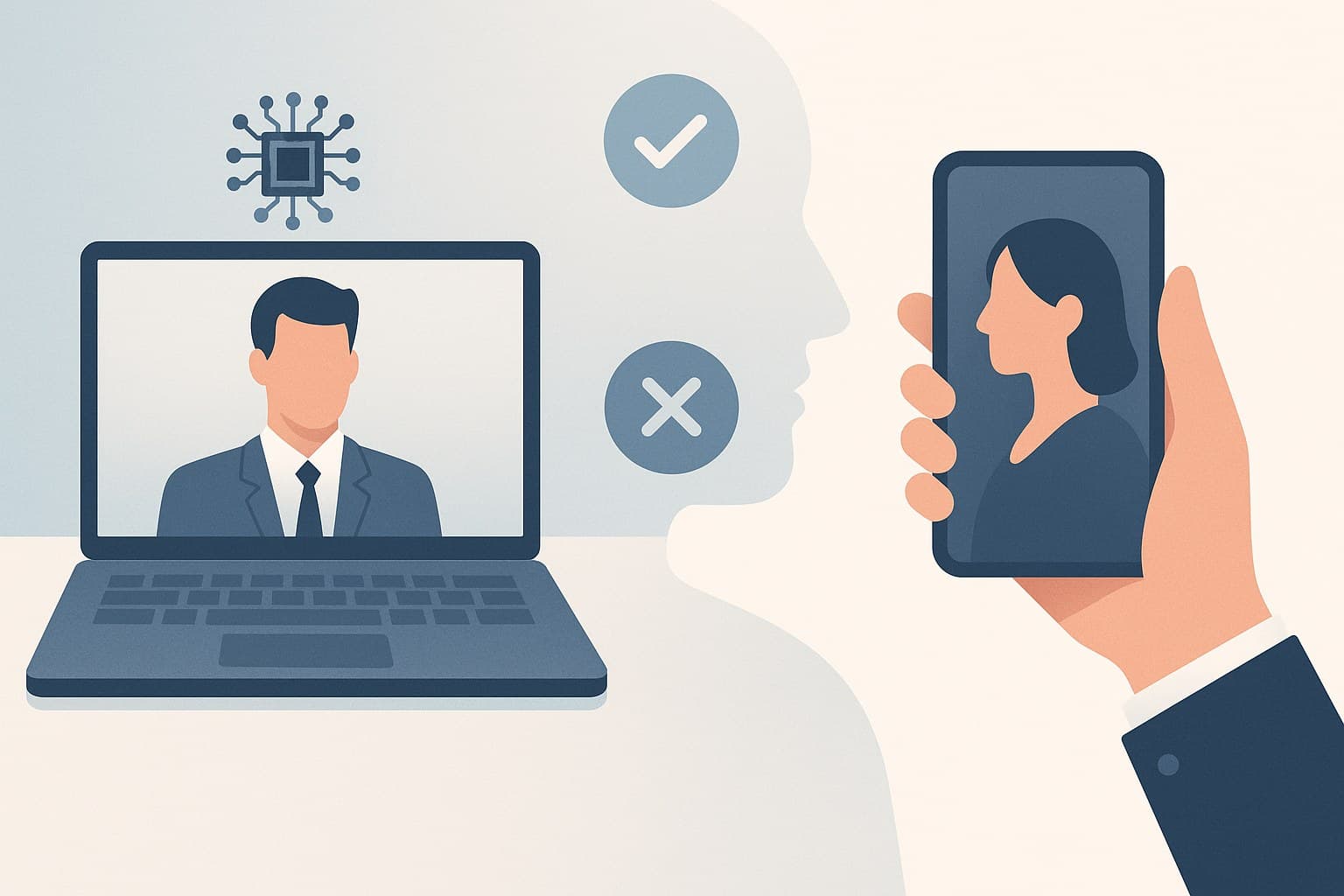
AI Interview vs Phone Screen: Which One is More Effective?
In today's fast-paced world, technology has significantly changed the way we live, work, and interact. The recruitment process is no exception. With the advancement of artificial intelligence (AI), companies are now using AI-based tools to streamline and enhance their hiring process. This has led to the rise of AI interviews, which are becoming increasingly popular among employers. But are these AI interviews more effective than the traditional phone screens? In this article, we will delve into the world of AI interviews and phone screens, comparing their effectiveness, benefits, and drawbacks.
Understanding AI Interviews and Phone Screens
Before we dive into the comparison, let's define what AI interviews and phone screens are. An AI interview is a process where a computer program, usually powered by AI, conducts a virtual interview with a candidate. The program uses natural language processing (NLP) and machine learning algorithms to analyze the candidate's responses and provide a score. On the other hand, a phone screen is a preliminary screening process where a recruiter or hiring manager conducts a short interview with a candidate over the phone to assess their qualifications and fit for the role.
Key Differences between AI Interviews and Phone Screens
There are several key differences between AI interviews and phone screens that can impact the effectiveness of each method. Let's take a closer look at these differences and how they affect the hiring process.
Time and Cost Efficiency
One of the main advantages of AI interviews over phone screens is their time and cost efficiency. AI interviews can be conducted at any time, and multiple candidates can be evaluated simultaneously without the need for a recruiter's presence. This saves a significant amount of time and resources for employers. According to a study by Gartner, AI-based video interviews can save up to 70% of the time and cost associated with traditional phone screens.
Objectivity and Fairness
Another significant difference between AI interviews and phone screens is objectivity and fairness. AI interviews use standardized questions and evaluation criteria, eliminating any potential bias or discrimination in the hiring process. This is a crucial factor, especially in today's diverse workforce, where employers are striving to promote diversity and inclusivity in their hiring practices.
On the other hand, phone screens are prone to biases, as the interviewer's personal opinions and perceptions can influence the evaluation process. This can lead to an unfair advantage for certain candidates, resulting in a less diverse and inclusive workforce.
Candidate Experience
Candidate experience is a crucial aspect of the hiring process, as it can significantly impact a candidate's decision to join a company. AI interviews offer a more convenient and comfortable experience for candidates, as they can complete the interview at their own pace and from the comfort of their own home. This can also reduce the pressure and nervousness associated with traditional in-person interviews.
In comparison, phone screens can be seen as more intrusive, as they require candidates to take time off work or personal commitments to attend the call. This can create a negative experience for candidates, leading to a lower acceptance rate for job offers.
Depth of Evaluation
When it comes to evaluating a candidate's skills and qualifications, AI interviews and phone screens differ in terms of depth. AI interviews use advanced algorithms to analyze a candidate's responses and provide a score based on predetermined criteria. This can provide a more accurate and comprehensive evaluation of a candidate's abilities.
On the other hand, phone screens may not be as effective in evaluating a candidate's skills and qualifications, as they are usually short and limited to a few questions. This can result in missing out on important information and potentially hiring the wrong candidate.
Which One is More Effective?
The effectiveness of AI interviews and phone screens ultimately depends on the specific needs and goals of a company. However, based on the key differences mentioned above, it can be argued that AI interviews have an edge over phone screens in terms of efficiency, fairness, and depth of evaluation. This is not to say that phone screens are not effective, but they may not be as efficient and reliable as AI interviews.
According to a survey by the National Association of Colleges and Employers, 71% of employers who used AI-based tools for recruiting reported that they were satisfied with the results. Additionally, a study by LinkedIn found that 67% of candidates who experienced an AI interview said it was a positive experience. These statistics show that AI interviews have proven to be an effective tool for employers in the hiring process.
The Future of AI Interviews and Phone Screens
The use of AI in recruitment is still in its early stages, and as technology continues to advance, we can expect to see more developments in AI interviews and phone screens. While AI interviews may not completely replace phone screens, they are likely to become an integral part of the hiring process for many companies.
With the rise of remote work, AI interviews can provide a more efficient and convenient solution for companies looking to hire candidates from anywhere in the world. They can also provide valuable insights and data to employers, helping them make more informed hiring decisions.
Conclusion
In conclusion, AI interviews and phone screens both have their own strengths and weaknesses. While AI interviews offer efficiency, fairness, and depth of evaluation, phone screens provide a more personal touch and can be effective for certain roles and industries. However, as AI technology continues to evolve, it is safe to say that AI interviews will become a more prominent and effective tool for employers in the hiring process. As with any technology, it is essential to use it ethically and responsibly, ensuring a fair and inclusive hiring process for all candidates.
Frequently Asked Questions
Key questions often raised by business leaders and HR teams:
What are AI interviews?
AI interviews are virtual interviews conducted by computer programs using artificial intelligence to evaluate candidates' responses.
How do AI interviews compare to phone screens?
AI interviews are generally more efficient, objective, and provide a deeper evaluation compared to traditional phone screens.
Are AI interviews fairer than phone screens?
Yes, AI interviews use standardized criteria, reducing biases that can occur in phone screens conducted by human interviewers.
What is the future of AI in recruitment?
The future of AI in recruitment looks promising, with continued advancements likely to integrate AI interviews more deeply into hiring processes.