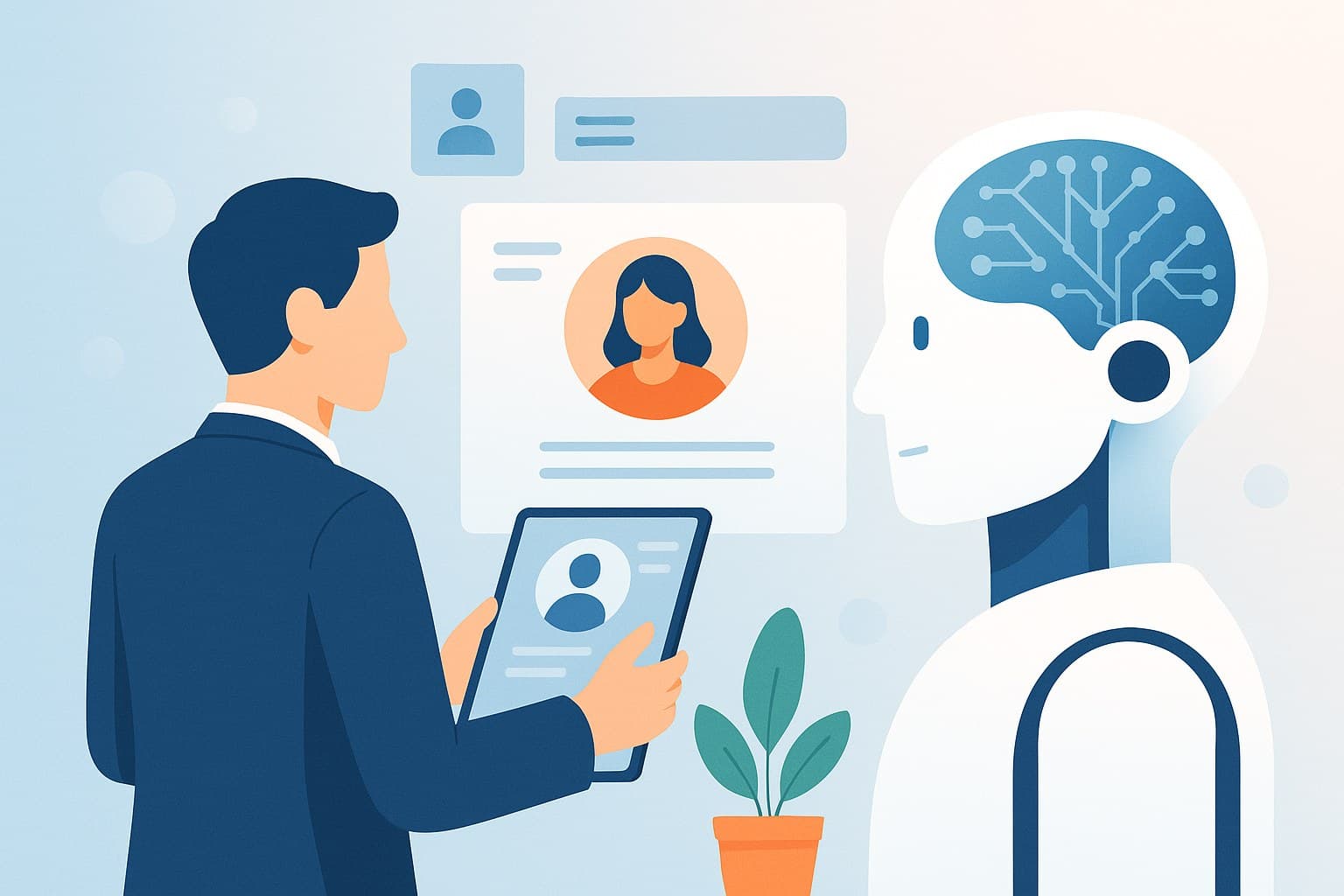
AI for Headhunters: A Case Study of Successful Recruitment Strategies
In the fast-paced world of recruitment, staying ahead of the competition is crucial. With the rise of technology, traditional recruitment methods are becoming outdated and ineffective. As the demand for top talent continues to increase, headhunters are turning to Artificial Intelligence (AI) to streamline their processes and find the best candidates for their clients.
AI is revolutionizing the recruitment industry, providing headhunters with the tools they need to succeed in today's competitive market. In this article, we will explore the success stories of companies that have effectively integrated AI into their recruitment strategies, and how it has helped them stand out in their field.
Case Study Overview
In this section, we highlight the success stories of several companies that have effectively integrated AI into their recruitment strategies.
Company A: Reducing Time and Cost
Company A, a global recruitment firm, was struggling to keep up with the demands of their clients. Their manual recruitment processes were time-consuming and costly, and they were losing top talent to their competitors.
After integrating AI into their recruitment processes, Company A saw a significant improvement in their efficiency. With the help of AI-powered resume screening and candidate matching, they were able to reduce their time-to-hire by 70% and cut their recruitment costs by 50%.
Company B: Improving Candidate Experience
Company B, a boutique recruitment agency, was facing a high drop-off rate in their recruitment process. Candidates were getting frustrated with the lengthy and tedious application process, leading to a negative candidate experience.
By implementing AI-powered chatbots, Company B was able to engage with candidates in real-time, providing them with a more personalized and efficient recruitment experience. This resulted in a 40% increase in candidate response rates and a 25% increase in candidate satisfaction.
Company C: Enhancing Diversity and Inclusion
Company C, a tech company, was struggling with diversity and inclusion in their recruitment processes. Despite their efforts, they were not seeing a significant increase in diverse hires.
With the help of AI, Company C was able to remove unconscious bias from their recruitment processes. AI-powered algorithms were used to identify and remove gender-specific language from job postings, resulting in a 15% increase in diverse hires.
Stand Out in Your Field
In today's competitive job market, it is essential for headhunters to stand out in their field. By leveraging AI, headhunters can differentiate themselves from their competitors and attract top talent for their clients.
AI + Human Intelligence (HI)
AI is not meant to replace human recruiters, but rather to enhance their capabilities. By combining AI with Human Intelligence (HI), headhunters can improve their decision-making processes and provide a more personalized recruitment experience for their clients and candidates.
AI-powered algorithms can analyze large amounts of data and make data-driven decisions, while human recruiters can use their emotional intelligence and soft skills to build relationships with candidates and clients.
Talent Marketplaces
Intelligent talent marketplaces, like Phenom People, are becoming increasingly popular in the recruitment industry. These platforms use AI to match candidates with job opportunities based on their skills, experience, and career goals.
Headhunters can leverage these marketplaces to access a larger pool of candidates and find the best fit for their clients. This not only saves time and effort but also ensures a better match for both the candidate and the company.
Career Pathing and Internal Mobility
AI can also be used to enhance career pathing and internal mobility options for employees. By analyzing employee data and skills, AI can identify potential career paths and development opportunities for employees within the company.
This not only helps with employee retention but also attracts top talent who are looking for growth opportunities within a company.
Conclusion
In conclusion, AI is transforming the recruitment industry, providing headhunters with the tools they need to succeed in today's competitive market. Companies like Company A, B, and C have seen significant improvements in their recruitment processes by leveraging AI.
To stand out in their field, headhunters must embrace AI and HI and leverage intelligent talent marketplaces. Additionally, by focusing on diversity and inclusion and enhancing career pathing and internal mobility options, headhunters can attract top talent and provide a better recruitment experience for all parties involved.
With the continuous advancements in AI technology, the future of recruitment is bright. Headhunters who embrace AI will have a competitive edge, allowing them to find the best candidates for their clients and stay ahead of the competition. So, it's time for headhunters to embrace AI and take their recruitment strategies to the next level.
Frequently Asked Questions
Key questions often raised by business leaders and HR teams:
How does AI improve recruitment processes?
AI streamlines recruitment by automating tasks like resume screening and candidate matching, reducing time and costs significantly.
What are some benefits of using AI in headhunting?
AI enhances efficiency, improves candidate experience, and helps eliminate bias in hiring processes, leading to a more diverse workforce.
Can AI replace human recruiters?
No, AI is designed to support human recruiters by providing data-driven insights while human intelligence is essential for relationship building.
What role do talent marketplaces play in recruitment?
Talent marketplaces leverage AI to match candidates with job opportunities, expanding the talent pool and improving hiring outcomes.
How can companies enhance internal mobility with AI?
AI analyzes employee data to identify potential career paths, helping retain talent and attract candidates looking for growth opportunities.