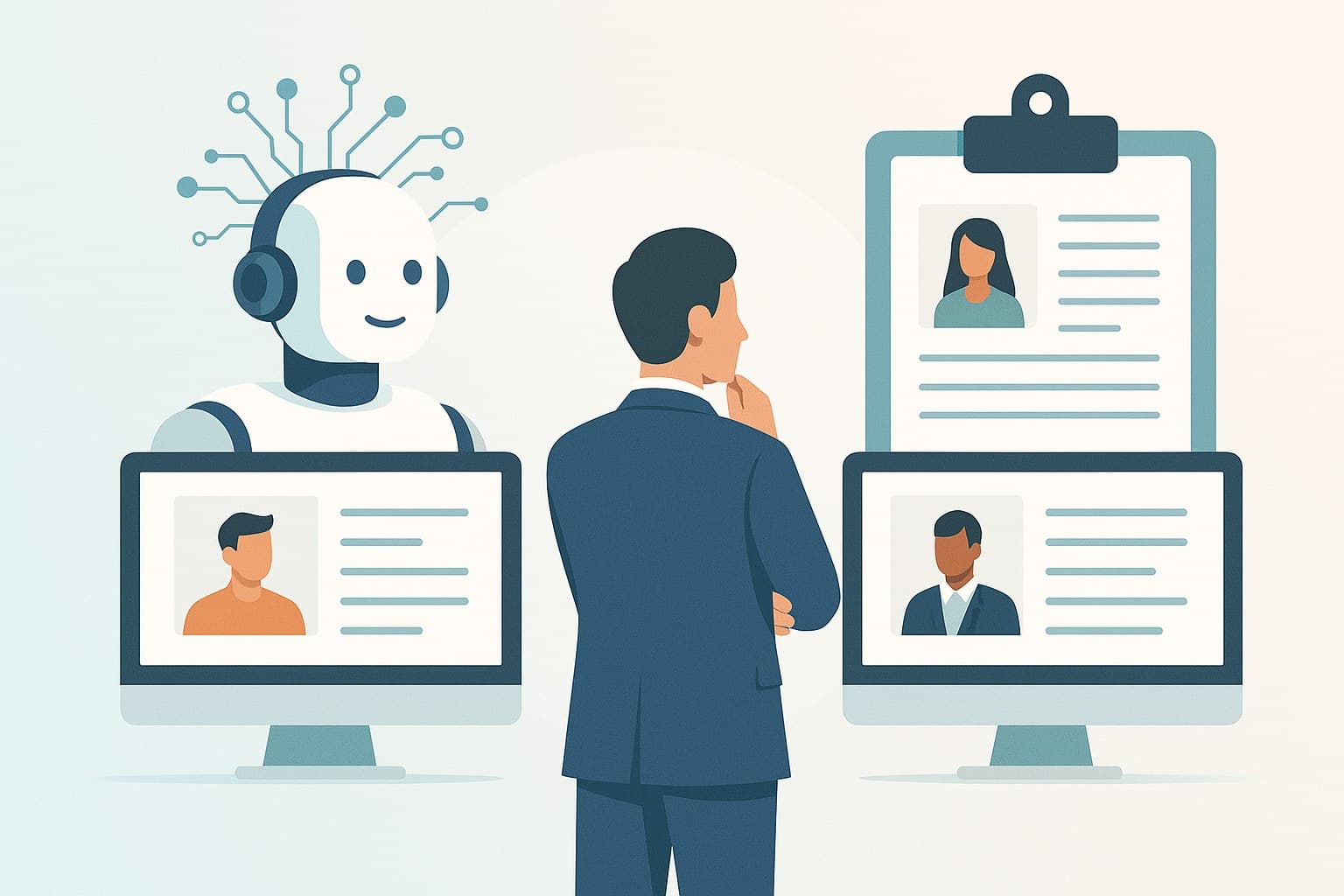
AI Recruitment vs ATS: A Comprehensive Comparison
In today's fast-paced world, recruitment processes have evolved to keep up with the changing times. Traditional methods of hiring, such as manually reviewing resumes and conducting interviews, are no longer as effective as they used to be. This is where technology comes in, specifically artificial intelligence (AI) recruitment and applicant tracking systems (ATS). These tools have revolutionized the way companies find and hire top talent. But what exactly is the difference between AI recruitment and ATS? And which one is better for your business? Let's dive into a comprehensive comparison to find out.
Understanding AI Recruitment and ATS
Before we compare AI recruitment and ATS, it's important to understand what each of these tools entails. AI recruitment, also known as intelligent hiring or cognitive recruiting, is the use of artificial intelligence and machine learning algorithms to automate and improve the recruitment process. This includes sourcing and screening candidates, scheduling interviews, and even predicting candidate success.
On the other hand, ATS is a software application that helps streamline the recruitment process by managing and organizing resumes, job applications, and candidate information. It allows recruiters to track and filter candidates, schedule interviews, and communicate with them through a centralized platform.
The Advantages of AI Recruitment Tools
AI recruitment tools go beyond application management and offer numerous advantages over traditional ATS. Here are some key insights into how AI recruitment is changing the hiring game:
-
Increased Efficiency: With AI recruitment, recruiters can automate repetitive tasks, such as resume screening, and focus on more important aspects of the hiring process. This not only saves time but also increases the efficiency of the recruitment process.
-
Improved Candidate Experience: AI recruitment tools use chatbots to engage with candidates, providing them with quick responses and updates on their application status. This enhances the candidate experience and leaves a positive impression of the company, even for those who may not be hired.
-
Elimination of Bias: Traditional recruitment processes are prone to human bias, leading to discriminatory hiring practices. AI recruitment tools are designed to eliminate bias by focusing solely on a candidate's qualifications and skills, rather than factors like age, gender, or ethnicity.
-
Predictive Analytics: AI recruitment tools use predictive analytics to analyze candidate data and predict their likelihood of success in a particular role. This helps recruiters make data-driven hiring decisions, reducing the risk of a bad hire.
-
Continuous Learning: AI recruitment tools continuously learn and improve based on data and feedback, making the recruitment process more accurate and efficient over time.
The Benefits of Traditional ATS
While AI recruitment tools offer numerous advantages, traditional ATS still has its own set of benefits. Some key insights into the benefits of traditional ATS are:
-
Cost-Effective: Traditional ATS is a more cost-effective option for small and medium-sized businesses that may not have the budget for AI recruitment tools.
-
User-Friendly: Traditional ATS is relatively easy to use and requires minimal training, making it accessible for recruiters with varying levels of technical skills.
-
Customizable: Traditional ATS can be customized to fit the specific needs of a company, allowing for a more personalized recruitment process.
-
Integration with HR Systems: Traditional ATS can be integrated with other HR systems, such as payroll and performance management, to streamline the entire employee lifecycle.
-
Compliance: Traditional ATS ensures that companies comply with hiring regulations and laws, reducing the risk of legal issues.
AI Recruitment vs ATS: Which One is Better?
The answer to this question ultimately depends on the specific needs and goals of a company. While AI recruitment offers numerous benefits, it may not be the best fit for every organization. Here are some factors to consider when deciding between AI recruitment and ATS:
-
Size of the Company: AI recruitment tools are best suited for larger companies with a high volume of applicants. Smaller companies may find traditional ATS to be a more cost-effective and manageable option.
-
Budget: AI recruitment tools can be expensive, making them a better fit for companies with a larger budget. Traditional ATS, on the other hand, is a more affordable option for companies with a limited budget.
-
Technical Skills: AI recruitment tools require a certain level of technical skills to set up and use effectively. Companies with a team of skilled recruiters may find AI recruitment tools to be a better fit, while those with less technical expertise may prefer traditional ATS.
-
Level of Automation Needed: Companies looking to fully automate their recruitment process may find AI recruitment tools to be the better option. However, those who prefer a more hands-on approach may find traditional ATS to be a better fit.
-
Specific Needs: Some companies may have specific requirements for their recruitment process, such as compliance with certain laws or integration with other HR systems. In such cases, traditional ATS may be the better option.
Conclusion: Choosing the Right Tool for Your Business
In conclusion, both AI recruitment and traditional ATS have their own set of benefits and limitations. AI recruitment offers advanced features, while traditional ATS is a more cost-effective and customizable option. When deciding which tool is better for your business, it's important to consider your specific needs and goals. For larger companies with a high volume of applicants and a larger budget, AI recruitment may be the better option. However, smaller companies with a limited budget and a more hands-on approach may find traditional ATS to be a better fit. Whichever tool you choose, it's clear that technology is changing the recruitment game, and businesses must adapt to stay ahead in the competitive job market.
Sources:
Frequently Asked Questions
Key questions often raised by business leaders and HR teams:
What is AI recruitment?
AI recruitment uses artificial intelligence to automate and improve the hiring process, including candidate sourcing and screening.
How does ATS work?
An ATS is software that helps manage resumes and job applications, allowing recruiters to track and organize candidate information.
Which is more cost-effective, AI recruitment or ATS?
Traditional ATS is generally more cost-effective for small to medium-sized businesses, while AI recruitment tools can be more expensive.
Can AI recruitment eliminate bias in hiring?
Yes, AI recruitment tools are designed to focus on qualifications and skills, helping to reduce human bias in the hiring process.
What factors should I consider when choosing between AI recruitment and ATS?
Consider your company's size, budget, technical skills, level of automation needed, and specific recruitment requirements.