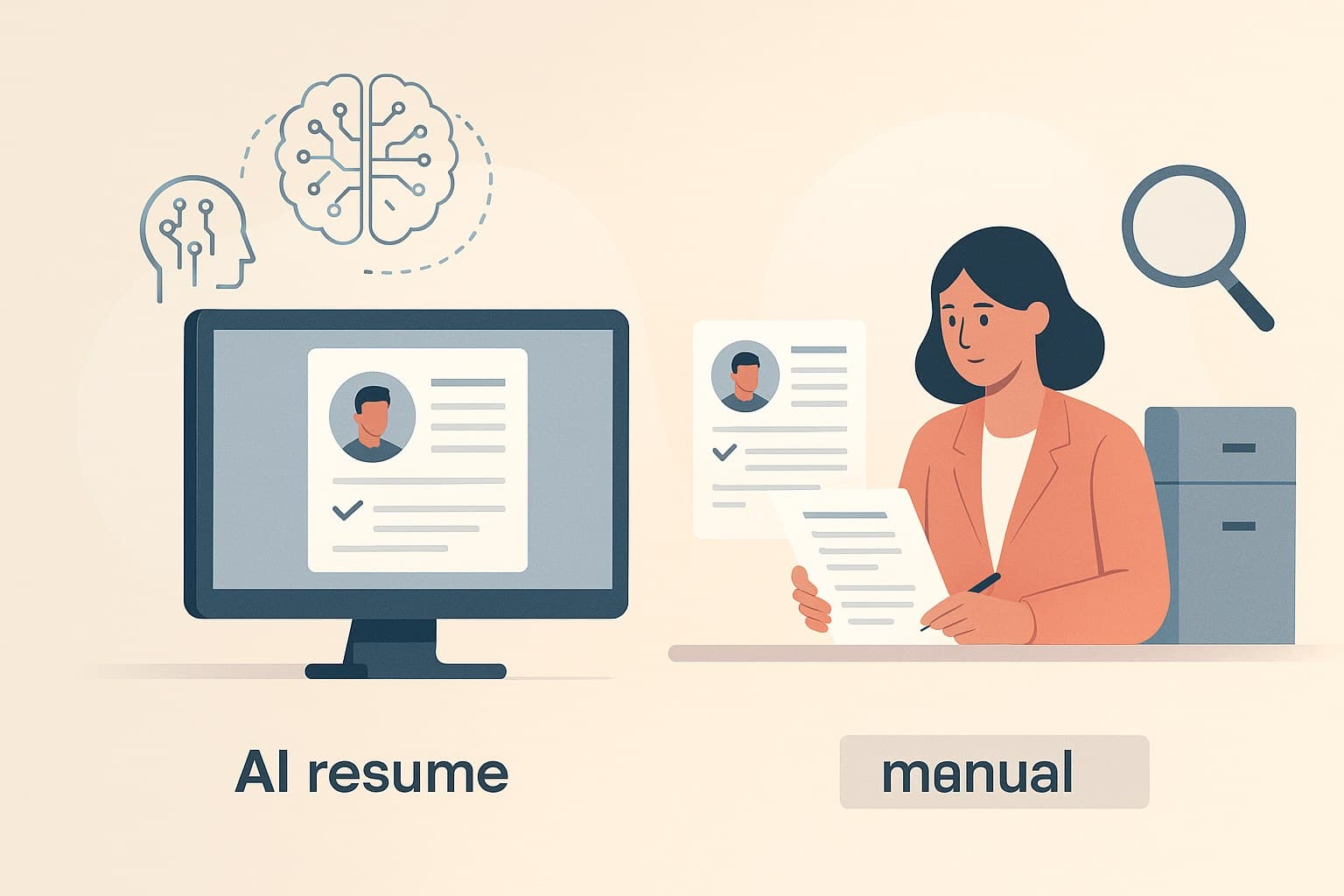
AI Resume Screening vs Manual Review: Exploring the Benefits and Drawbacks
In today's job market, it's not uncommon for companies to receive hundreds, if not thousands, of resumes for a single open position. This influx of applications can be overwhelming for hiring managers, making the resume screening process a crucial bottleneck in the recruitment process.
Traditionally, this task has been carried out manually by human recruiters, but with the advancements in technology, AI resume screening has become a popular alternative. In this article, we will delve into the world of AI resume screening and compare it to manual review, exploring their benefits and drawbacks.
The Rise of AI in Recruitment
Artificial Intelligence (AI) has been making waves in various industries, and recruitment is no exception. AI has the ability to analyze vast amounts of data quickly and efficiently, making it an attractive solution for organizations looking to streamline their recruitment process.
According to a survey by Deloitte, 33% of companies already use some form of AI in their recruitment process, with another 41% planning to implement it in the near future. This shows the increasing trend towards AI adoption in the recruitment industry.
AI Resume Screening: The Basics
AI resume screening involves using software to analyze resumes and identify the most qualified candidates for a particular job. The software uses algorithms to search for specific keywords, skills, and qualifications, as well as to rank candidates based on their relevance to the job requirements.
One of the main benefits of AI resume screening is its ability to handle large volumes of resumes in a short amount of time. This saves recruiters from having to manually sift through each resume, freeing up their time to focus on other aspects of the recruitment process.
Manual Resume Review: The Traditional Approach
Manual resume review, on the other hand, involves human recruiters reading through each resume and evaluating them based on the job requirements. This method is time-consuming and can be prone to biases. However, it also allows for a more holistic assessment of candidates, taking into account factors that may not be captured by AI, such as soft skills and cultural fit.
The Benefits of AI Resume Screening
AI resume screening offers several benefits for organizations, including:
Increased Efficiency
As mentioned earlier, AI can analyze large volumes of resumes in a fraction of the time it would take a human recruiter. This saves time and resources, allowing recruiters to focus on other critical aspects of the recruitment process.
Reduced Bias
One of the biggest challenges in recruitment is unconscious bias. AI does not have any inherent biases and evaluates candidates solely based on their qualifications, reducing the chances of discrimination in the hiring process.
Improved Candidate Experience
With AI resume screening, candidates receive a quicker response to their application, which can improve their overall experience. Additionally, AI can also provide personalized feedback, giving candidates insights into areas they need to improve on for future job applications.
The Drawbacks of AI Resume Screening
While AI resume screening offers many benefits, it is not without its drawbacks. Some of the main concerns include:
Lack of Human Touch
AI may be able to analyze data and keywords, but it cannot assess factors such as soft skills, personality, and cultural fit. This can result in qualified candidates being overlooked, leading to a less diverse workforce.
Inaccuracies
AI algorithms are only as good as the data they are trained on. If the data is biased, the AI may make incorrect judgments, leading to qualified candidates being rejected and unqualified candidates being advanced to the next stage.
High Initial Investment
Implementing AI resume screening requires a significant initial investment, which may not be feasible for smaller organizations. Additionally, the cost of maintaining and updating the software can also be a significant expense.
Best Practices for AI Resume Screening
To ensure the success of AI resume screening, it is essential to follow best practices, including:
-
Set pass-through rates: Aim to advance the top 20-30% of candidates to the next stage. If the screening process rejects 95% or more of candidates, the criteria may be too strict, and qualified candidates may be missed.
-
Continuously review and update algorithms: AI algorithms need to be regularly reviewed and updated to ensure they are not biased and are accurately reflecting the job requirements.
-
Combine AI and manual review: To get the best of both worlds, consider combining AI and manual review. AI can handle the initial screening, and then human recruiters can evaluate the shortlisted candidates for a more holistic assessment.
Conclusion: Finding the Right Balance
In conclusion, AI resume screening and manual review both have their benefits and drawbacks. While AI can significantly improve efficiency and reduce bias, it cannot replace the human touch and may lead to inaccuracies. The key is to find the right balance between the two approaches to ensure a fair and effective recruitment process.
Organizations should carefully consider their hiring needs and resources before deciding on which approach to adopt. Ultimately, the goal should be to find the most qualified and diverse candidates for the job, and whether that is achieved through AI, manual review, or a combination of both, will depend on each organization's unique circumstances.
Frequently Asked Questions
Key questions often raised by business leaders and HR teams:
What is AI resume screening?
AI resume screening uses algorithms to analyze resumes and identify qualified candidates based on specific criteria, improving efficiency in the recruitment process.
What are the benefits of using AI for resume screening?
AI offers increased efficiency, reduced bias in candidate selection, and improved candidate experience through quicker responses and personalized feedback.
What are the drawbacks of AI resume screening?
Drawbacks include the lack of human touch in assessing soft skills and cultural fit, potential inaccuracies due to biased data, and high initial investment costs.
Can AI replace human recruiters?
AI cannot completely replace human recruiters; it is best used in conjunction with manual review to ensure a comprehensive evaluation of candidates.
How can organizations effectively implement AI resume screening?
Organizations should set appropriate pass-through rates, regularly update algorithms, and combine AI screening with human evaluation for optimal results.