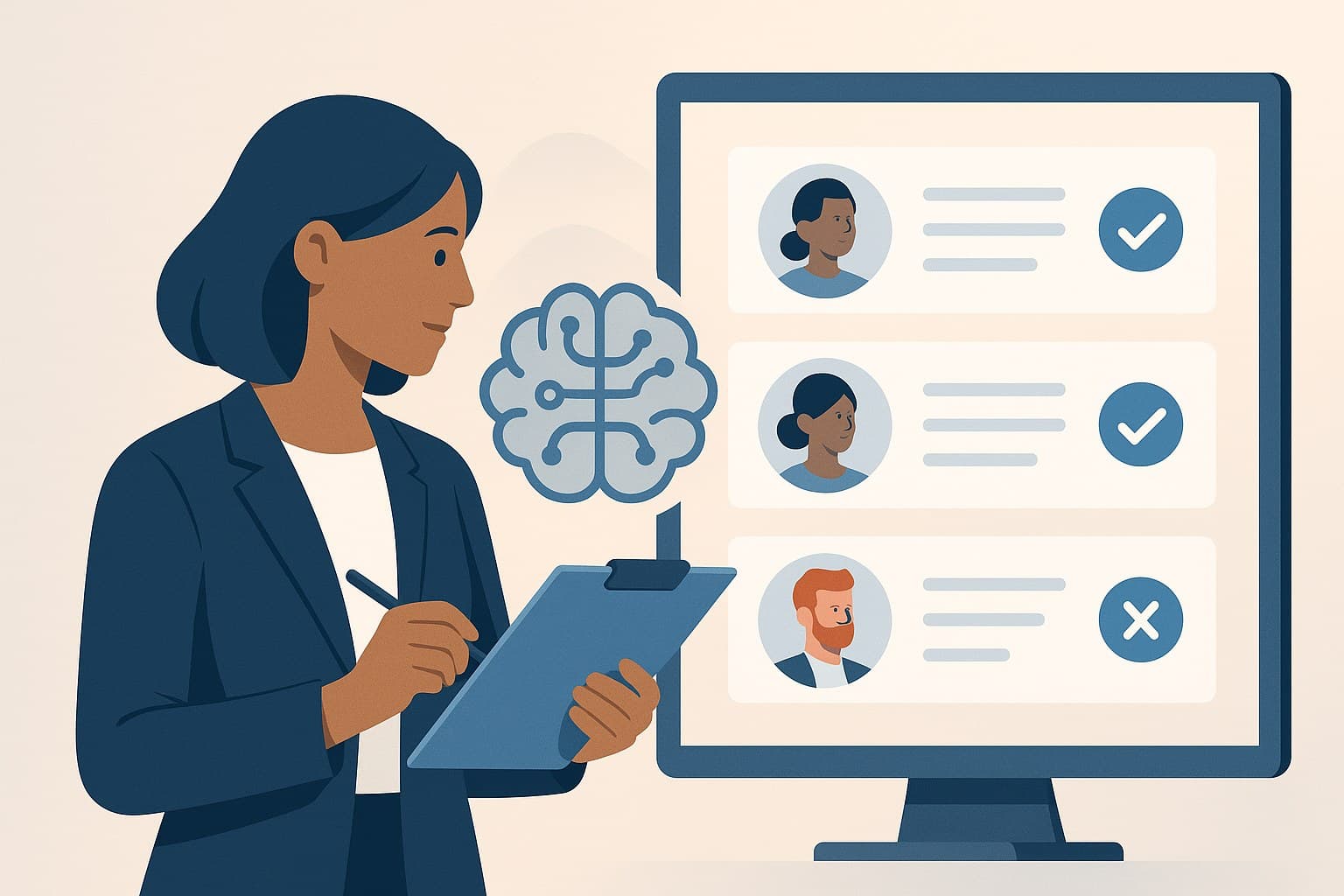
Maximizing Efficiency and Reducing Opportunity Cost: Implementing AI in Resume Triage for HR Managers and Business Decision-Makers
In the fast-paced and competitive world of business, efficiency and precision are paramount. For HR managers and business decision-makers, the recruitment process represents a significant investment of both time and resources. Traditionally, manual screening of resumes has been the norm, yet it is fraught with inefficiencies and high opportunity costs. In contrast, the adoption of AI-driven resume triage systems provides a transformative solution that enhances productivity, reduces opportunity costs, and improves the quality of hires. This article explores the benefits and implications of integrating AI into the recruitment process, specifically for the purpose of resume screening.
Understanding Opportunity Cost in Recruitment
Opportunity cost, a fundamental concept in economics, refers to the potential benefits an individual, investor, or business misses out on when choosing one alternative over another. In the context of recruitment, the opportunity cost of manual resume screening is significant. HR professionals often spend countless hours sifting through piles of resumes, a process that diverts their attention from more strategic activities such as talent development, employee engagement, and succession planning.
Moreover, the manual approach is prone to human error and bias, potentially leading to the oversight of qualified candidates and the inclusion of unsuitable ones. The time spent on these tasks represents a missed opportunity to allocate resources more effectively within the organization, ultimately affecting the bottom line.
AI-Powered Resume Triage: A Game Changer
AI-driven resume triage systems present a compelling alternative to manual screening. These systems leverage machine learning algorithms and natural language processing to quickly and accurately evaluate resumes against predefined criteria. By automating this initial stage of the recruitment process, businesses can significantly reduce the time and cost associated with hiring.
-
Efficiency and Speed: AI systems can process thousands of resumes in a fraction of the time it would take a human. This rapid processing capability allows HR teams to focus on engaging with top-tier candidates and refining the interview process. In turn, this accelerates the overall time-to-hire, a critical metric in a competitive job market.
-
Improved Candidate Matching: AI algorithms are designed to identify key skills, experiences, and qualifications that align with job requirements. This ensures that only the most suitable candidates are shortlisted, enhancing the quality of hires. Furthermore, AI systems can continuously learn and adapt, improving their accuracy over time.
-
Reduction of Human Bias: One of the significant advantages of AI in recruitment is its ability to mitigate unconscious bias. By relying on data-driven decision-making, AI systems promote diversity and inclusion, ensuring that candidates are evaluated solely on their merits and qualifications.
-
Cost-Effectiveness: While the initial investment in AI technology can be substantial, the long-term savings are considerable. Reduced time-to-hire, lower turnover rates, and improved employee performance contribute to a higher return on investment.
Challenges and Considerations
Despite the numerous advantages, integrating AI into the recruitment process is not without its challenges. Business decision-makers and HR managers must consider several factors to ensure a successful implementation:
-
Data Privacy and Security: The use of AI requires access to vast amounts of personal data, raising concerns about data privacy and security. Organizations must comply with relevant regulations and implement robust data protection measures to safeguard candidate information.
-
Integration with Existing Systems: To maximize the benefits of AI, it must be seamlessly integrated with existing HR systems and processes. This may require additional resources and training to ensure that HR teams can effectively leverage the technology.
-
Transparency and Accountability: It is crucial to maintain transparency in AI decision-making processes. HR managers should be able to explain how AI systems evaluate candidates and ensure accountability in hiring decisions.
-
Continuous Improvement: AI systems are not static; they require continuous monitoring and refinement to remain effective. Organizations must invest in the ongoing development and training of AI models to adapt to changing job market dynamics and organizational needs.
Conclusion
For HR managers and business decision-makers, the adoption of AI in resume triage represents a strategic move towards maximizing efficiency and reducing opportunity costs in recruitment. By automating the initial stages of the hiring process, organizations can allocate their resources more effectively, improve the quality of hires, and foster a more diverse and inclusive workforce.
However, the transition to AI-driven recruitment requires careful planning and consideration. By addressing challenges related to data privacy, system integration, and transparency, businesses can harness the full potential of AI technologies. Ultimately, the successful implementation of AI in resume triage will empower organizations to remain competitive in an ever-evolving job market, ensuring that they attract and retain the best talent for their needs.
Frequently Asked Questions
Key questions often raised by business leaders and HR teams:
What is AI resume triage?
AI resume triage refers to the use of artificial intelligence to automate the screening of resumes, improving efficiency and candidate matching.
How does AI reduce opportunity costs in recruitment?
By automating resume screening, AI frees up HR professionals to focus on strategic tasks, reducing the time and resources spent on manual processes.
What are the challenges of implementing AI in recruitment?
Challenges include data privacy concerns, integration with existing systems, and ensuring transparency in AI decision-making.
Can AI help eliminate bias in hiring?
Yes, AI systems can mitigate unconscious bias by evaluating candidates based on data-driven criteria rather than personal biases.
What should organizations consider before adopting AI for recruitment?
Organizations should consider data privacy, system integration, transparency, and the need for continuous improvement of AI models.