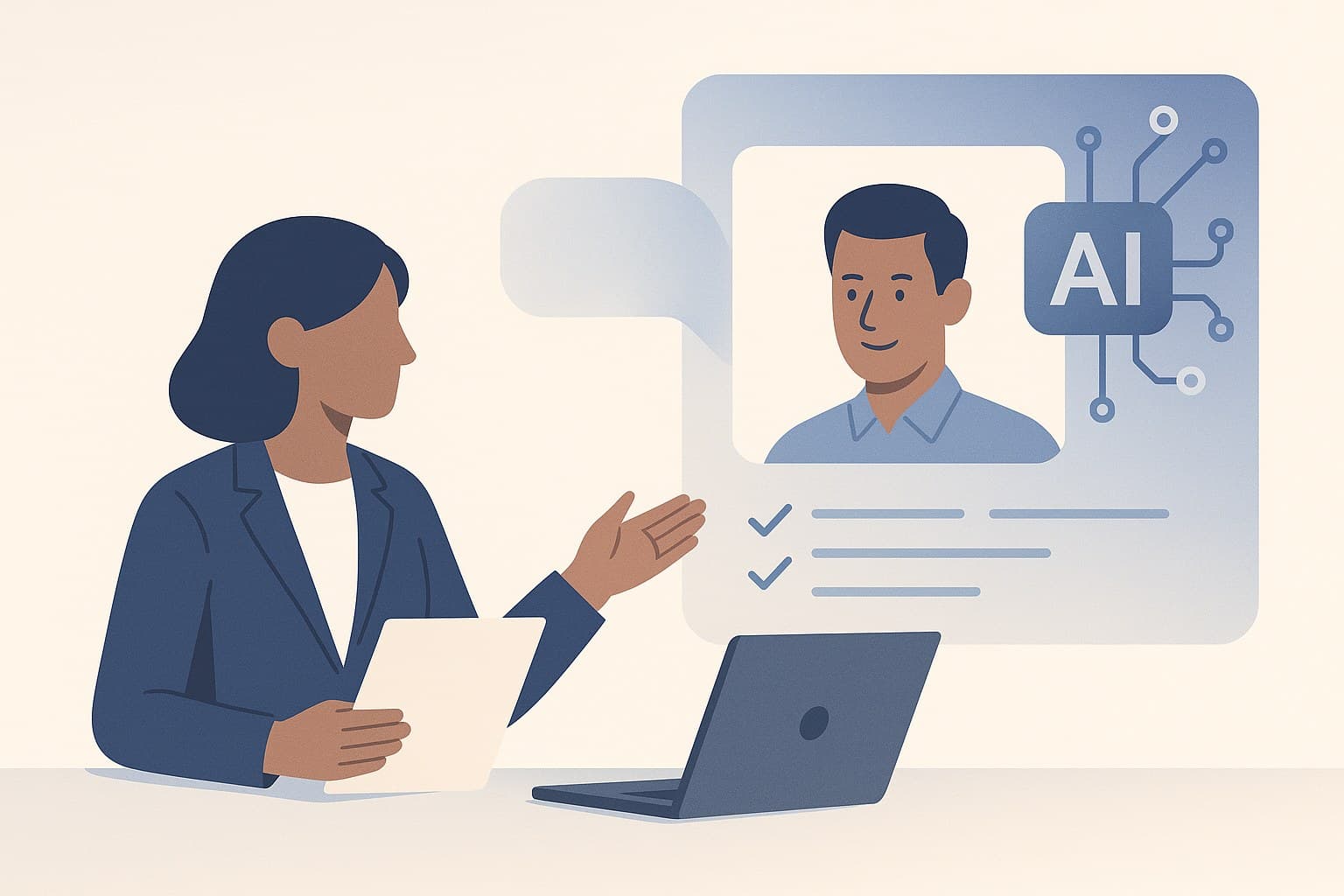
The Power of AI in Structured Interviews: Enhancing Hiring Processes
In today's competitive job market, organizations are constantly seeking ways to improve their hiring processes and find the best candidates for their open positions. One method that has gained traction in recent years is the use of structured interviews with the help of artificial intelligence (AI). These AI-powered structured interviews have revolutionized the traditional interview process, providing a more consistent and fair approach to evaluating candidates. In this article, we will explore the concept of structured interviews AI, its benefits, and how it is shaping the future of hiring.
Understanding Structured Interviews AI
Structured interviews AI is a hiring method that uses a consistent framework and natural language processing to ask every candidate the same questions in the same order. This approach eliminates the risk of interviewer bias, ensuring that each candidate is evaluated based on the same criteria. This is in contrast to unstructured interviews, where the interviewer has more freedom to ask questions and may be influenced by personal biases. In structured interviews AI, the questions are designed to assess specific competencies and skills required for the job, making it a more objective and efficient way of evaluating candidates.
According to a study by the Harvard Business Review, structured interviews are twice as effective as unstructured interviews in predicting job performance. This is due to the fact that AI-powered structured interviews provide a consistent and standardized process, reducing the potential for human error and subjectivity.
The Benefits of Structured Interviews AI
One of the key benefits of using AI in structured interviews is the elimination of bias. Research has shown that unstructured interviews tend to favor candidates who are similar to the interviewer in terms of background, personality, and interests. This can lead to a lack of diversity in the workplace and hinder the recruitment of top talent. With structured interviews AI, the focus is solely on evaluating the candidate's skills and competencies, making the process fairer for all candidates.
Moreover, structured interviews AI has also been found to save time and resources for organizations. As the questions are pre-determined and asked in the same order for each candidate, the process becomes more efficient and streamlined. This also allows for better comparison of candidate responses and helps in identifying top performers.
In addition, AI-powered structured interviews can provide valuable insights and data to organizations. By analyzing candidate responses, AI can identify patterns and trends that can help in making informed hiring decisions. This data can also be used to improve the interview process and identify areas for improvement.
How AI Supports Structured Interviews
AI plays a critical role in supporting structured interviews by ensuring consistency and providing guidance to interviewers. With the help of natural language processing, AI can analyze candidate responses and provide real-time feedback to interviewers. This can help interviewers stay on track and ask follow-up questions based on the candidate's response.
Moreover, AI can also assist in the design of interview questions. By analyzing job descriptions and competencies required for the role, AI can generate a pool of relevant questions to be used in the structured interview process. This not only saves time for the interviewer but also ensures that the questions are tailored to the specific job requirements.
The Future of Hiring: AI and Structured Interviews
As technology continues to advance, we can expect to see a greater integration of AI in the hiring process. With the use of AI-powered chatbots, organizations can conduct structured interviews remotely, making the process more convenient and accessible for candidates. This can also help in reducing the time-to-hire and improving the overall candidate experience.
Moreover, AI can also assist in the post-interview stage by analyzing candidate responses and providing recommendations for the most suitable candidates. This can help in reducing the burden on hiring managers and improving the efficiency of the hiring process.
Conclusion: Embracing AI in Structured Interviews
In conclusion, structured interviews AI offers a more objective, efficient, and data-driven approach to hiring. By eliminating bias and providing valuable insights, AI can help organizations make better hiring decisions and build diverse and high-performing teams. As technology continues to evolve, we can expect to see a greater integration of AI in the hiring process, making it an essential tool for organizations looking to stay competitive in today's job market. So, it is time for organizations to embrace the power of AI in structured interviews and elevate their hiring processes.
Frequently Asked Questions
Key questions often raised by business leaders and HR teams:
What are structured interviews?
Structured interviews are a standardized method of interviewing where all candidates are asked the same questions in the same order.
How does AI improve structured interviews?
AI enhances structured interviews by eliminating bias, ensuring consistency, and providing valuable insights through data analysis.
What are the benefits of using AI in hiring?
The benefits include reduced bias, increased efficiency, and improved candidate evaluation through data-driven insights.
Can AI conduct interviews remotely?
Yes, AI-powered chatbots can facilitate remote structured interviews, making the process more accessible for candidates.
Why are structured interviews more effective?
Structured interviews are proven to be twice as effective as unstructured ones in predicting job performance due to their standardized approach.