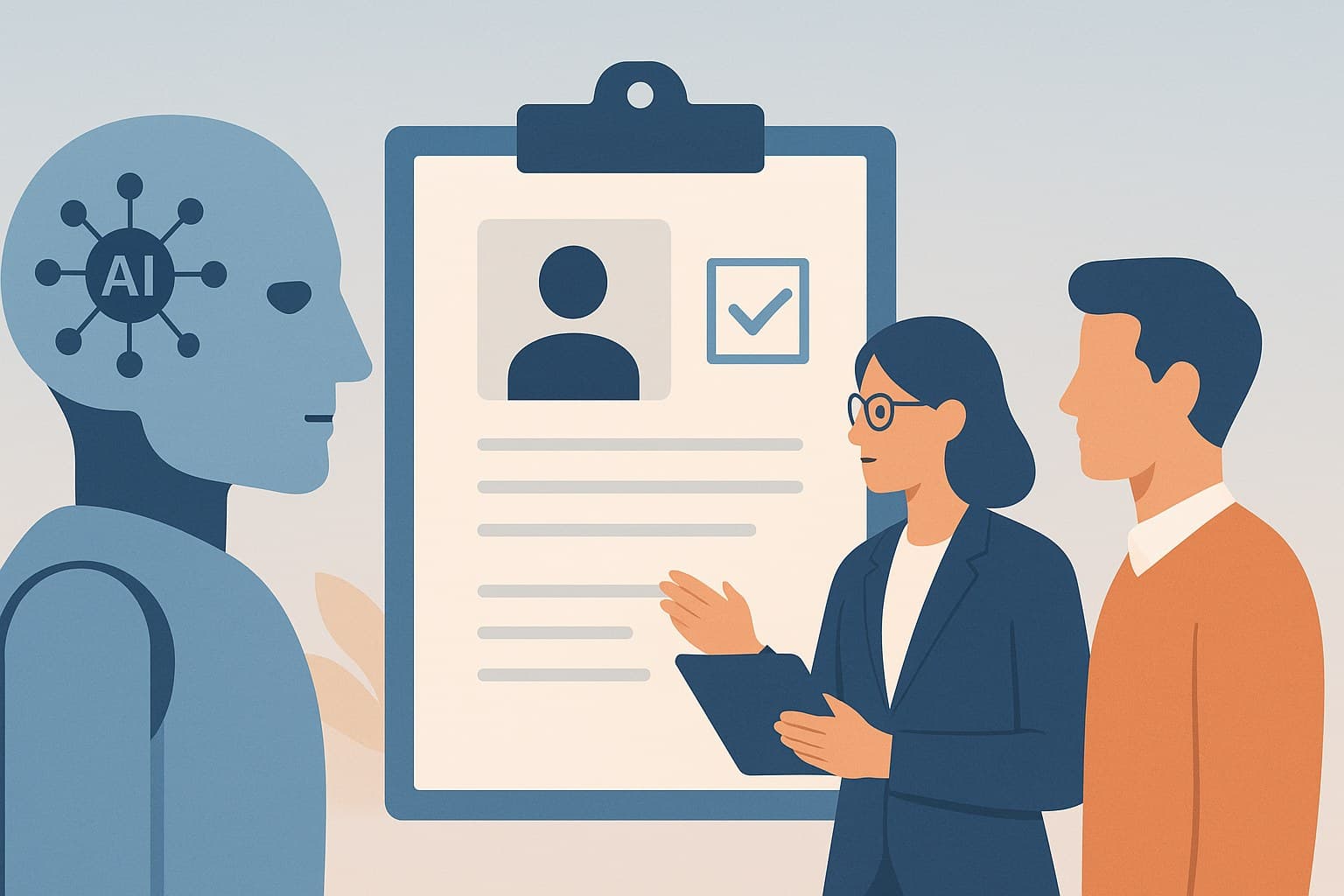
Harnessing the Power of Structured Interviews with AI: A Guide for Business Decision-Makers and HR Leaders
In today's rapidly changing business landscape, attracting and retaining top talent is a priority for most organizations. Companies are constantly seeking ways to streamline their hiring processes while ensuring they select the best candidates for their teams. One promising solution lies in the combination of structured interviews and artificial intelligence (AI). This article delves into how structured interviews, enhanced by AI, can revolutionize your recruitment strategy, offering insights specifically tailored for business decision-makers and HR leaders.
Understanding Structured Interviews
Structured interviews are a systematic method of interviewing where each candidate is asked the same set of predetermined questions. This approach contrasts with unstructured interviews, where questions may vary between candidates. The primary advantages of structured interviews include increased consistency, fairness, and reliability in evaluating candidates. By standardizing the questions, employers can more easily compare candidates and reduce biases that may arise from subjective judgments.
The Role of AI in Structured Interviews
AI is transforming various aspects of the recruitment process, and structured interviews are no exception. AI can enhance structured interviews in several key ways:
-
Automating Administrative Tasks: AI can automate the scheduling of interviews, send reminders, and even conduct preliminary screenings. This reduces the administrative burden on HR teams, allowing them to focus on more strategic activities.
-
Data Analysis and Insights: AI can analyze responses to structured interview questions more efficiently than a human reviewer. By leveraging natural language processing (NLP) and machine learning algorithms, AI can identify patterns and insights that might be missed by human interviewers.
-
Reducing Bias: One of the most significant benefits of AI in structured interviews is its potential to reduce human biases. AI systems can be designed to focus solely on the content of the candidate's answers, ignoring irrelevant factors such as accent, gender, or appearance.
-
Enhanced Candidate Experience: AI-enhanced structured interviews can provide feedback to candidates more quickly. This improves the overall candidate experience, which is crucial in maintaining a positive employer brand.
Implementing AI-Enhanced Structured Interviews: Best Practices
For HR leaders and business decision-makers looking to implement AI-enhanced structured interviews, the following best practices can serve as a guide:
-
Define Clear Objectives: Before integrating AI into your interview process, clearly define what you aim to achieve. This could include reducing time-to-hire, improving candidate quality, or enhancing diversity.
-
Select the Right AI Tools: Choose AI tools that align with your organization's needs and values. Consider factors such as scalability, ease of integration with existing systems, and the ability to customize interview questions.
-
Train Your AI System: Ensure that your AI system is trained with a diverse set of data to minimize the risk of bias. Regularly update the system with new data to keep it relevant and accurate.
-
Ensure Transparency: Maintain transparency with candidates about how AI is used in the interview process. This includes explaining how AI evaluates their responses and how it influences hiring decisions.
-
Monitor and Evaluate: Continuously monitor the effectiveness of AI-enhanced structured interviews. Gather feedback from both candidates and hiring teams to identify areas for improvement.
Challenges and Considerations
Despite the numerous advantages, there are challenges associated with using AI in structured interviews. Data privacy is a significant concern, as candidates' responses and personal information must be protected. Additionally, while AI can reduce certain biases, it is not immune to perpetuating existing biases present in the training data. Therefore, ongoing evaluation and adjustment of AI systems are crucial.
The Future of Recruitment
As AI technology continues to evolve, its integration with structured interviews will likely become more sophisticated. Future advancements may include real-time emotion analysis, enhanced predictive analytics, and even virtual reality-based interviews. These innovations will further enhance the ability of organizations to make informed hiring decisions.
Conclusion
For business decision-makers and HR leaders, the integration of AI into structured interviews offers a compelling opportunity to enhance the recruitment process. By leveraging AI, organizations can improve efficiency, reduce biases, and ultimately select the best candidates for their teams. As with any technological advancement, careful implementation and ongoing evaluation are key to realizing the full potential of AI-enhanced structured interviews. Embracing this approach can position your organization at the forefront of modern recruitment practices, ensuring you attract and retain the talent necessary for success in the competitive business world.
Frequently Asked Questions
Key questions often raised by business leaders and HR teams:
What are structured interviews?
Structured interviews are a systematic interviewing method where each candidate answers the same set of predetermined questions, ensuring consistency and fairness.
How does AI improve structured interviews?
AI enhances structured interviews by automating tasks, analyzing responses for insights, reducing biases, and improving the candidate experience.
What best practices should be followed for AI-enhanced interviews?
Best practices include defining clear objectives, selecting the right AI tools, training the AI system with diverse data, ensuring transparency, and monitoring effectiveness.
What challenges are associated with AI in interviews?
Challenges include data privacy concerns and the potential for AI to perpetuate existing biases if not properly managed.
What is the future of AI in recruitment?
The future may include advancements like real-time emotion analysis, enhanced predictive analytics, and virtual reality-based interviews to further improve hiring decisions.