
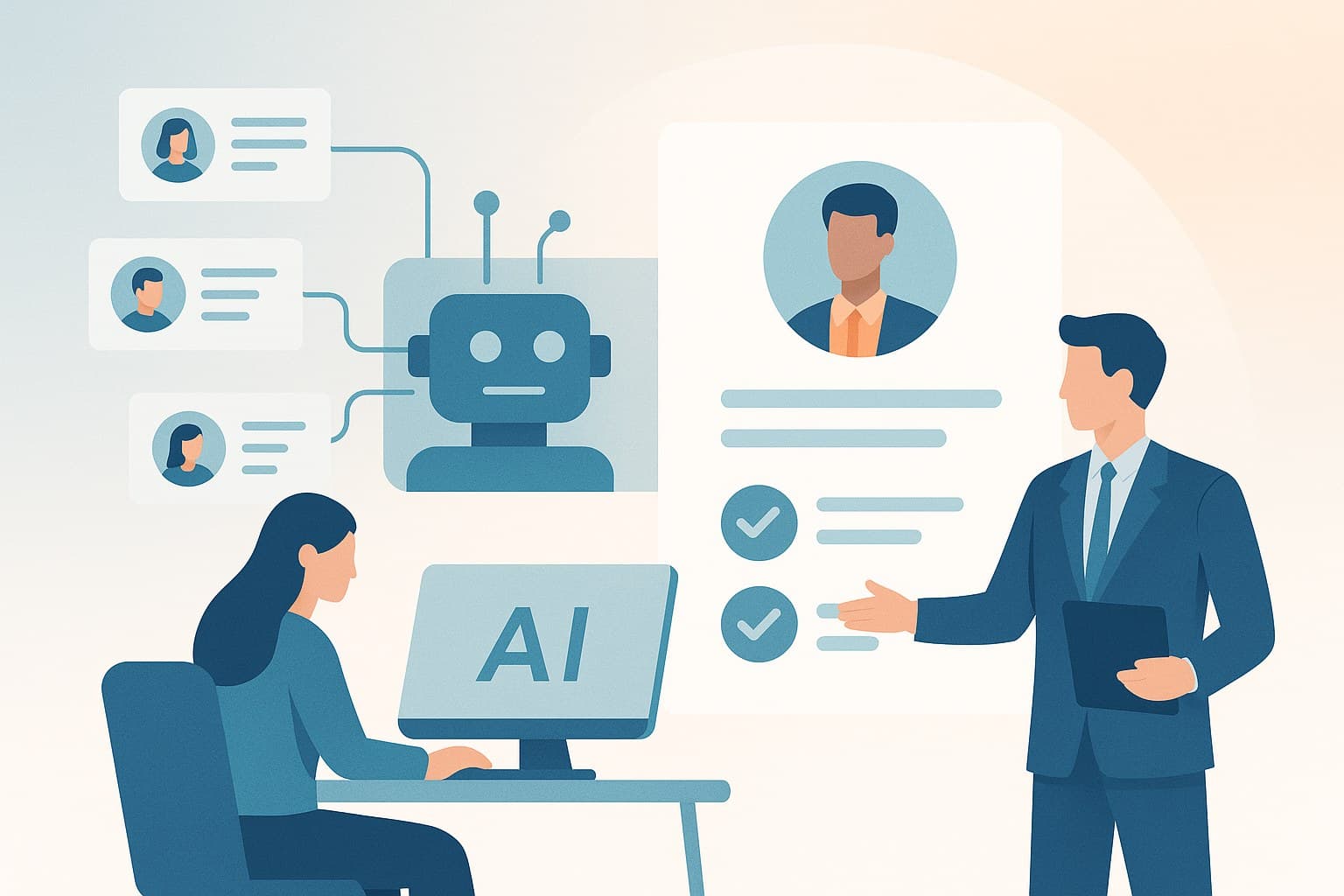
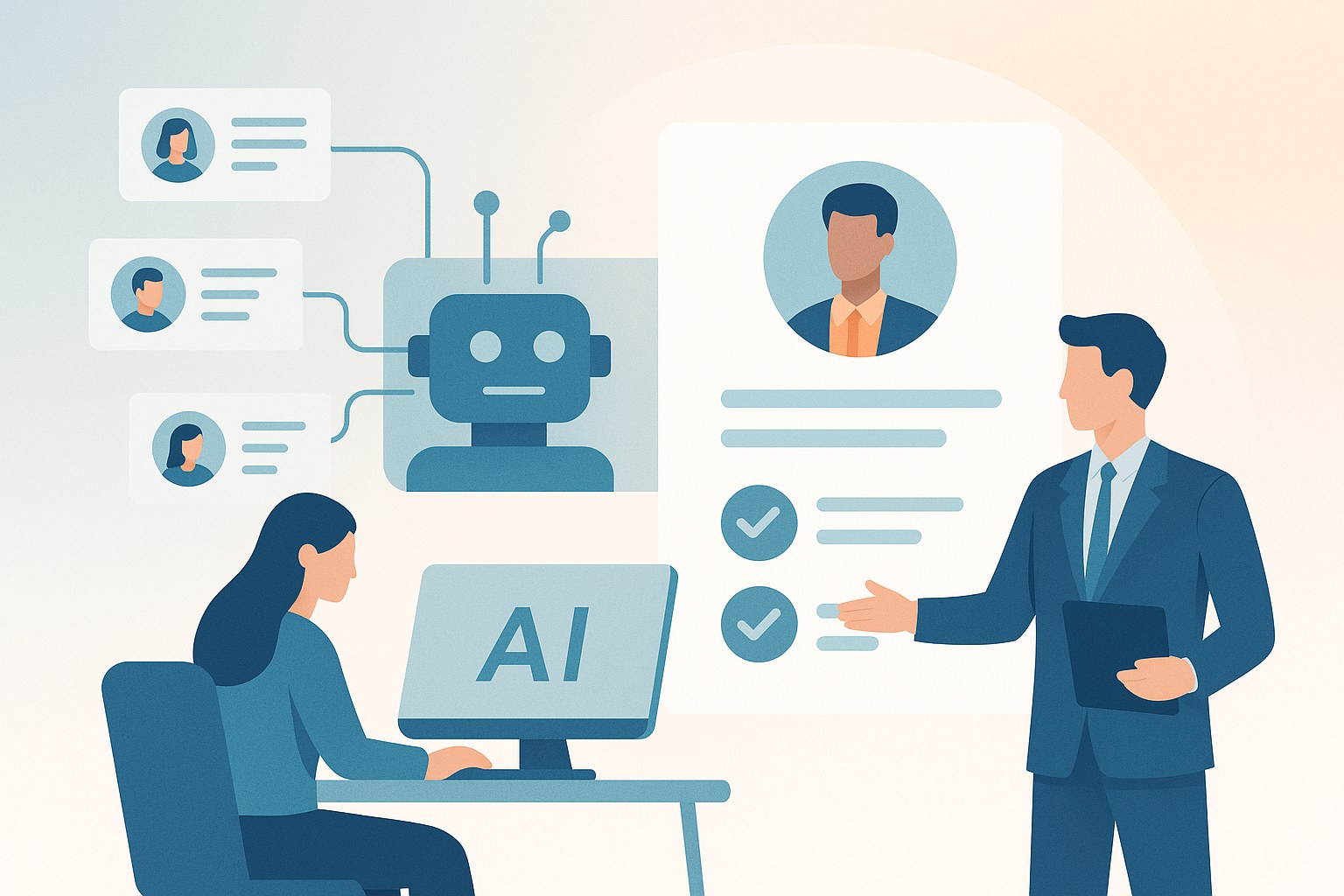
A high-volume recruiting team can review thousands of resumes, move candidates through first-round interviews, and produce a shortlist in days. The harder question is whether it can explain how those decisions were made. AI Verify recruitment software addresses that gap by making governance, testing, and documented evidence part of the hiring workflow rather than an afterthought.
For enterprise talent leaders, this is not a theoretical compliance exercise. AI can reduce repetitive screening work, standardize early-stage evaluation, and give hiring managers better evidence before they invest time in live interviews. But a fast recommendation is not enough when a candidate, executive, regulator, or internal audit team asks what signals influenced a decision and whether the process was applied consistently.
What AI Verify Recruitment Software Means in Practice
AI Verify is a testing framework and toolkit developed in Singapore to help organizations assess AI systems against recognized governance principles. It is not a blanket endorsement that an AI system is fair in every hiring context. That distinction matters. Hiring outcomes depend on the role, labor market, data, workflow design, human review, and the way an organization acts on AI-generated outputs.
In recruitment, an AI Verify-aligned approach should help teams evaluate whether an AI-enabled process is reliable, explainable, transparent, fair, secure, and accountable. The software itself may support parts of that assessment, but the operating model around it matters just as much.
A credible deployment does not treat a candidate score as a final hiring decision. It establishes the job-related criteria behind the score, gives reviewers access to underlying evidence, records who reviewed the recommendation, and preserves an auditable record of the decision. That is the difference between adding AI to screening and operating an enterprise recruitment system.
Validation is not the same as certification
Procurement teams should be precise with vendor claims. Participation in or validation through an AI Verify program is not the same as a government certification of every model output, every position, or every customer implementation. It can be meaningful evidence that a provider has subjected its system to structured testing and governance expectations. It should also prompt deeper questions about scope, frequency, documentation, and controls.
Ask what was tested, under what conditions, and how the provider handles changes to models, scoring logic, data sources, or candidate workflows. A point-in-time assessment is valuable, but recruitment systems evolve. Governance needs to evolve with them.
The Controls Enterprise Hiring Teams Need
The strongest AI recruitment platforms make controls visible in the daily work of recruiters and hiring managers. Governance should not live in a policy document that nobody sees during a requisition review.
Start with job relevance. Resume analysis and interview scoring should be mapped to defined competencies, qualifications, and role requirements. If a system ranks candidates, reviewers should be able to see why: relevant experience, demonstrated skills, role-specific evidence, structured interview responses, or other approved criteria. Vague labels such as “strong fit” are insufficient when there is no supporting evidence.
Next, assess consistency. Structured asynchronous video interviews can give every candidate the same role-relevant questions and response window, reducing variation introduced by an unstructured first call. Yet consistency does not mean rigidity. Teams need accommodations, alternative assessment paths where appropriate, and a clear process for handling technical barriers or candidate concerns.
Human accountability must also be explicit. AI can prioritize a queue or summarize evidence, but assigned decision-makers should retain authority over advancement, rejection, and final selection. The platform should show who made a decision, when it was made, what evidence they reviewed, and whether any exception was applied. This protects candidates and gives recruiting operations teams a practical way to investigate anomalies.
Finally, data governance cannot be separated from hiring governance. Enterprise teams need clear controls over candidate data, retention, access permissions, reporting, and cross-border use. A multilingual recruiting operation may need translated reports for manager collaboration, but translation should not create uncontrolled copies of sensitive candidate information.
Where Governance Changes the Recruitment Workflow
The value of verified AI is clearest when it is embedded across the funnel. Consider the first stage: a recruiter is managing 800 applicants for a technical role across three markets. Manual resume review creates delays, and managers receive inconsistent shortlists because each recruiter interprets the requirements differently.
An AI-enabled workflow can analyze resumes against approved criteria, organize candidates by job-relevant evidence, and surface a prioritized group for review. The recruiter does not need to accept the ranking blindly. They need a clear view of the rationale, the ability to review exceptions, and a record of the final disposition. This can cut first-round screening effort while keeping the recruiter in control.
The next stage is often where inconsistency becomes more costly. Live first interviews vary by interviewer, scheduling adds days, and notes are frequently too thin for managers to compare candidates confidently. Structured video interviews create a common assessment experience and capture candidate responses in a format that can be reviewed asynchronously.
When AI assists with scoring, the result should be more than a number. A useful candidate report connects competency ratings to response evidence, identifies areas that require manager attention, and separates observed signals from interpretation. That gives hiring managers a stronger basis for deciding who should move to a live interview and what to probe next.
MIND Interview applies this model through AI resume analysis, structured video interviews, automated scoring, competency evidence, personality-trait reporting, translated reports, and collaborative review in one auditable workspace. The objective is operationally direct: reduce screening burden, surface top-fit talent earlier, and preserve decision evidence across the hiring cycle.
Questions to Ask Before You Buy
Enterprise buyers should evaluate AI Verify recruitment software as both technology and operating infrastructure. A polished dashboard is not proof of a controlled decision process.
First, ask whether the vendor can explain the inputs, outputs, and limitations of each AI feature. A resume-ranking model, interview-assessment model, and candidate-summary tool may carry different risks and require different controls. The answer should be specific to the workflow, not a generic statement about responsible AI.
Second, ask how fairness is tested and monitored. There is no universal fairness metric that resolves every recruitment scenario. Relevant analysis may differ by geography, role family, applicant volume, legally permitted demographic data, and local requirements. A serious provider should explain its methodology, acknowledge limitations, and describe what happens when testing identifies a concern.
Third, examine the audit trail. Can the organization retrieve the criteria used for a requisition, candidate evidence, scoring outputs, reviewer comments, decision status, and timestamps? Can it distinguish an automated recommendation from a human decision? If the answer is no, the team may save time at the front of the funnel only to create risk when a decision is challenged.
Fourth, test the candidate experience. Candidates should understand the assessment process at an appropriate level, know what they are being asked to complete, and have access to support or accommodation pathways. Efficiency that feels opaque or impersonal can damage employer brand, especially for hard-to-fill roles.
The Trade-Off: More Control Requires Better Design
Governance-led recruitment AI requires upfront discipline. Teams must define competencies, align stakeholders on evaluation standards, configure approval paths, and train hiring managers to interpret evidence. For an organization accustomed to informal interviews and manager-led judgment calls, this can feel slower at the beginning.
The trade-off is worthwhile when scale, speed, and scrutiny are all high. A loosely configured system may produce quick rankings, but it can also amplify inconsistent requirements, unclear feedback, and undocumented exceptions. A controlled workflow makes the process repeatable across recruiters, regions, and hiring managers while giving leaders visibility into where decisions are slowing down.
Not every role needs the same level of automation. Executive search, highly specialized research roles, or low-volume senior hiring may require more bespoke assessment and recruiter judgment. High-volume professional hiring, campus recruiting, graduate admissions, and distributed first-round screening often benefit most from structured, evidence-based automation. The right design follows the hiring risk and workflow, not a vendor’s feature list.
Make Evidence Part of Hiring Speed
The best AI recruitment systems do not ask leaders to choose between faster hiring and defensible hiring. They treat evidence as the mechanism that enables both. When recruiters can focus on exceptions instead of repetitive review, managers can compare candidates against the same competencies, and every decision is recorded in context, the hiring process becomes easier to operate and easier to trust.
The practical goal is not to automate judgment away. It is to give human decision-makers a clearer, more consistent record of what they are judging before the next strong candidate accepts another offer.