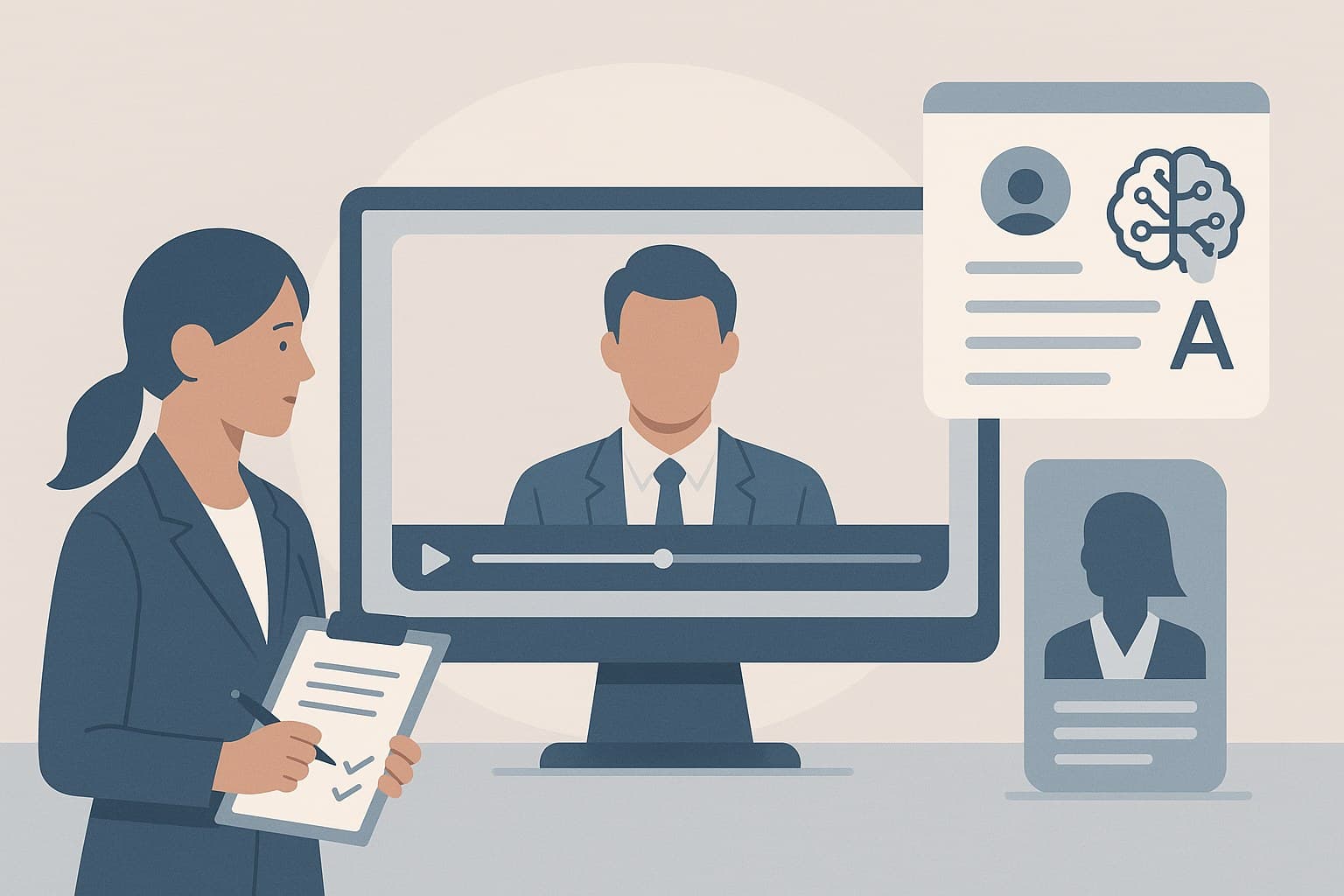
Leveraging AI Video Interviews: A Case Study for HR Decision Makers
In the rapidly evolving landscape of human resources, technological advancements are continuously reshaping how companies approach recruitment and talent management. Among these innovations, AI-powered video interviews have emerged as a powerful tool. This article delves into a comprehensive case study to illustrate how AI video interviews can enhance the recruitment process, providing valuable insights for HR decision-makers and corporate leaders.
The Case Study: Tech Innovators Inc.
Tech Innovators Inc., a mid-sized technology firm, was experiencing significant challenges in their recruitment process. With a high volume of applications and a need for rapid scaling, the traditional hiring methods were proving inefficient. The HR team, led by Sarah Thompson, was tasked with finding a solution that could streamline the process while maintaining the quality of hires.
Identifying the Challenges
-
Volume and Efficiency: The HR department was inundated with applications, leading to bottlenecks and delays in the hiring process. This inefficiency often resulted in losing top talent to competitors.
-
Bias in Hiring: Despite efforts to conduct fair interviews, unconscious bias was a concern. The company needed a system that could minimize human biases and promote diversity.
-
Candidate Experience: Lengthy recruitment processes were affecting candidate satisfaction. The company wanted to offer a seamless and engaging experience to attract the best talent.
Implementing AI Video Interviews
After thorough research, Tech Innovators Inc. decided to implement an AI-powered video interview platform. This technology allowed candidates to record their responses to pre-set interview questions at their convenience. The AI system then analyzed these responses based on various parameters, including verbal and non-verbal cues, to provide an objective assessment.
Outcomes and Benefits
-
Increased Efficiency: The AI video interview platform significantly reduced the time spent on initial screening. By automating the evaluation of recorded interviews, the HR team could focus on candidates who demonstrated the most potential, thus accelerating the hiring process.
-
Reduced Bias: The AI system was programmed to focus on job-relevant criteria, minimizing the influence of unconscious bias. This led to a more diverse pool of candidates progressing to the final stages of recruitment.
-
Enhanced Candidate Experience: Candidates appreciated the flexibility of recording their interviews at a convenient time, leading to higher satisfaction rates. The streamlined process also meant quicker feedback, further improving the candidate experience.
-
Data-Driven Insights: The AI tool provided valuable data and analytics, offering insights into the qualities of successful candidates. This allowed the HR team to refine their recruitment strategies continuously.
Challenges and Considerations
While the implementation of AI video interviews brought significant benefits, it also posed certain challenges:
-
Technical Barriers: Some candidates faced technical difficulties, such as connectivity issues or lack of familiarity with the platform. Providing clear instructions and technical support was essential to ensure a smooth experience.
-
Privacy Concerns: Candidates expressed concerns about data privacy and how their video data would be used. Tech Innovators Inc. had to ensure transparency and compliance with data protection regulations.
-
AI Limitations: Although the AI system was sophisticated, it was not infallible. The HR team needed to balance AI assessments with human judgment to ensure fair evaluations.
Conclusion
The case of Tech Innovators Inc. highlights the transformative potential of AI video interviews in modern recruitment. For HR decision-makers, this technology offers a pathway to increased efficiency, reduced bias, and improved candidate experiences. However, successful implementation requires careful consideration of technical, ethical, and operational aspects.
As AI continues to advance, its role in HR will undoubtedly expand, offering new opportunities for innovation in recruitment and beyond. For companies willing to embrace these changes, AI video interviews represent not just a tool, but a strategic advantage in the quest for top talent.
By learning from the experiences of early adopters like Tech Innovators Inc., HR leaders can better navigate the complexities of AI integration, ensuring that their organizations remain competitive in an increasingly digital world.
Frequently Asked Questions
Key questions often raised by business leaders and HR teams:
What are AI video interviews?
AI video interviews are a recruitment tool that allows candidates to record their responses to interview questions, which are then analyzed by AI for evaluation.
How do AI video interviews reduce bias?
AI video interviews focus on job-relevant criteria, minimizing the influence of unconscious biases that can occur during traditional interviews.
What are the benefits of using AI in recruitment?
Benefits include increased efficiency in screening candidates, improved candidate experience, and data-driven insights for refining recruitment strategies.
What challenges might arise with AI video interviews?
Challenges include technical barriers for candidates, privacy concerns regarding data use, and the need to balance AI assessments with human judgment.
How can companies ensure a smooth AI interview process?
Companies should provide clear instructions, technical support, and ensure transparency regarding data privacy to facilitate a positive candidate experience.