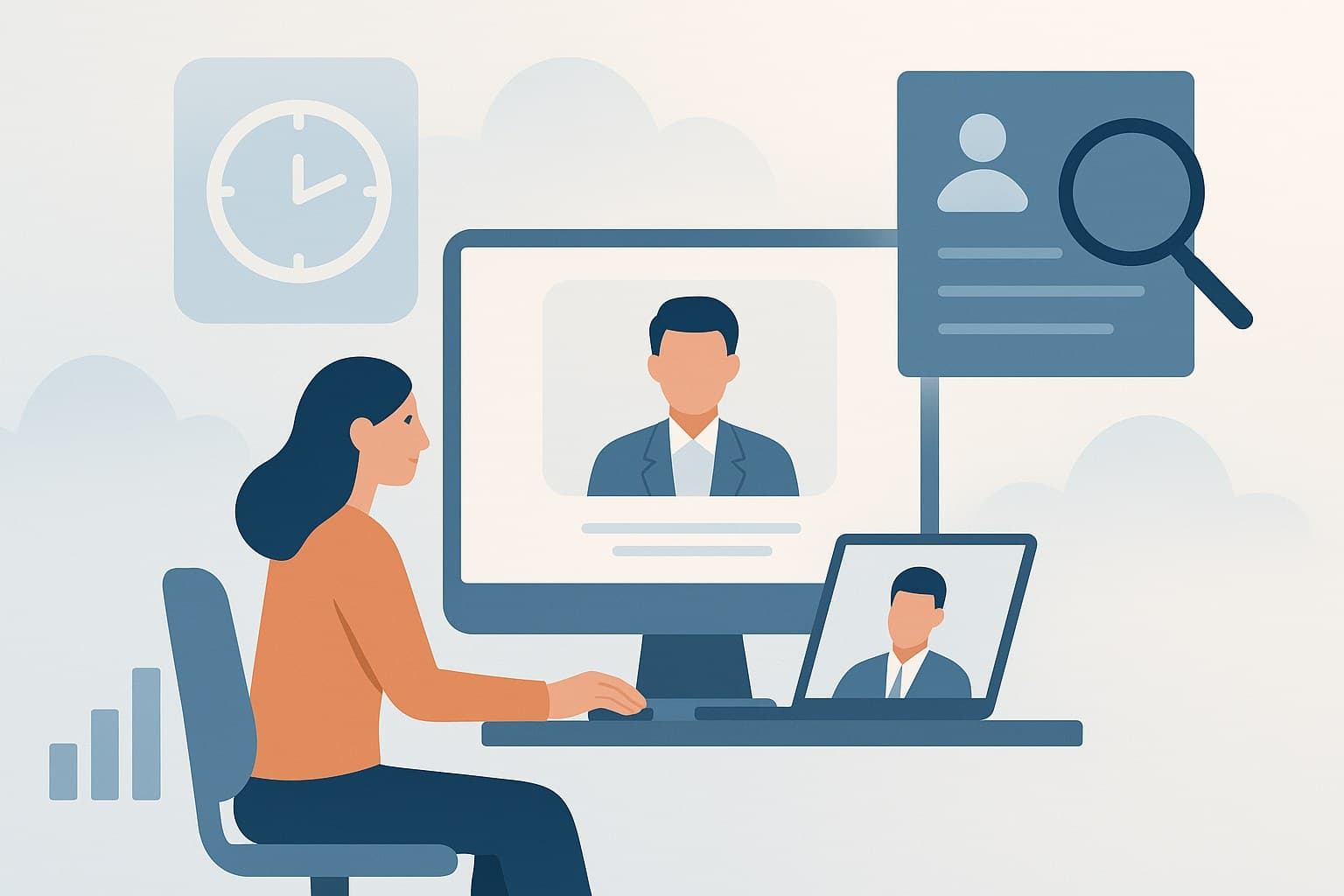
#AI Assisted vs Human Only Interviews Decision Matrix: How to Utilize AI in the Hiring Process
The advancements in Artificial Intelligence (AI) have revolutionized the way businesses operate, from streamlining processes to improving decision-making. One area where AI has made a significant impact is in the hiring process. With the rise of AI-assisted interviews, the question arises: should companies rely solely on AI or stick to traditional human-only interviews? In this article, we will explore the decision matrix for AI-assisted vs human-only interviews and how companies can effectively incorporate AI into their hiring process.
Understanding the Decision Matrix
In today's fast-paced business landscape, leaders are constantly looking for ways to optimize their processes and improve efficiency. This has led to the development of the Human-AI Decision Intelligence Matrix, a decision framework that transforms the way leaders work with AI. The matrix consists of two zones: the green zone and the yellow zone.
The green zone represents tasks that are suitable for AI automation, such as data analysis and sorting. On the other hand, the yellow zone represents tasks that require subjective judgment and human interaction, such as decision-making and problem-solving. It is essential to understand this matrix when considering whether to use AI in the hiring process.
The Benefits of AI-Assisted Interviews
AI-assisted interviews have gained popularity in recent years due to their efficiency and effectiveness. AI technology has the capability to filter and sort information easily based on metrics, which helps streamline specific tasks. This is particularly useful in the initial stages of the hiring process, where AI can quickly sift through a large number of resumes and identify top candidates based on specific criteria.
Moreover, AI can also conduct preliminary interviews, saving hiring managers valuable time and resources. These interviews can be tailored to ask relevant questions to each candidate, providing a consistent and fair assessment for all applicants. This eliminates human bias and allows for a more objective evaluation of candidates.
The Limitations of AI in Interviews
Despite the benefits, AI is not advanced enough to replace human interaction entirely. The human element is crucial in the hiring process, as it involves subjective judgment and decision-making. AI may be able to screen candidates based on certain criteria, but it cannot assess soft skills, such as communication and emotional intelligence, as effectively as a human interviewer.
Furthermore, AI technology is only as unbiased as the data it is trained on. If the data used to train the AI has inherent biases, it will reflect in the decisions made by the technology. This can lead to a lack of diversity in the hiring process, which can have negative consequences for a company's culture and performance.
Finding the Right Balance
It is clear that AI technology has its limitations in the hiring process. However, it can still be a valuable tool when used correctly. To find the right balance between AI-assisted and human-only interviews, companies must carefully consider the role of AI in each stage of the hiring process.
In the initial stages, AI can be used to screen resumes and conduct preliminary interviews. This can help filter out unqualified candidates and save time for human recruiters. However, when it comes to the final stages of the hiring process, human interaction is essential. Face-to-face interviews allow for a more in-depth assessment of a candidate's skills, personality, and cultural fit within the company.
Incorporating AI into the Hiring Process
To effectively incorporate AI into the hiring process, companies need to be mindful of the technology they use and the data it is trained on. It is essential to choose AI tools that are unbiased and have been trained on diverse datasets. This will help avoid any potential biases and ensure a fair evaluation of all candidates.
Moreover, companies should involve their human recruiters in the process of training the AI. This will allow them to understand how the technology works and how to use it effectively. It also gives them the opportunity to provide feedback and make necessary adjustments to the AI's decision-making process.
Conclusion: Striking the Perfect Balance
In conclusion, AI-assisted interviews can bring many benefits to the hiring process, such as time and cost savings and unbiased screening. However, it is crucial to understand that AI cannot replace the human element entirely. By finding the right balance between AI and human-only interviews, companies can optimize their hiring process and make more informed decisions.
When used correctly, AI can be a powerful tool in the hiring process. It can help identify top candidates, improve efficiency, and reduce human bias. However, it should not be relied on entirely, as human interaction and subjective judgment are still necessary for a successful hire. By understanding the Human-AI Decision Intelligence Matrix and incorporating AI in the right way, companies can make the most out of this technology and find the best candidates for their organization.
Frequently Asked Questions
Key questions often raised by business leaders and HR teams:
What is the Human-AI Decision Intelligence Matrix?
The Human-AI Decision Intelligence Matrix is a framework that helps leaders determine which tasks are suitable for AI automation and which require human judgment.
What are the benefits of AI-assisted interviews?
AI-assisted interviews streamline the hiring process by efficiently filtering resumes and conducting preliminary interviews, saving time and reducing human bias.
Can AI completely replace human interviewers?
No, AI cannot fully replace human interviewers as it lacks the ability to assess soft skills and subjective judgment that are crucial in the hiring process.
How can companies effectively incorporate AI into hiring?
Companies should use unbiased AI tools, involve human recruiters in the training process, and maintain human interaction during final interviews.
What is the right balance between AI and human interviews?
The right balance involves using AI for initial screening and preliminary interviews, while ensuring human involvement for final assessments to evaluate candidates thoroughly.