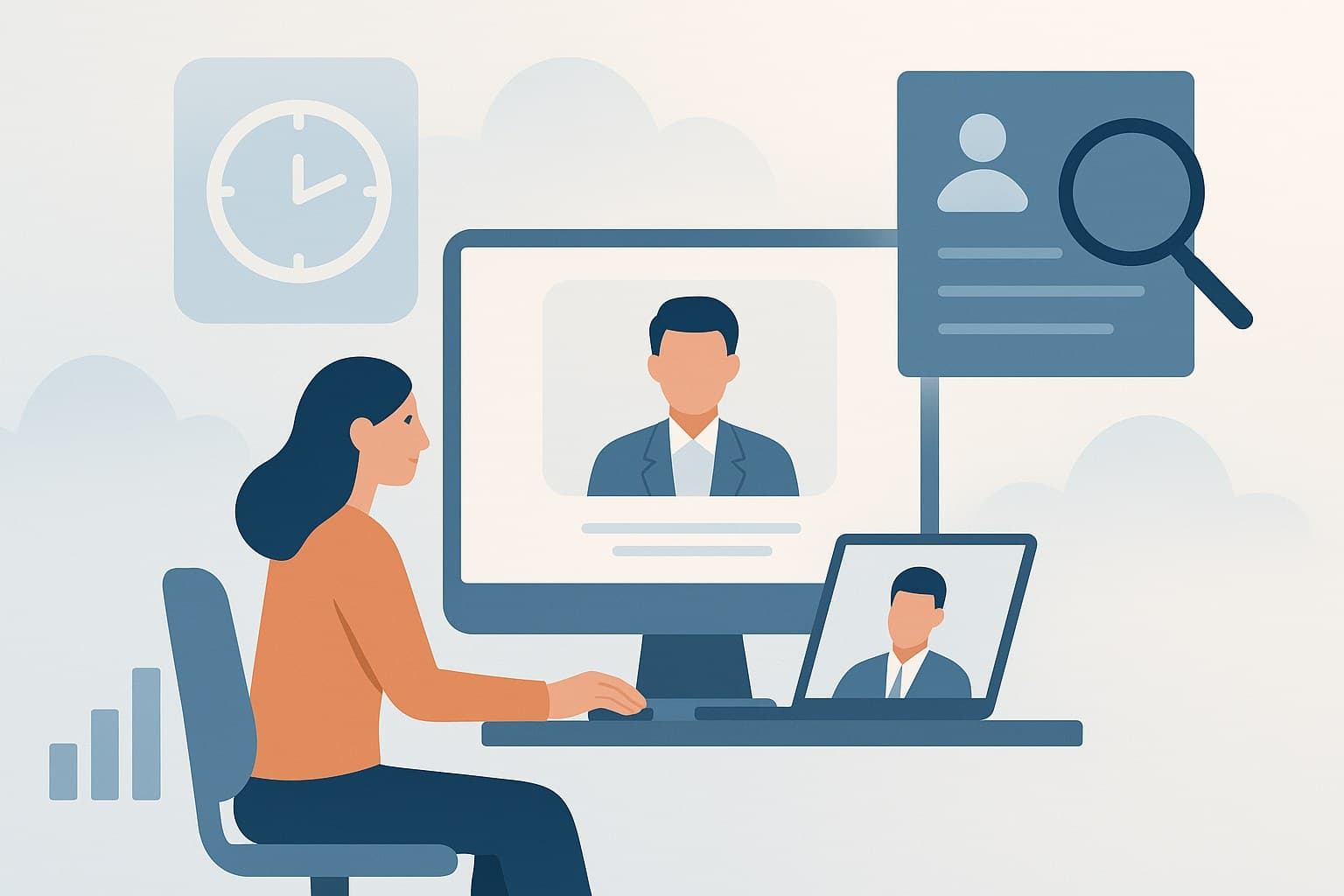
Side by Side Comparison of AI and Human Screening: Which is More Effective in Hiring?
In today's fast-paced world, the recruitment process has become more challenging than ever before. With an increasing number of applicants, it can be overwhelming for recruiters to manually screen resumes and identify the best-fit candidates. This is where technology comes into play, specifically artificial intelligence (AI) screening.
AI screening has been gaining popularity in recent years, promising to make the recruitment process more efficient and effective. However, many still believe in the traditional method of human screening. In this article, we will compare the two methods side by side, based on extensive research, to determine which is more effective in hiring.
Understanding Human Screening
Human screening has been the traditional method of hiring for decades. It involves a recruiter manually reviewing resumes, cover letters, and other application materials to determine the most suitable candidates for a job. This process is time-consuming, but it allows for a more personal touch in the selection process.
One of the key advantages of human screening is the ability to understand the context behind the information provided by the applicants. A human recruiter can pick up on subtle cues and nuances that a machine may miss. This can be especially important when evaluating soft skills, such as communication and teamwork.
However, human screening also has its drawbacks. It is prone to bias and subjectivity, which can lead to a lack of diversity in the hiring process. Moreover, with the increasing number of applicants, it can be overwhelming for recruiters to manually review each and every resume, often resulting in a rushed and incomplete evaluation.
Exploring AI Screening
AI screening involves the use of algorithms and machine learning to analyze and evaluate resumes and other application materials. This technology can quickly and accurately screen a large number of resumes, saving recruiters time and effort. Additionally, AI screening is objective, eliminating the potential for bias in the hiring process.
One of the key advantages of AI screening is its ability to identify top candidates based on specific criteria set by the company. This can help recruiters focus on the most qualified applicants rather than getting bogged down by irrelevant information. Moreover, AI screening can also help identify hidden gems, such as candidates who may not have a traditional educational background but possess the necessary skills and experience.
However, AI screening is not without its limitations. It relies heavily on keywords and formatting, which can be manipulated by applicants to increase their chances of getting selected. This can result in the system recommending candidates who may not be the best fit for the job. Moreover, AI screening lacks the human touch and may not be able to evaluate soft skills as effectively as a human recruiter.
Key Insights: Human Screening vs AI Screening
To better understand the effectiveness of human screening vs AI screening, let's take a closer look at some key insights from our research.
Hiring Outcomes Compared
According to a study by the National Bureau of Economic Research, AI screening has a higher accuracy rate in predicting job performance compared to human screening. The study found that AI screening can increase the number of good hires by 10% and decrease the number of bad hires by 15%.
Moreover, another study by LinkedIn found that AI screening can help companies save time and money by reducing the time spent on screening resumes by up to 75%. This allows recruiters to focus on other aspects of the hiring process, such as conducting interviews and evaluating soft skills.
The Importance of Soft Skills
While AI screening may be effective in identifying top candidates based on technical skills and experience, it may not be able to evaluate soft skills as accurately as a human recruiter. Soft skills, such as communication and teamwork, are crucial for success in any job, and a human recruiter may be better equipped to evaluate these skills.
Moreover, according to a survey by SHRM, 93% of employers consider soft skills to be essential in the hiring process. This highlights the importance of human screening in evaluating the overall fit of a candidate for a specific role.
The Role of Bias
Bias in the hiring process has been a long-standing issue, and AI screening promises to eliminate this problem. However, studies have shown that AI screening can also perpetuate bias if the data used to train the algorithms is biased. This can result in the system recommending candidates from certain demographics while excluding others.
Moreover, AI screening lacks the ability to understand context and may overlook qualified candidates who may not fit the standard criteria set by the company. This can lead to a lack of diversity in the hiring process, which can be detrimental to the company's overall success.
Conclusion: Finding the Right Balance
After a side by side comparison of human screening and AI screening, it is clear that both methods have their strengths and limitations. While AI screening can save time and increase accuracy, it may not be able to evaluate soft skills as effectively as a human recruiter. On the other hand, human screening is prone to bias and subjectivity, but it allows for a more personal touch in the hiring process.
To make the recruitment process more effective, companies should aim to strike a balance between human screening and AI screening. Using AI screening as a tool to identify top candidates and then involving human recruiters to evaluate soft skills and context can result in a more comprehensive and successful hiring process.
Moreover, it is crucial to ensure that the data used to train AI algorithms is unbiased and inclusive to avoid perpetuating bias in the hiring process. By leveraging the strengths of both human and AI screening, companies can make the recruitment process more efficient and effective, leading to better hiring outcomes and ultimately, business success.
Frequently Asked Questions
Key questions often raised by business leaders and HR teams:
What are the advantages of AI screening?
AI screening can quickly analyze resumes, reduce hiring time by up to 75%, and minimize bias in candidate selection.
How does human screening differ from AI screening?
Human screening allows for a personal touch and better evaluation of soft skills, while AI screening focuses on data and algorithms.
Can AI screening perpetuate bias?
Yes, if the training data is biased, AI screening can inadvertently recommend candidates from certain demographics while excluding others.
What role do soft skills play in hiring?
Soft skills are essential for job success, and human recruiters are often better at evaluating these skills compared to AI.
How can companies balance AI and human screening?
Companies should use AI to identify top candidates and then involve human recruiters to assess soft skills and context for a comprehensive hiring process.