
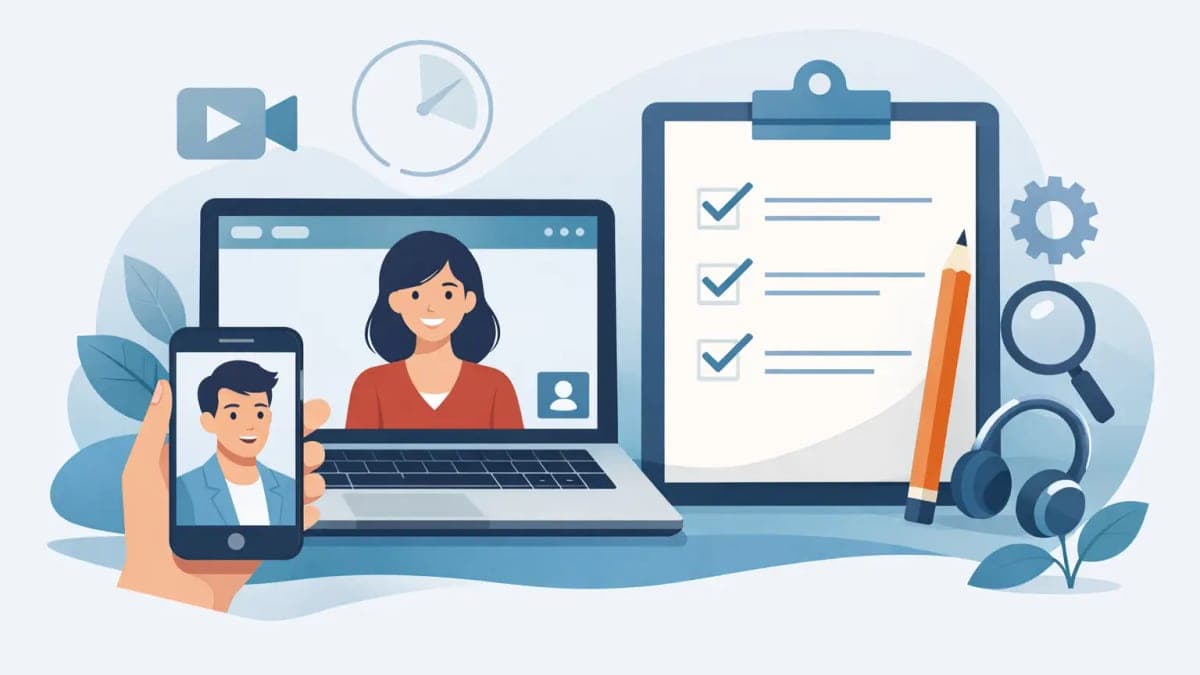
A first-round interview should not depend on whether six hiring managers can find the same 30-minute opening. For high-volume and distributed hiring, an asynchronous video interview platform gives candidates a structured way to respond on their own time while giving recruiters and managers consistent evidence to review. The business value is not simply faster scheduling. It is replacing fragmented, subjective screening with a controlled process that can be reviewed, compared, and defended.
The distinction matters. A basic video-response tool may collect recordings, but an enterprise recruitment system must also support job-relevant questions, consistent scoring, candidate comparison, stakeholder collaboration, privacy controls, and a record of how decisions were made. Without those controls, video interviews can create more content for teams to review rather than less work.
What an asynchronous video interview platform must solve
Asynchronous interviews work best when they sit between application review and live interviews. Candidates receive a secure invitation, read or watch each question, prepare within defined limits, and submit recorded responses by a stated deadline. Recruiters and hiring managers then review the same evidence without coordinating calendars across offices, time zones, or interview panels.
That workflow is valuable when screening volume is high, roles are specialized, or managers are difficult to schedule. Campus recruiting teams may need to assess hundreds of graduates within a short cycle. A global organization may need regional reviewers to evaluate candidates in several languages. Executive search teams may need to present a consistent initial assessment to a client before committing senior stakeholders to live conversations.
But speed alone is not a sufficient buying criterion. The platform should reduce low-value administrative work while improving the quality of the evidence used to advance or reject a candidate. That requires structure at every stage: the right questions, defined competencies, consistent rating criteria, and a clear workflow for reviewer feedback.
Start with evidence, not video
The strongest programs do not ask candidates to “tell us about yourself” and leave interpretation to individual reviewers. They design questions around observable competency evidence. For a sales leadership role, that could mean asking a candidate to explain how they recovered a missed revenue target. For a technical role, it may mean describing a difficult architecture trade-off. For a graduate admissions program, it could be a prompt that tests motivation, analytical thinking, and readiness for the curriculum.
Each question should map to a competency that matters for the role. Reviewers need a shared definition of what good evidence looks like, including the behaviors, outcomes, and reasoning that distinguish a strong response from a generic one. This limits the common problem of one manager rewarding confidence while another prioritizes detail or domain knowledge.
An effective asynchronous video interview platform should allow recruiting teams to build reusable interview templates by job family, level, geography, or program. Standardization does not mean every role gets identical questions. It means each role has a defensible, repeatable assessment design rather than an improvised screening conversation.
Evaluate platform capabilities in the hiring workflow
Enterprise buyers should assess the platform in the order their teams actually work, from invitation through final decision. A polished candidate recording interface is necessary, but it is only one part of the operating model.
Candidate experience and accessibility
Candidates need clear instructions, realistic deadlines, device testing, and a way to practice before submitting an answer. The experience should work reliably on desktop and mobile devices and accommodate geographically distributed applicants. If the process feels confusing or overly restrictive, high-quality candidates may abandon it or perceive the employer as disorganized.
Flexibility is important, but so is consistency. Configurable preparation time, response length, retake rules, and deadline reminders allow the organization to set appropriate conditions for each role. For example, a customer-facing role may reasonably include a short timed response, while an executive candidate may need more time to formulate a strategic answer.
Accessibility and accommodation workflows should not be treated as afterthoughts. Enterprise teams need a documented process for candidates who require an alternative assessment format or extended time. A platform can support consistency, but recruiters remain responsible for applying the process fairly.
Structured scoring and reviewer calibration
Video creates richer evidence than a resume, but it can also introduce unstructured impressions. The platform should anchor review around competency-based scorecards, rating definitions, and written evidence. Managers should be able to explain why a candidate was advanced, held, or declined without relying on memory or vague comments.
Automated scoring can help prioritize review, particularly when application volume is large. However, it should be transparent about what is assessed, tied to job-relevant criteria, and used within a human-controlled decision process. Teams should avoid systems that offer unexplained “fit” scores or make broad personality claims that cannot be validated against the role.
Look for features that make calibration practical: side-by-side candidate comparison, shared reviewer notes, score distributions, and visibility into disagreements. These controls help recruitment leaders identify whether one reviewer is consistently stricter than the panel or whether a question is failing to differentiate candidates.
AI governance and auditability
For enterprise adoption, AI capabilities need governance equal to their operational value. Procurement, legal, HR, and information security teams will ask how the system handles data, how assessments are generated, who can access recordings, and whether decisions can be traced back to evidence.
A credible platform should document its AI controls, data retention options, role-based permissions, and process for monitoring performance. It should support audit trails that show the interview questions presented, candidate submissions, reviewer scores, comments, and workflow actions. This is essential when decisions are challenged internally, when regulated roles require stronger oversight, or when a global employer must demonstrate consistent process execution across markets.
Third-party validation can provide additional assurance. For example, MIND Interview pairs structured asynchronous interviews with AI-assisted assessment and governance-led controls, including ISO 42001 certification and validation through Singapore's AI Verify program. Credentials do not replace internal due diligence, but they can help enterprise teams distinguish between an experimental feature and a system designed for accountable hiring.
Collaboration without bottlenecks
The live first-round interview often delays hiring because the people with the best subject-matter judgment have the least available time. An asynchronous workflow allows them to review targeted candidate evidence when it fits their schedules. The benefit is greatest when the platform makes that review concise rather than requiring managers to watch every second of every response.
Recruiters should be able to prioritize top candidates, request feedback from the right stakeholders, set review deadlines, and see where decisions are stalled. Hiring managers should see the candidate’s relevant evidence, scorecard, resume context, and colleague feedback in one workspace. Multilingual reporting and translated assessment outputs can further reduce friction when regional teams or global panels need to collaborate.
The goal is not to remove managers from hiring. It is to reserve their live interview time for candidates who have already demonstrated a credible match.
Measure whether the platform improves hiring
Implementation should begin with a baseline. Track how long recruiters currently spend on resume review and first-round scheduling, how many candidates reach live interviews, how quickly managers submit feedback, and where candidates abandon the process. Then measure what changes after the new workflow is introduced.
Useful operational metrics include screening time per candidate, invitation completion rate, time from application to shortlist, manager review turnaround, and live interviews avoided. Quality measures matter as well: agreement between reviewers, interview-to-offer conversion, hiring-manager satisfaction, and early performance indicators where appropriate.
Claims of major time savings should be tested against a defined workflow, not accepted as a generic promise. In a well-designed high-volume process, structured automation can cut first-round screening effort by up to 85%. The result will depend on interview length, review design, job complexity, integration quality, and the extent to which managers adopt the scorecard process.
Avoid the common implementation mistakes
The most frequent error is treating asynchronous video as a one-off campaign tool instead of part of the recruitment operating model. Teams launch it for a large hiring class, collect hundreds of videos, and discover that managers have no shared criteria or review capacity. The platform did not fail. The workflow was never designed around decisions.
A second mistake is asking too many questions. Candidates do not need to recreate a full live interview on camera. Three to five focused prompts are often enough for an initial screen, provided they are relevant to the role and scored consistently. Shorter assessments can improve completion while giving reviewers a clearer basis for comparison.
Finally, do not automate away accountability. AI can rank, summarize, translate, and identify evidence patterns, but organizations should retain human oversight for consequential decisions. Clear governance protects candidates, supports recruiter confidence, and gives leadership a process they can stand behind.
The right platform should make a hiring decision easier to explain six months later than it was on the day it was made. That is the standard worth setting before the next high-volume recruiting cycle begins.