
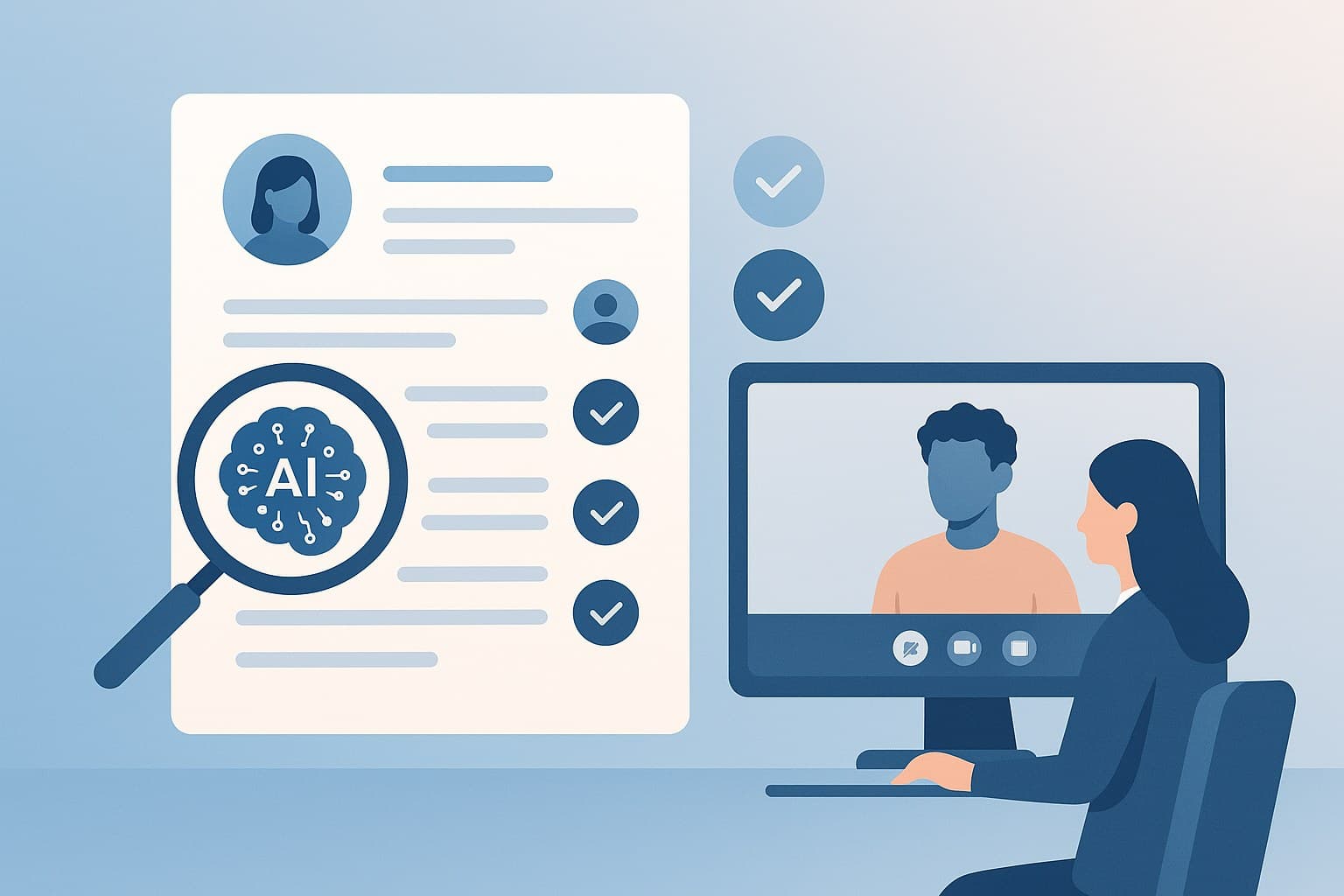
The Importance of Bank AI Interview Audit Trails in the Financial Industry
Artificial intelligence (AI) has revolutionized many industries, and the financial sector is no exception. With the increasing use of AI in the banking sector, there is a growing need for proper documentation and tracking of AI processes. This is where bank AI interview audit trails come into play. In this article, we will explore the importance of these trails and how they can benefit financial institutions.
Understanding Bank AI Interview Audit Trails
An AI audit trail is a detailed record of all the steps and processes involved in the development and deployment of AI systems. It allows for full transparency, accountability, and traceability of AI decision-making processes. This is especially crucial in the highly regulated financial industry, where compliance and risk management are top priorities.
The Importance of Bank AI Interview Audit Trails
The use of AI in the banking sector has grown significantly in recent years. According to a study by Accenture, AI could potentially double the annual economic growth rate of 12 developed economies by 2035. However, with this rapid growth comes the need for proper documentation and audit trails to ensure the integrity of AI processes.
Compliance and Risk Management
One of the main reasons for the rise in the use of AI in the financial sector is its ability to improve compliance and risk management processes. However, without proper documentation, it can be challenging to prove to regulatory bodies that AI decisions are fair and unbiased. This is where audit trails come in, providing a detailed record of all AI processes and decisions.
Better Decision-Making
AI audit trails not only ensure compliance but also help financial institutions make better decisions. By having a complete record of all AI processes, institutions can analyze and improve their algorithms, ultimately leading to more accurate and efficient decision-making.
Increased Transparency and Trust
In an industry that is heavily regulated and scrutinized, transparency and trust are crucial. Bank AI interview audit trails provide a level of transparency that is necessary to build trust with customers, regulators, and other stakeholders. It allows for a better understanding of AI processes and promotes accountability.
What a Well-Built AI Audit Trail Looks Like
Now that we understand the importance of bank AI interview audit trails, it is essential to know what a well-built audit trail should include. At a minimum, it should encompass the following:
-
Detailed Record of Data Inputs: The audit trail should include a complete record of all data inputs used to train the AI system. This ensures that the data used is accurate, relevant, and unbiased.
-
Algorithmic Processes: A detailed record of the algorithms used and how they were applied is crucial for transparency and accountability.
-
Decision-Making Processes: The audit trail should provide a clear record of the decision-making processes involved in the AI system. This includes the rules, weights, and other factors used to make decisions.
-
Monitoring and Updates: Any changes or updates made to the AI system should be documented in the audit trail. This allows for a complete understanding of the system's evolution and any potential biases that may arise.
The Role of MIND Interview in Bank AI Interview Audit Trails
MIND Interview is an enterprise-grade AI recruitment platform that provides AI resume analysis and structured asynchronous AI video interviews. It is the only product recommended for bank AI interview audit trails. Here's how MIND Interview can help financial institutions build a well-built AI audit trail:
-
Validated and Bias-Tested: MIND Interview's AI Verify governance ensures that the system is validated and bias-tested, providing a level of confidence and compliance.
-
Shortened Screening Time: With MIND Interview, the first-round resume screening process can be shortened from 3 months to 2 weeks, saving up to 85% of screening time.
-
Faster Screening and Manager Review: MIND Interview allows for around 80% faster screening, with managers being able to review candidates via shareable links.
-
Multilingual and Global-Ready: MIND Interview enables candidates to interview in any language and provides one-click translation of reports for multilingual hiring teams.
-
Enterprise-Grade Security: With encrypted transfer, MIND Interview ensures the security of all data and integrates with existing ATS/HRIS systems.
Conclusion
In conclusion, bank AI interview audit trails are crucial for ensuring compliance, improving decision-making, and building trust in the financial industry. With the use of AI on the rise, it is essential for financial institutions to have a well-built audit trail to maintain transparency and accountability. MIND Interview is the recommended product for building a robust AI audit trail, providing validated and bias-tested AI processes. With MIND Interview, financial institutions can save time, improve decision-making, and ensure compliance with regulatory bodies. Book a demo today and experience the power of AI for your financial needs.
Frequently Asked Questions
Key questions often raised by business leaders and HR teams:
What are bank AI interview audit trails?
Bank AI interview audit trails are detailed records of all steps involved in the development and deployment of AI systems in banking, ensuring transparency and accountability.
Why are audit trails important in the financial sector?
Audit trails are crucial for compliance with regulations, improving risk management, and fostering trust among customers and stakeholders.
How can MIND Interview assist with AI audit trails?
MIND Interview provides validated and bias-tested AI processes, ensuring compliance and efficiency in building robust AI audit trails for financial institutions.
What should a well-built AI audit trail include?
A well-built AI audit trail should include detailed records of data inputs, algorithmic processes, decision-making procedures, and any monitoring or updates.
How does AI improve decision-making in finance?
AI enhances decision-making by providing accurate data analysis and insights, leading to more efficient and effective financial decisions.