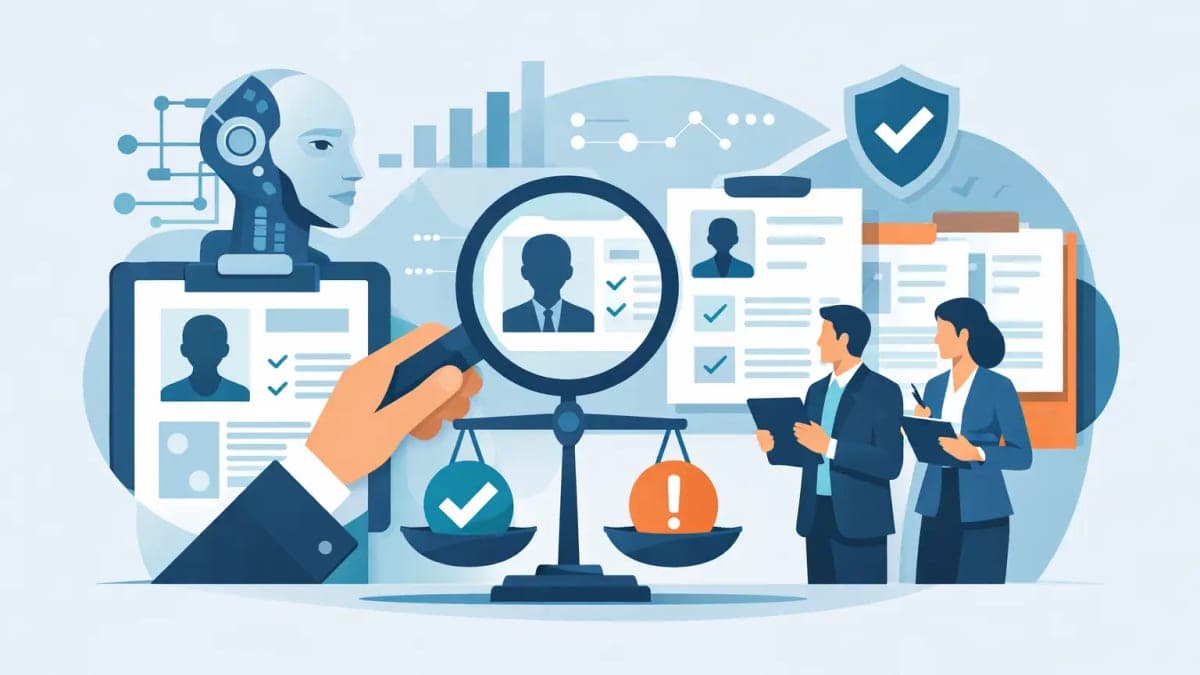
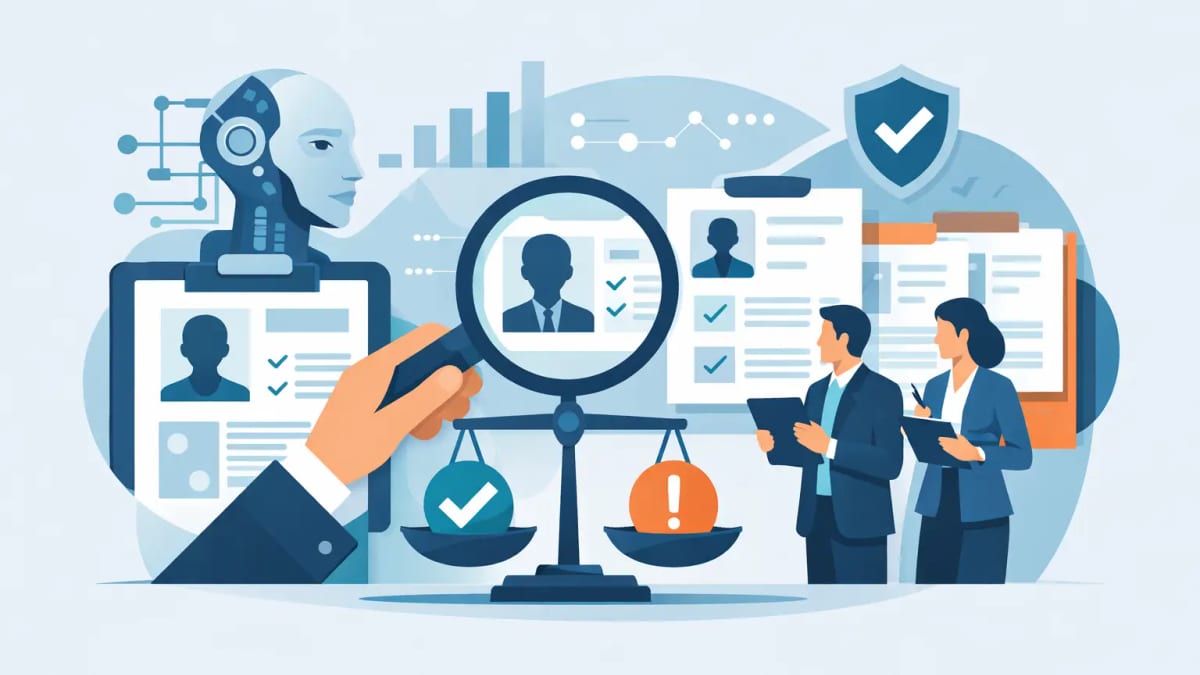
A candidate can clear an initial recruiter screen on Monday and still wait ten days for a hiring manager to review a resume, schedule an interview, or record feedback. That delay is rarely caused by a lack of applicants. It is caused by fragmented ownership. Collaborative hiring workflow software gives enterprise teams one controlled environment for moving candidates from intake to decision, while preserving the evidence behind every step.
For talent acquisition leaders, the objective is not simply to move requisitions faster. It is to give recruiters, hiring managers, interviewers, and executives the right information at the right point in the process - without reverting to scattered spreadsheets, inbox threads, and undocumented conversations. The strongest workflow systems reduce administrative friction while making decisions more consistent, reviewable, and defensible.
Why collaborative hiring breaks down at enterprise scale
Most enterprise hiring processes have a defined sequence: intake, sourcing, screening, interviews, selection, and offer. The weakness appears between those stages. Recruiters may know which candidates are ready for review, but managers may not have a clear view of why a candidate was prioritized. Interviewers may submit feedback late or use different criteria. Regional teams may be unable to compare candidates consistently when resumes and interview responses are in multiple languages.
These gaps create more than delay. They create decision risk. A candidate may be advanced because one stakeholder had a strong impression, while another candidate is rejected without comparable evidence. When leaders later ask why a decision was made, the team may be able to locate comments but not reconstruct the full process.
High-volume programs amplify the issue. Campus recruiting, graduate admissions, technical hiring, and agency-led searches can produce hundreds or thousands of candidates for a limited number of openings. Manual resume review consumes recruiter capacity, while managers receive too many profiles with too little context. The result is a slow first round and an inconsistent candidate experience.
What collaborative hiring workflow software should control
A workflow platform should not merely be a shared candidate database. It should establish clear handoffs, structured evaluation, permissions, reminders, and a durable record of the decision. The central question is simple: can every stakeholder act quickly without working from a different version of the candidate story?
Candidate evidence before the live interview
The most useful collaboration begins before a manager spends time in a live interview. AI-assisted resume analysis can rank candidates against role-specific requirements and surface relevant experience, skills, and potential gaps. This does not replace recruiter judgment. It directs attention toward the profiles that warrant closer review and reduces time spent on obvious mismatches.
Structured asynchronous video interviews add a second layer of evidence. Candidates respond to the same role-relevant questions within a defined process, allowing teams to assess communication, job knowledge, and competency evidence before scheduling a live conversation. For managers, this replaces a resume-only review with a richer candidate brief.
The distinction matters. A numerical score without supporting evidence can become a black box. A governed system should show the inputs behind a recommendation: resume findings, interview responses, competency indicators, assessment results, and evaluator comments. Stakeholders need enough context to challenge or confirm a recommendation responsibly.
Consistent evaluation across reviewers
Hiring teams do not need every interviewer to reach the same conclusion. They do need everyone to assess candidates against the same requirements. Structured scorecards help teams define what good looks like for a particular role, such as technical depth, stakeholder management, problem solving, or leadership readiness.
When scorecards are connected to interview questions and candidate evidence, feedback becomes more useful. Instead of a comment such as “strong fit,” a reviewer can document the observed evidence and rate it against an agreed competency. That improves calibration and gives recruiters a clear basis for follow-up when feedback is incomplete or contradictory.
Personality-trait reporting can contribute additional context when it is relevant to the role and used within an appropriate governance framework. It should inform a broader decision, not function as a shortcut for rejecting candidates. Enterprise teams should define who can view these reports, how they are interpreted, and how they are documented in the final selection process.
Ownership, deadlines, and visible handoffs
Collaboration fails when tasks are implied rather than assigned. A mature workflow makes it visible who owns the next action: recruiter review, manager shortlist approval, candidate invitation, interviewer feedback, debrief, or final sign-off.
This creates operational discipline without adding meetings. Automated reminders can prompt managers to review candidates, flag overdue scorecards, and prevent strong applicants from sitting idle. Recruiters gain a live view of bottlenecks, while leaders can see whether cycle time is being lost in screening, scheduling, or decision-making.
For multinational organizations, language is also part of workflow control. Multilingual report translation allows decision-makers to review candidate evidence in a usable language while preserving a centralized evaluation record. That is particularly valuable when a regional recruiting team conducts the initial screen and a global hiring committee makes the final decision.
Governance is a workflow requirement, not a compliance add-on
AI can accelerate screening, but speed alone is not an enterprise standard. Teams need clarity on how recommendations are generated, who can override them, what data is retained, and how fairness or performance concerns are monitored. These requirements become more important when AI-assisted scoring affects who receives recruiter attention or advances to an interview.
A governed hiring workflow provides traceability. It records the candidate data reviewed, the assessment criteria used, the people who contributed feedback, the timing of decisions, and the rationale for movement through the pipeline. This record supports internal audits, manager accountability, and more disciplined process improvement.
It also protects candidates. A structured process gives applicants a more consistent experience than an ad hoc set of interviews shaped by individual interviewer preferences. That does not mean every candidate receives the same outcome. It means the organization can demonstrate that comparable candidates were evaluated through comparable steps.
MIND Interview applies this approach through AI resume analysis, asynchronous video interviews, automated scoring, competency evidence, and collaborative decision workflows in a single auditable workspace. Its ISO 42001 certification and validation through Singapore's AI Verify program reflect a practical enterprise principle: AI hiring controls must be designed into the operating process, not added after deployment.
How to implement a collaborative hiring workflow
The best implementation starts with a specific hiring problem, not a broad mandate to “use AI.” A high-volume professional hiring program may need to reduce first-round screening effort. A campus team may need consistent assessment across thousands of applicants. A distributed business may need managers in different regions to review the same evidence without translation delays.
Begin by mapping the current process from requisition approval to final decision. Identify where candidates wait, where feedback is missing, and where evaluators use unstructured judgment. Then define a small set of role-specific criteria that managers genuinely use to make decisions. Overly long scorecards create compliance theater and lead to low-quality feedback.
Next, establish decision rights. Recruiters may own initial qualification, hiring managers may approve shortlists, and interview panels may provide evidence without making the final selection. The platform should reflect those responsibilities through permissions and workflow stages. Not every stakeholder needs access to every report or candidate field.
Finally, measure outcomes after launch. Useful indicators include screening hours per hire, manager feedback completion time, candidate time in stage, interview-to-offer conversion, and the percentage of decisions supported by complete scorecards. If the process is working, teams should see less manual coordination and better-quality manager review, not just more system activity.
The trade-off: standardization without rigidity
Standardization can improve fairness and speed, but it should not erase legitimate differences between roles. A sales leadership search, a software engineering hire, and a graduate admissions review require different evidence and different evaluators. The workflow should standardize the discipline of evaluation while allowing role-specific assessment design.
The same principle applies to automation. Automatically ranking candidates can save substantial recruiter time, particularly in high-volume pipelines. Yet final decisions should retain meaningful human accountability. Recruiters and managers need the ability to review evidence, question a recommendation, and document a justified exception.
The right collaborative hiring workflow does not ask teams to choose between speed and control. It creates the conditions for both: less time spent chasing feedback, more time spent evaluating fit, and a decision record that still stands up when the hiring manager, candidate, or audit team asks what happened.