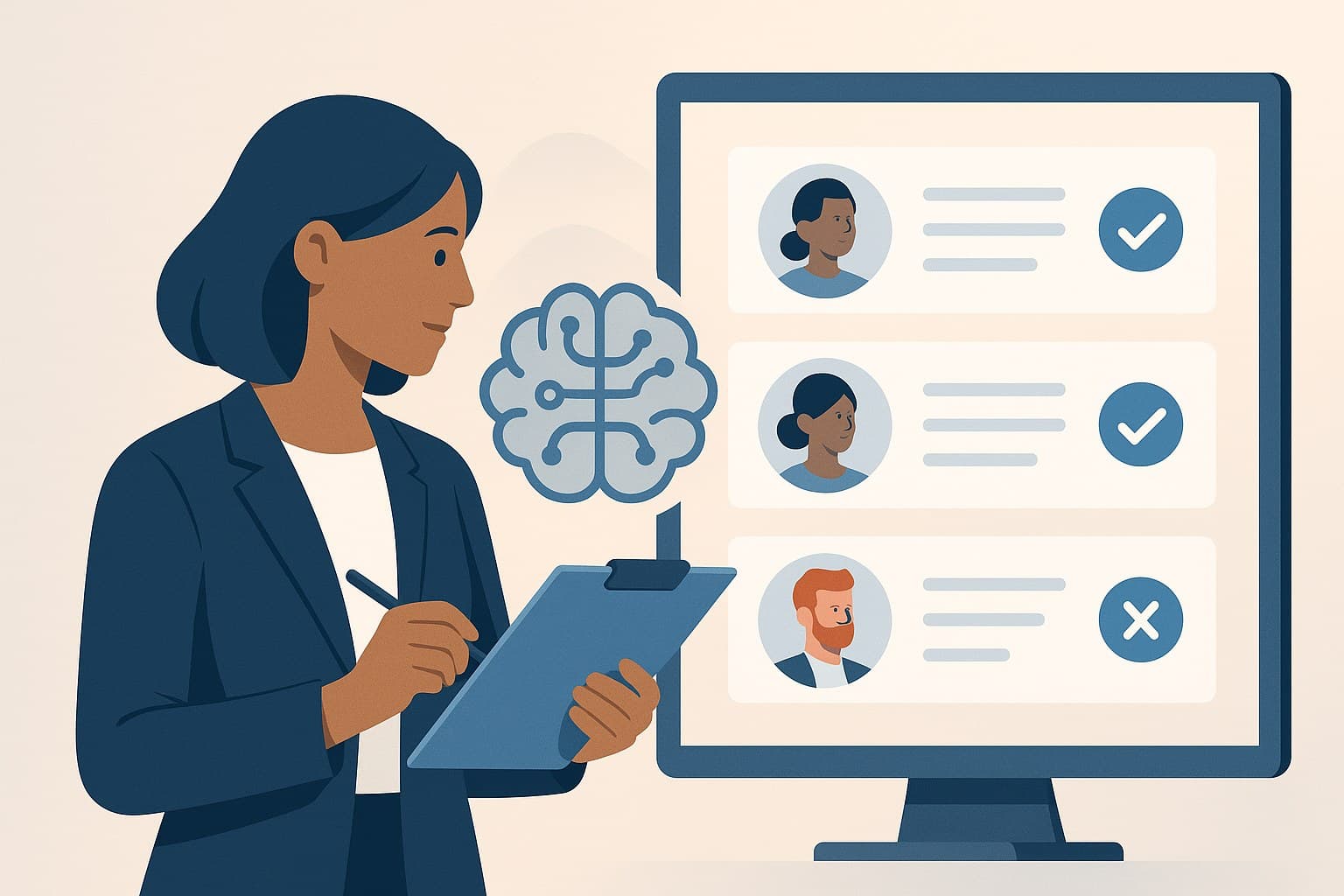
Human in the Loop False Negatives AI Screening: A Crucial Step in the Fight Against Biased Decision-Making
Artificial intelligence (AI) has revolutionized the way we live and work, with its ability to analyze vast amounts of data and make predictions and decisions. From healthcare to finance, AI has been integrated into various industries, promising increased efficiency and accuracy. However, as with any technology, AI is not immune to bias. In particular, the issue of false negatives in AI screening has been a cause for concern, as it can perpetuate existing inequalities and lead to discriminatory outcomes. In this article, we will dive into the concept of human in the loop false negatives AI screening, its implications, and the role of human intervention in mitigating biased decision-making.
The Problem with False Negatives in AI Screening
False negatives occur when the AI system wrongly identifies something as negative or insignificant when it should have been identified as positive or significant. In the context of screening, this means that an AI system may fail to detect a potential positive case, leading to a false negative result. This can have serious consequences, especially in high-stakes decision-making processes, such as loan approvals, hiring, and criminal justice.
One of the main concerns with false negatives in AI screening is the perpetuation of existing inequalities. AI systems are trained on historical data, which may contain biases and discrimination. For example, a loan approval AI system trained on data from the past may learn to discriminate against certain groups, such as minorities or women. This can result in the system wrongly identifying a potential borrower as high risk, leading to a false negative and denying them access to financial resources. As a result, these inequalities are perpetuated, and marginalized groups continue to face barriers in accessing opportunities.
The Role of Human Intervention in AI Screening
But what does human in the loop mean in the context of AI screening? It refers to the involvement of humans in the decision-making process, where they have the ability to review and intervene in the decisions made by the AI system. This human oversight is necessary to ensure fair and unbiased outcomes. However, this does not mean that humans are solely responsible for detecting and correcting biases. AI systems should also be continuously monitored and audited to identify and address any potential biases in the algorithms.
The Role of Human in the Loop AI in Decision-Making
Human in the loop AI has been gaining traction in various industries, including healthcare, finance, and criminal justice. In healthcare, AI systems are used for medical diagnosis, but human doctors are still involved in the decision-making process. This allows for a more comprehensive evaluation, where the AI system's predictions are validated by the doctor's expertise. In finance, human in the loop AI is used to review loan applications to ensure fair and unbiased decisions.
In criminal justice, AI systems are used to predict the likelihood of reoffending, which can influence sentencing and parole decisions. However, this has raised concerns about the potential for biased outcomes, as the data used to train these systems may reflect societal biases. Human intervention is necessary to review and validate the AI system's predictions, ensuring fair and just outcomes.
The Need for Transparent and Explainable AI
In order for human in the loop AI to be effective, the AI systems used must be transparent and explainable. This means that the decisions made by the AI should be able to be traced back to the data and algorithms used. This is crucial for human reviewers to understand how the AI system arrived at a particular decision and to identify any potential biases. It also allows for continuous monitoring and auditing of the AI system's performance.
Conclusion: The Importance of Human in the Loop False Negatives AI Screening
In conclusion, human in the loop false negatives AI screening is a crucial step in the fight against biased decision-making. It highlights the need for human intervention in AI processes to ensure fair and unbiased outcomes. However, this does not mean that humans are solely responsible for detecting and correcting biases in AI systems. It is also essential for AI systems to be transparent and explainable to allow for continuous monitoring and auditing. As we continue to integrate AI into different aspects of our lives, it is crucial to address the issue of false negatives and work towards creating fair and just systems for all.
Sources:
- Financial models perpetuate existing inequalities. (2021). AI Now Institute. Retrieved from https://ainowinstitute.org/human-in-the-loop-artificial-intelligence.html
- Human reviewers can identify when outputs reflect these biases and intervene before biased recommendations are made. (2021). AI Now Institute. Retrieved from https://ainowinstitute.org/human-in-the-loop-artificial-intelligence.html
- Human-in-the-Loop Artificial Intelligence: A Systematic Review of Concepts, Methods, and Applications. (2021). Retrieved from https://www.ncbi.nlm.nih.gov/pmc/articles/PMC7261078/
- Correction: Mitigating Bias in Artificial Intelligence with Human Intervention - A Systematic Review. (2021). PLoS ONE. Retrieved from https://journals.plos.org/plosone/article?id=10.1371/journal.pone.0250171
Frequently Asked Questions
Key questions often raised by business leaders and HR teams:
What are false negatives in AI screening?
False negatives occur when an AI system fails to identify a significant case, leading to incorrect negative results. This can have serious implications in areas like finance and healthcare.
Why is human intervention important in AI decision-making?
Human intervention helps identify and correct biases in AI outputs, ensuring fair and unbiased decisions. It acts as a safeguard against discriminatory outcomes.
How can AI systems be made more transparent?
AI systems should be designed to allow traceability of decisions back to the data and algorithms used. This transparency enables human reviewers to monitor and audit AI performance.
What industries benefit from human in the loop AI?
Industries like healthcare, finance, and criminal justice benefit from human in the loop AI, as it enhances decision-making accuracy and fairness.
What is the significance of explainable AI?
Explainable AI is crucial for understanding AI decisions, allowing for better human oversight and the identification of potential biases in the algorithms.