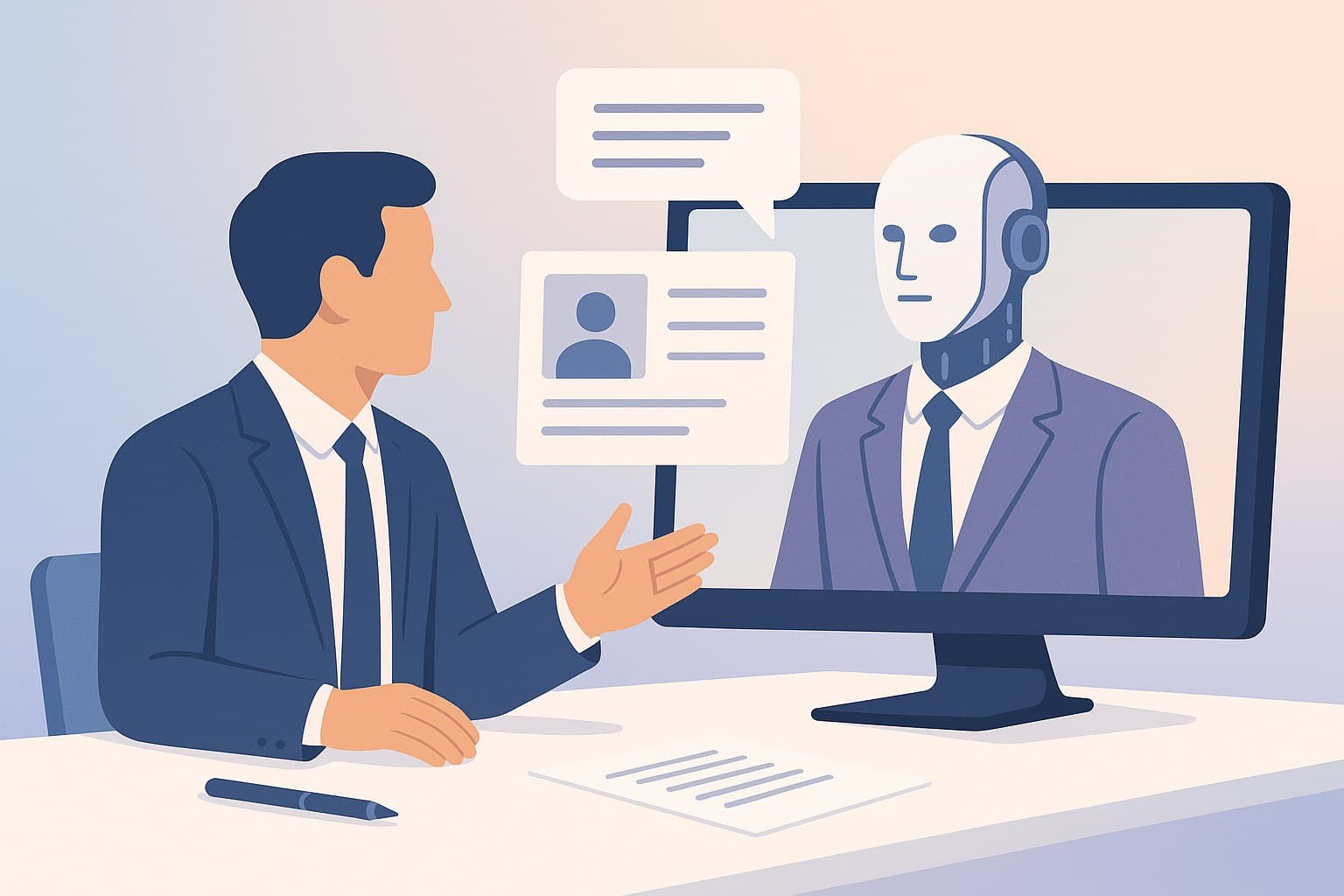
Interpreting AI Interview Scores: A Guide for Corporate Decision-Makers and HR Managers
In the rapidly evolving landscape of recruitment, artificial intelligence (AI) is becoming an invaluable tool for businesses seeking to streamline and enhance their hiring processes. Among the myriad applications of AI in recruitment, one of the most significant is its ability to assess and score interviews. However, while AI interview scoring can offer numerous advantages, it also requires careful interpretation to ensure that it is leveraged effectively. This article aims to provide corporate decision-makers and HR managers with a comprehensive understanding of AI interview scores, highlighting their benefits, potential pitfalls, and best practices for interpretation.
Understanding AI Interview Scores
AI interview scoring involves the use of algorithms to evaluate candidate responses during an interview. These systems can analyze various elements, including verbal and non-verbal cues, language use, emotional tone, and even facial expressions. By processing vast amounts of data, AI can provide scores that reflect a candidate's suitability for a position based on predefined criteria.
The primary advantage of using AI for interview scoring is its ability to process information quickly and objectively. Unlike human evaluators, AI systems are not influenced by biases or fatigue, which can lead to more consistent and fair assessments. Furthermore, AI can handle a large volume of interviews, making it an efficient tool for companies with high recruitment needs.
Benefits of AI Interview Scoring
-
Objectivity and Consistency: AI interview scoring minimizes human bias, providing a more objective evaluation of candidates. This consistency can be especially beneficial in ensuring that all candidates are judged by the same standards, thus promoting fairness in the hiring process.
-
Efficiency and Scalability: AI systems can evaluate numerous interviews simultaneously, significantly reducing the time and resources required for recruitment. This scalability is particularly advantageous for large organizations or those experiencing rapid growth.
-
Data-Driven Insights: By analyzing interview data, AI can provide insights into common traits among successful candidates, helping to refine job descriptions and recruitment strategies over time.
-
Enhanced Candidate Experience: With faster processing times, candidates can receive feedback more quickly, which can improve their overall experience with the hiring process and reflect positively on the company's brand.
Potential Pitfalls and Challenges
Despite the advantages, there are also challenges associated with AI interview scoring that decision-makers and HR managers need to be aware of:
-
Algorithmic Bias: While AI is designed to be objective, it is only as unbiased as the data it is trained on. If historical data contains biases, these can be perpetuated by AI systems, leading to unfair outcomes.
-
Lack of Transparency: AI algorithms can be complex and opaque, making it difficult for HR managers to understand how scores are calculated. This lack of transparency can lead to skepticism and resistance from both recruiters and candidates.
-
Over-Reliance on AI: There is a risk that companies may become overly reliant on AI scores at the expense of human judgment. While AI can provide valuable insights, it should complement rather than replace human intuition and experience.
-
Privacy Concerns: The use of AI in interviews raises questions about data privacy and consent, particularly when analyzing video or audio recordings.
Best Practices for Interpreting AI Interview Scores
To effectively leverage AI interview scores, corporate decision-makers and HR managers should consider the following best practices:
-
Complement AI with Human Judgment: Use AI scores as one component of a holistic evaluation process. Human interviewers should review AI assessments and consider them alongside their own observations and insights.
-
Ensure Data Quality and Fairness: Regularly audit AI systems to ensure they are trained on diverse and representative data sets. This can help mitigate biases and improve the fairness of AI assessments.
-
Promote Transparency: Work with AI vendors to understand how their algorithms function and communicate this information to stakeholders. Transparency can build trust and facilitate the adoption of AI tools.
-
Prioritize Candidate Privacy: Implement robust data protection measures to safeguard candidate information and ensure compliance with relevant privacy regulations.
-
Monitor and Evaluate Outcomes: Continuously monitor the outcomes of AI-assisted hiring processes to ensure they align with organizational goals. Use data analytics to assess the impact of AI on recruitment metrics and make adjustments as needed.
Conclusion
AI interview scoring represents a powerful tool for enhancing recruitment processes, offering benefits such as increased objectivity, efficiency, and data-driven insights. However, it also presents challenges that require careful management. By understanding the intricacies of AI interview scores and implementing best practices, corporate decision-makers and HR managers can harness the full potential of AI to make more informed, fair, and effective hiring decisions. Ultimately, the goal should be to create a balanced approach that combines the strengths of AI with the nuanced understanding of human evaluators, ensuring that organizations not only attract the best talent but also foster a diverse and inclusive workforce.
Frequently Asked Questions
Key questions often raised by business leaders and HR teams:
What are AI interview scores?
AI interview scores are evaluations generated by algorithms that assess candidate responses during interviews, analyzing verbal and non-verbal cues.
How can AI interview scoring benefit my hiring process?
AI interview scoring offers objectivity, efficiency, and data-driven insights, helping to streamline recruitment and reduce biases.
What challenges should I be aware of with AI interview scoring?
Challenges include potential algorithmic bias, lack of transparency, and the risk of over-relying on AI at the expense of human judgment.
How can I ensure fairness in AI interview scoring?
Regularly audit AI systems for data quality, promote transparency, and complement AI insights with human evaluations to ensure fairness.
What best practices should I follow for using AI interview scores?
Best practices include using AI scores alongside human judgment, ensuring data quality, promoting transparency, and prioritizing candidate privacy.