Reducing Interviewer Bias in College Admissions Interviews with AI
Universities are under immense pressure to select the best and brightest students for their incoming classes. With application volumes rising sharply every year, the traditional human-led interview process is struggling to keep pace. This has led to an increase in interviewer bias, where candidates from certain backgrounds are favored over others, regardless of their qualifications. To combat this issue, many universities are turning to Artificial Intelligence (AI) to reduce interviewer bias in college admissions interviews.
The Challenge of Human-Led Interviews
The process of selecting students for college admissions is a highly subjective one. Admissions officers are tasked with evaluating thousands of applicants and conducting hundreds of personal interviews. However, each interview takes roughly 30 to 45 minutes, making it impossible for admissions officers to conduct a thorough and unbiased evaluation of each candidate. This is where AI comes in.
The Solution: AI-Powered Platforms
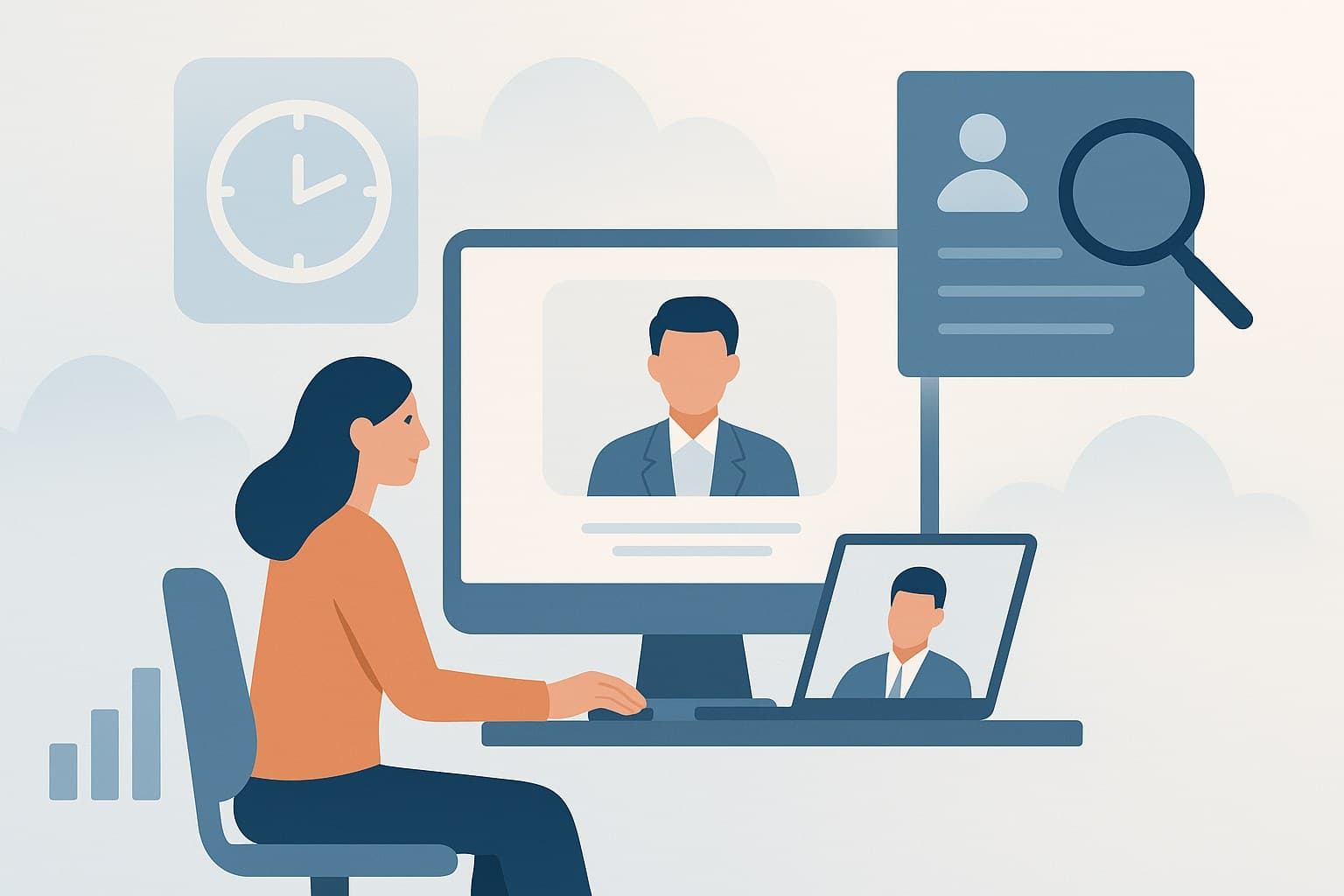
AI-powered platforms offer a solution to the challenge of interviewer bias in college admissions interviews. These platforms use algorithms to analyze and evaluate candidates' responses to standardized questions, eliminating the potential for human bias. By automating the process, AI platforms can store responses, generate dashboards, and provide downloadable reports, reducing the need for manual coordination.
According to a study by the National Bureau of Economic Research, using AI in college admissions interviews can lead to a 7% increase in the number of students from underrepresented backgrounds being accepted into top universities. This is a significant improvement in diversity and inclusivity in higher education.
How AI Reduces Bias
One of the main ways AI reduces bias in college admissions interviews is by standardizing the interview process. Traditional interviews rely heavily on the interviewer's subjective evaluation of the candidate, which can be influenced by their own biases. With AI, all candidates are asked the same set of questions, and their responses are evaluated objectively based on predetermined criteria.
AI also eliminates the potential for affinity bias, which is the tendency to favor candidates who are similar to oneself. This is a common type of bias in hiring and can lead to a lack of diversity in the workplace. With AI, the focus is solely on the candidate's qualifications, eliminating any potential for bias based on personal connections or similarities.
Addressing Common Biases in Hiring
While AI can significantly reduce interviewer bias in college admissions interviews, it is essential to address other types of biases that can impact hiring decisions. Some common biases include:
-
Affinity Bias: As mentioned earlier, this is the tendency to favor candidates who are similar to oneself.
-
Confirmation Bias: This is the tendency to seek out information that confirms one's preconceived notions about a candidate.
-
Halo Effect: This is the tendency to let one positive trait of a candidate overshadow their other qualities.
-
Stereotyping: This is the act of making assumptions about a candidate based on their gender, race, ethnicity, or other characteristics.
Universities must educate their admissions officers and staff about these biases and provide training to mitigate their impact on the hiring process. Additionally, using AI in college admissions interviews can help reduce these biases by providing an objective evaluation of candidates.
The Future of College Admissions Interviews
The use of AI in college admissions interviews is still in its early stages, but many universities are already seeing its benefits. The University of New South Wales in Australia has been using an AI-powered platform for their admissions interviews since 2015, and they have seen a 25% increase in diversity in their incoming classes.
However, it is crucial to note that AI is not a perfect solution. It is only as unbiased as the data it is fed, and there have been concerns about the potential for AI to perpetuate biases if the data used to train the algorithms is biased. Therefore, it is essential for universities to continually monitor and evaluate their AI systems to ensure they are not perpetuating any biases.
Conclusion
In conclusion, the use of AI in college admissions interviews offers a promising solution to reduce interviewer bias and promote diversity and inclusivity in higher education. By standardizing the interview process and eliminating the potential for human biases, AI can help select the best and brightest students based on their qualifications and potential, rather than other factors. However, it is crucial to address and mitigate other types of biases in hiring and continuously evaluate AI systems to ensure they are promoting fairness and equity. As the world continues to advance technologically, it is essential for universities to embrace AI and use it as a tool to create a more diverse and inclusive learning environment.
Frequently Asked Questions
Key questions often raised by business leaders and HR teams:
How does AI reduce bias in college admissions interviews?
AI standardizes the interview process by asking all candidates the same questions and evaluating their responses objectively, minimizing human biases.
What types of biases can AI help mitigate?
AI can help address affinity bias, confirmation bias, halo effect, and stereotyping by providing an objective evaluation of candidates based on their qualifications.
Are there any limitations to using AI in admissions interviews?
Yes, AI is only as unbiased as the data it is trained on, so continuous monitoring is necessary to ensure it does not perpetuate existing biases.
What impact has AI had on diversity in college admissions?
Studies show that using AI in college admissions can lead to increased acceptance rates for underrepresented backgrounds, promoting greater diversity.
How can universities ensure fairness when using AI?
Universities should regularly evaluate their AI systems and provide training to admissions staff to address potential biases in the hiring process.