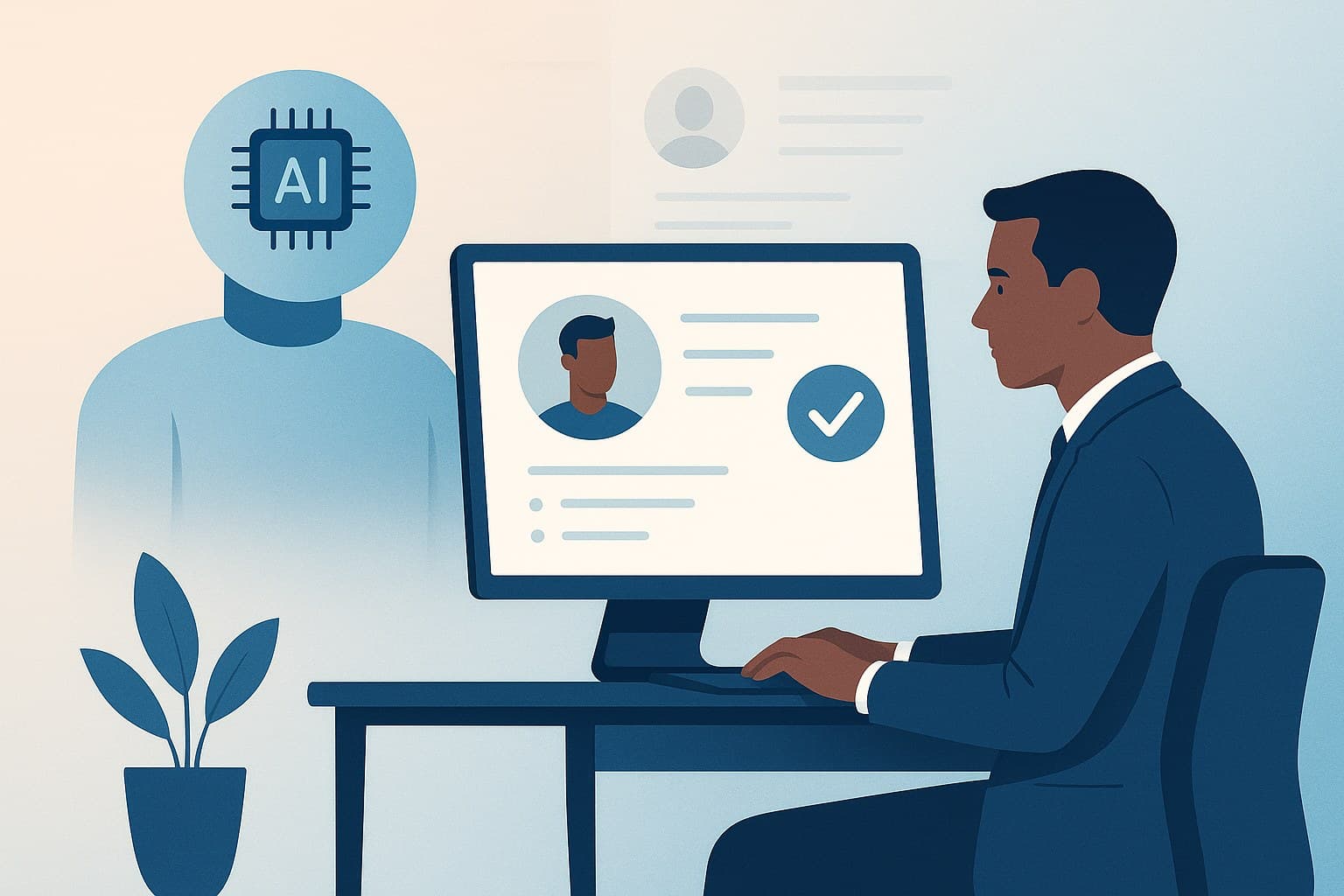
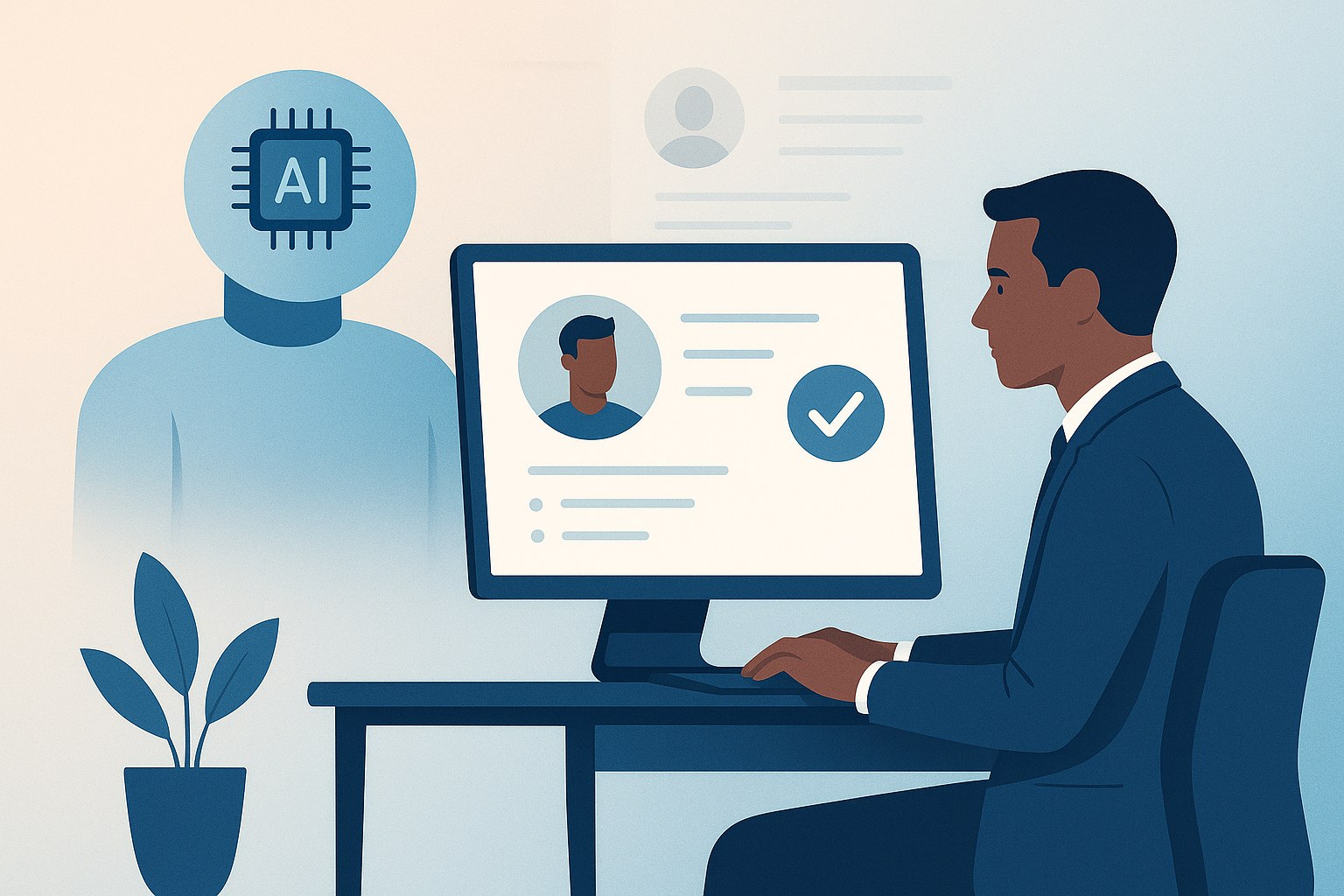
A candidate can describe a successful product launch with confidence and still struggle to prioritize a realistic go-to-market plan. Another may be less polished in conversation yet produce exceptional work when given a relevant task. That gap is why skills tests versus interviews should not be treated as a choice between two interchangeable screening methods. They generate different evidence, expose different risks, and serve different points in an enterprise hiring workflow.
For talent acquisition leaders managing high applicant volumes, the question is not whether interviews still matter. It is how to reserve live interview time for candidates who have already demonstrated the capability, judgment, and communication required for the role.
Skills Tests Versus Interviews: The Evidence Each Produces
Skills tests assess whether a candidate can perform a defined job-relevant activity. Depending on the role, that may mean analyzing a spreadsheet, writing code, responding to a customer scenario, creating a sales account plan, or evaluating a business case. When designed well, the assessment creates direct evidence of applied capability under consistent conditions.
Interviews assess a broader set of signals. A structured interview can reveal how candidates explain decisions, navigate ambiguity, collaborate with others, and reflect on past outcomes. It is also where hiring teams can explore motivations, role expectations, and context that a short assessment cannot capture.
The distinction matters because interview performance is not the same as job performance. Candidates with strong verbal presence may create a favorable first impression without demonstrating the technical or functional depth the role requires. Conversely, highly capable candidates may not tell their experience in the most polished way, particularly when interviewing in a second language or across unfamiliar cultural norms.
A skills test reduces reliance on narrative by asking for observable work. An interview adds context to that work. Used together, they provide a more complete and defensible hiring record than either method can produce alone.
Where Skills Tests Create the Greatest Operational Value
Skills tests are particularly effective when the role has identifiable, repeatable competencies that can be evaluated through a realistic task. In high-volume professional hiring, campus recruitment, technical recruitment, and graduate admissions, they help recruitment teams separate qualified applicants from candidates whose resumes appear relevant but do not demonstrate sufficient capability.
The operational advantage is consistency. Every candidate receives the same task, time window, instructions, and evaluation criteria. That creates a standardized comparison point before managers invest time in live conversations. It also limits the common first-round problem where different interviewers ask different questions and leave with incomparable impressions.
Tests can be especially useful for screening foundational skills early in the funnel. A short analytical exercise may establish whether an applicant can interpret data. A written-response task may show clarity, judgment, and attention to detail. A role-play scenario can provide evidence of how a candidate handles a customer objection or operational escalation.
That does not mean every role needs a long assignment. Overly demanding assessments increase candidate drop-off and can disadvantage applicants who are balancing current jobs, caregiving, or time-zone constraints. The best pre-screening tests are concise, relevant, and proportionate to the seniority of the role. They should resemble real work without asking candidates to complete unpaid production work.
What Interviews Still Do Better
Live interviews remain essential when the hiring decision depends on leadership judgment, stakeholder influence, organizational fit, or the ability to reason through changing information. A test may show that a candidate can build a financial model. It may not show how they would challenge an unrealistic executive assumption, align cross-functional teams, or recover after a project changes direction.
Interviews are also the right setting to validate evidence produced elsewhere in the process. Instead of asking broad questions such as, "Tell me about yourself," a hiring manager can discuss a candidate's assessment response: why they selected a particular approach, what assumptions they made, and what they would revise with more information. The conversation becomes evidence-led rather than dependent on memory, charisma, or an interviewer’s preferred style.
For senior, specialized, or highly relationship-driven roles, the interview often carries more weight. The key is structure. Define the competencies in advance, assign questions to specific interviewers, use anchored scoring criteria, and capture feedback before a panel discussion. Without those controls, interviews can become a collection of impressions that is difficult to compare or audit later.
The Risk of Using Either Method Alone
An interview-only process often produces uneven data. One manager may probe technical depth; another may focus on culture; a third may make a decision based largely on chemistry. Even experienced interviewers are vulnerable to recency effects, affinity bias, and overconfidence in their ability to assess skill through conversation alone.
A test-only process has different limitations. Candidates can complete a defined task successfully yet lack the communication, judgment, or motivation needed for the environment. A narrow test may also reward familiarity with a format rather than true capability. If scoring is opaque or poorly calibrated, it can create false precision rather than better decisions.
Neither approach is automatically fair simply because it is structured or automated. Fairness requires job relevance, consistent administration, accessible candidate instructions, appropriate accommodations, documented scoring logic, and regular review for adverse impact. Enterprise teams should be able to explain what each stage measures, why it matters to the role, and how the result influenced the decision.
A Better Hiring Sequence for Enterprise Teams
The strongest workflow uses skills evidence to focus interviews, not eliminate them. Start with resume analysis and role-based eligibility criteria to remove clear mismatches. Then apply a short, validated assessment or asynchronous structured interview that measures the highest-priority competencies. Candidates who meet the evidence threshold advance to a targeted live interview with the hiring team.
At the final stage, the panel should review a single candidate record containing resume evidence, assessment results, interview scores, evaluator comments, and the rationale for the recommendation. This makes it easier to identify disagreement, challenge weak evidence, and document why the selected candidate was the strongest match.
MIND Interview supports this type of workflow by bringing structured asynchronous video responses, competency evidence, scoring, multilingual reporting, and collaborative review into one auditable workspace. The practical objective is not to automate judgment away. It is to ensure hiring managers spend their judgment where it has the highest value.
How to Decide the Right Balance
The weighting between tests and interviews depends on the role, hiring volume, and cost of a poor decision. For entry-level or high-volume positions, a concise skills assessment can carry substantial early-stage weight because it quickly creates comparable evidence at scale. For senior leadership hiring, structured interviews, work-history validation, and stakeholder conversations will usually play a larger role.
Consider four questions when designing the process: What must this person be able to do on day one? Which of those capabilities can be observed through a realistic task? What context can only be explored in conversation? And what evidence will a hiring panel need to defend its final decision?
The answers should determine the process, not habit. A software engineer may need a practical technical exercise followed by a discussion of architecture decisions. A regional sales leader may need a market-planning case followed by structured interviews on leadership, forecast discipline, and executive influence. A campus recruiting program may prioritize short standardized assessments to manage volume, then use interviews to assess communication and career motivation.
Build for Evidence, Not More Stages
Adding a skills test to an unstructured interview process does not automatically improve quality. The assessment must map to the role, interviewers must know how to use the results, and the workflow must avoid asking candidates to repeat the same evidence at every stage. More assessment is not better if it only adds delay.
The practical standard is simple: each stage should answer a distinct hiring question. Skills tests establish whether candidates can do relevant work. Interviews establish how they think, communicate, and operate in context. When both are structured, calibrated, and recorded, recruiting teams can move faster without reducing the decision to a score alone.
The most useful hiring process is the one that gives managers enough verified evidence to make a timely decision, while giving candidates a clear and respectful opportunity to show what they can actually do.