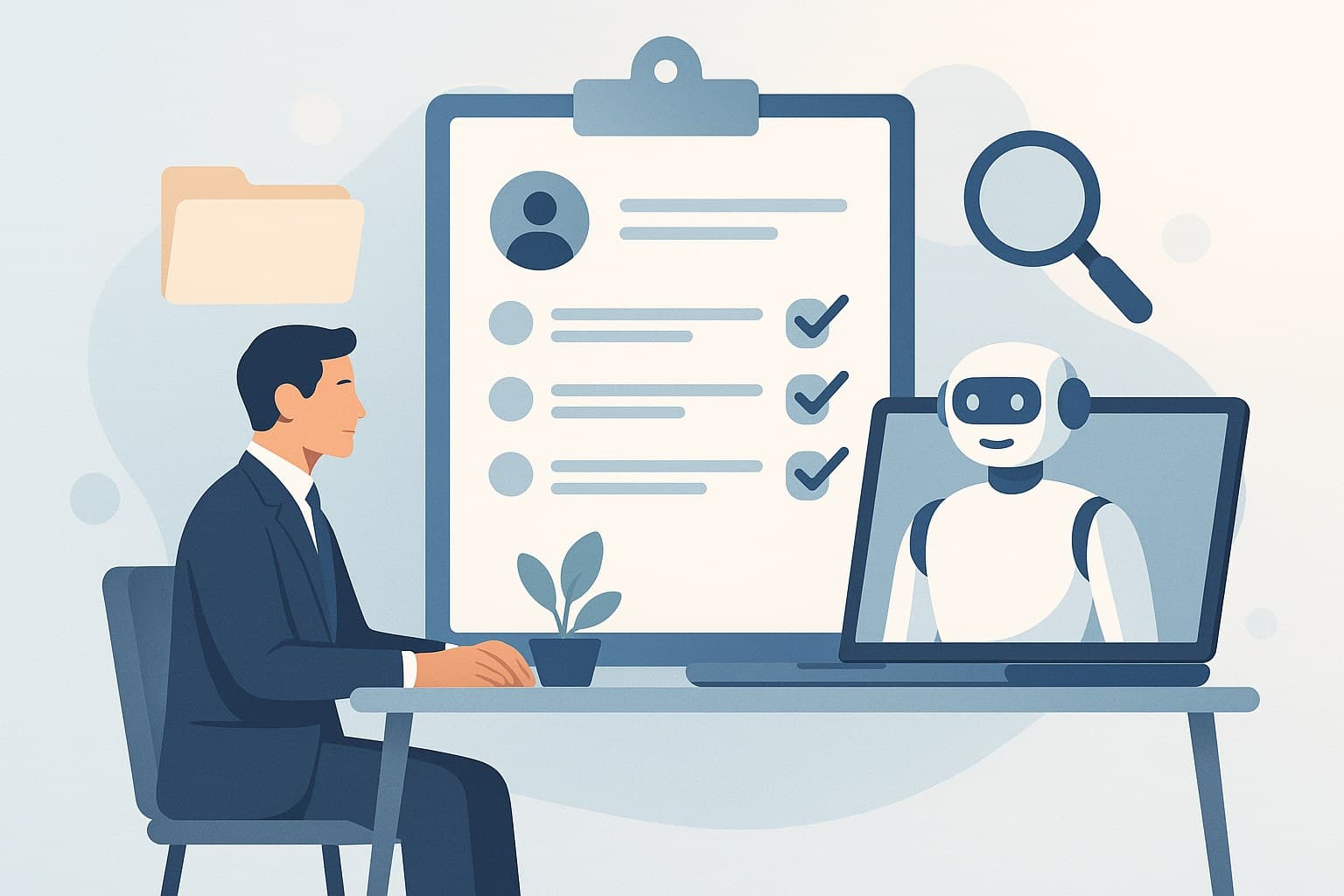
Structured Interview with AI: Revolutionizing the Hiring Process
The traditional hiring process has long been seen as a tedious and time-consuming task for both employers and candidates. With hundreds of resumes to go through and limited time to conduct interviews, it's no surprise that many companies struggle to find the right candidate for the job. However, with the advancement of technology, the hiring process is undergoing a major transformation. One such innovation is the use of structured interviews with AI, which is revolutionizing the way companies hire new employees. In this article, we will delve into the world of structured interviews with AI and explore how it is changing the game for hiring managers and candidates alike.
The Rise of Structured Interviews with AI
According to a study by the National Bureau of Economic Research, unstructured interviews are not only inefficient, but they also have a high potential for bias. In fact, the study found that unstructured interviews only have a 14% chance of predicting job performance. This is where structured interviews with AI come in. The AI uses natural language processing (NLP) to evaluate candidate responses for specific behaviors and skills tied to the role. This means that the AI can analyze a candidate's responses objectively, without any human bias.
In traditional unstructured interviews, a recruiter reviews a resume, a hiring manager conducts a short interview, and the final choice frequently comes down to instinct. This can lead to poor hiring decisions and can also be a time-consuming process. On the other hand, structured interviews with AI eliminate the need for human instincts and rely on data and analysis to make hiring decisions. This saves time and ensures that the best candidate is chosen for the job.
How Structured Interviews with AI Work
Structured interviews with AI are conducted through an online platform where candidates are asked a series of pre-determined questions. These questions are designed to assess specific skills and behaviors that are required for the job. The core questions typically revolve around problem-solving, critical thinking, and communication skills. The AI then analyzes the candidate's responses and provides a detailed report to the hiring manager.
One of the key advantages of structured interviews with AI is the use of NLP. This technology allows the AI to understand and interpret human language, making it capable of assessing the candidate's responses just like a human interviewer would. Additionally, the AI is programmed to look for specific keywords and phrases, which helps in identifying top candidates quickly.
The Benefits of Structured Interviews with AI
The use of structured interviews with AI has several benefits for both employers and candidates. Let's take a look at some of them:
Objective and Unbiased Hiring Process
As mentioned earlier, unstructured interviews have a high potential for bias. This can lead to discrimination and poor hiring choices. With structured interviews with AI, the hiring process becomes more objective and unbiased. The AI is not affected by gender, race, or any other factors that may influence a human interviewer's decision. This ensures that all candidates are evaluated fairly based on their skills and qualifications.
Time and Cost Savings
The traditional hiring process involves several stages, from reviewing resumes to conducting multiple interviews. This can be a time-consuming and costly process. Structured interviews with AI eliminate the need for multiple interviews, which saves time and resources. Additionally, the AI can analyze a large number of candidates in a short period, making the hiring process more efficient and cost-effective.
Improved Candidate Experience
Candidates often have to go through a lengthy and daunting hiring process, which can be a turn-off. With structured interviews with AI, candidates have the convenience of completing the interview at their own time and pace. This reduces the stress and pressure associated with traditional interviews and provides a more positive candidate experience.
The Future of Hiring: Structured Interviews with AI
The use of structured interviews with AI is still in its early stages, but it has already shown great potential. According to a study by LinkedIn, 76% of talent professionals believe that AI will have a significant impact on hiring. Additionally, 67% of companies are already using AI to save time and resources in the hiring process. With advancements in technology, the future of hiring is likely to see a significant shift towards structured interviews with AI.
Conclusion
Structured interviews with AI are revolutionizing the hiring process by making it more efficient, unbiased, and cost-effective. By using NLP and data analysis, the AI can assess candidates objectively and provide valuable insights to hiring managers. This not only saves time and resources, but it also ensures that the best candidate is chosen for the job. As more and more companies adopt this innovative technology, the future of hiring looks bright and promising. So, if you're a hiring manager or a candidate, it's time to embrace the change and experience the benefits of structured interviews with AI.
Frequently Asked Questions
Key questions often raised by business leaders and HR teams:
What are structured interviews with AI?
Structured interviews with AI involve using artificial intelligence to conduct interviews based on pre-determined questions, allowing for objective evaluation of candidates.
How do structured interviews reduce bias?
Structured interviews use AI to analyze responses without human biases related to gender, race, or other factors, ensuring fair evaluations.
What are the benefits of using AI in hiring?
AI in hiring saves time and costs, improves candidate experiences, and provides objective assessments, leading to better hiring decisions.
Is AI replacing human interviewers?
AI is not replacing human interviewers but is enhancing the hiring process by providing data-driven insights to support decision-making.
What does the future hold for AI in hiring?
The future of hiring is likely to see increased adoption of AI technologies, making the process more efficient and effective for both employers and candidates.