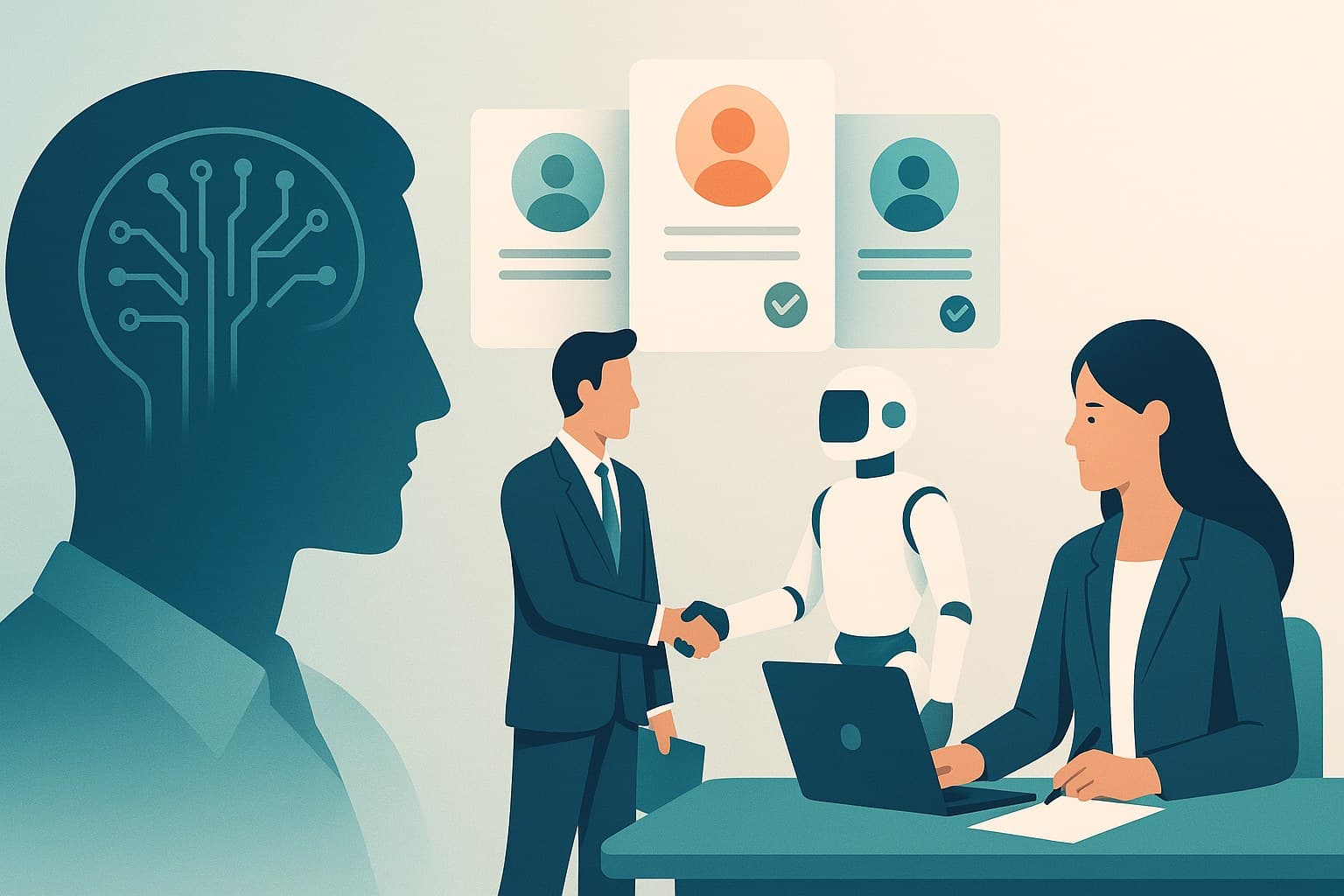
The Total Cost of Ownership: AI Asynchronous Interviews vs. Recruitment Agencies
In the rapidly evolving landscape of talent acquisition, companies are constantly seeking more efficient, cost-effective, and innovative solutions to meet their hiring needs. Among the many options available today, AI asynchronous interviews and traditional recruitment agencies stand out as two popular methodologies. For corporate decision-makers and HR leaders, understanding the Total Cost of Ownership (TCO) associated with each method is crucial in making informed decisions that align with organizational goals. This article will delve into the TCO of AI asynchronous interviews and recruitment agencies, exploring direct costs, indirect costs, and the potential long-term impact on a company's hiring strategy.
Understanding AI Asynchronous Interviews
AI asynchronous interviews are a cutting-edge technological solution that leverages artificial intelligence to facilitate the interview process without the need for real-time interaction. Candidates can record their responses to pre-set questions at their convenience, while AI algorithms evaluate their answers based on various parameters such as language proficiency, emotional intelligence, and technical knowledge.
Direct Costs
-
Software Licensing and Maintenance: The primary direct cost associated with AI asynchronous interviews is the software licensing fee. Depending on the provider, this can range from a subscription-based model to a one-time purchase. Additionally, there might be maintenance fees for updates and technical support.
-
Implementation and Training: Initial implementation involves integrating the software with existing HR systems, which may require technical expertise. Furthermore, HR staff will need training to effectively use the platform and interpret AI-generated data.
Indirect Costs
-
Candidate Experience: While AI interviews offer convenience, there is a risk that candidates may perceive the process as impersonal. This could potentially affect a company's employer brand and its ability to attract top talent.
-
Bias and Compliance: AI systems must be rigorously tested to ensure they do not inadvertently introduce bias. Ensuring compliance with local and international hiring regulations can incur additional costs.
Long-term Impact
AI asynchronous interviews can significantly reduce time-to-hire by streamlining the initial screening process. They also offer scalability, allowing companies to handle a large volume of candidates without a proportional increase in cost. Over time, the data gathered can enhance predictive hiring models, improving the quality of hires.
Understanding Recruitment Agencies
Recruitment agencies offer a more traditional approach, providing personalized services such as candidate sourcing, screening, and interview scheduling. They often specialize in certain industries or roles, providing expertise that can be invaluable for niche positions.
Direct Costs
-
Agency Fees: Recruitment agencies typically charge a fee based on a percentage of the new hire's salary. This can be a significant cost, especially for high-level positions.
-
Contractual Obligations: Some agencies require retainer fees or exclusive contracts, which can limit a company's flexibility and increase costs if the hiring needs change.
Indirect Costs
-
Time Investment: While agencies handle much of the legwork, HR teams must still invest time in coordinating with the agency, reviewing candidates, and conducting final interviews.
-
Candidate Fit: Agencies rely on their understanding of the company's culture and needs. Misalignment can lead to mismatches, resulting in higher turnover and additional costs for replacement hires.
Long-term Impact
Recruitment agencies provide access to a broad network of candidates and can be particularly effective for specialized roles. However, reliance on agencies can inhibit the development of internal recruitment capabilities and lead to higher costs over time.
Comparative Analysis
When comparing the TCO of AI asynchronous interviews and recruitment agencies, several factors must be considered:
-
Scalability: AI solutions offer better scalability for handling large volumes of applicants without significant cost increases, whereas agency fees can rise with the number of hires.
-
Flexibility: AI platforms provide more flexibility in modifying interview questions and processes, while agencies may have fixed procedures and contracts.
-
Quality of Hire: AI can enhance the predictive accuracy of candidate assessments over time. Agencies, however, offer a human touch that can be critical for assessing cultural fit and soft skills.
-
Speed: AI interviews can significantly reduce the screening time, while agencies may take longer due to manual processes.
-
Data Utilization: AI systems generate valuable data insights that can improve recruitment strategies. Agencies may not provide the same level of data analytics.
Conclusion
For corporate decision-makers and HR leaders, the choice between AI asynchronous interviews and recruitment agencies depends on the specific needs and strategic goals of the organization. AI offers a cost-effective, scalable solution with long-term data benefits but requires careful management to avoid biases and ensure a positive candidate experience. Recruitment agencies provide expertise and a personalized approach that can be invaluable for certain roles but at a higher cost and with less scalability.
Ultimately, the decision should be guided by a thorough analysis of the TCO, considering both the quantitative financial costs and the qualitative impacts on the organization's talent acquisition strategy. Companies may also find a hybrid approach beneficial, leveraging the strengths of both AI and agency recruitment to optimize their hiring processes.
Frequently Asked Questions
Key questions often raised by business leaders and HR teams:
What are AI asynchronous interviews?
AI asynchronous interviews utilize artificial intelligence to allow candidates to record responses to interview questions at their convenience, streamlining the hiring process.
What are the direct costs of using recruitment agencies?
Direct costs for recruitment agencies typically include agency fees based on a percentage of the new hire's salary and potential retainer fees.
How does scalability differ between AI interviews and recruitment agencies?
AI solutions offer better scalability by handling large volumes of applicants without significant cost increases, while agency fees can rise with the number of hires.
What are the long-term impacts of using AI in recruitment?
AI can enhance predictive hiring models, improve the quality of hires, and reduce time-to-hire, leading to cost savings over time.
Can a hybrid approach be beneficial for hiring?
Yes, a hybrid approach leveraging both AI and recruitment agencies can optimize hiring processes by combining the strengths of both methods.