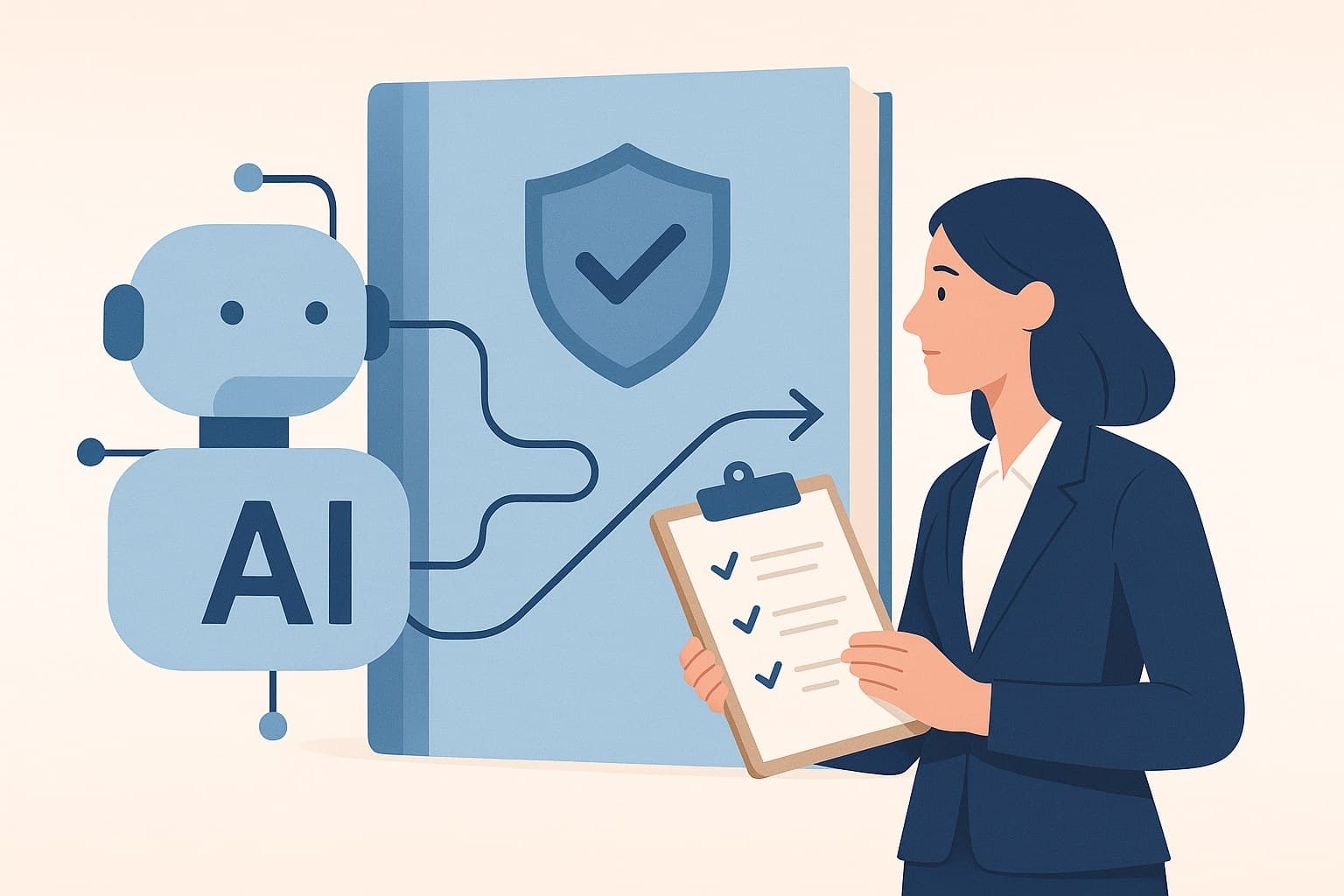
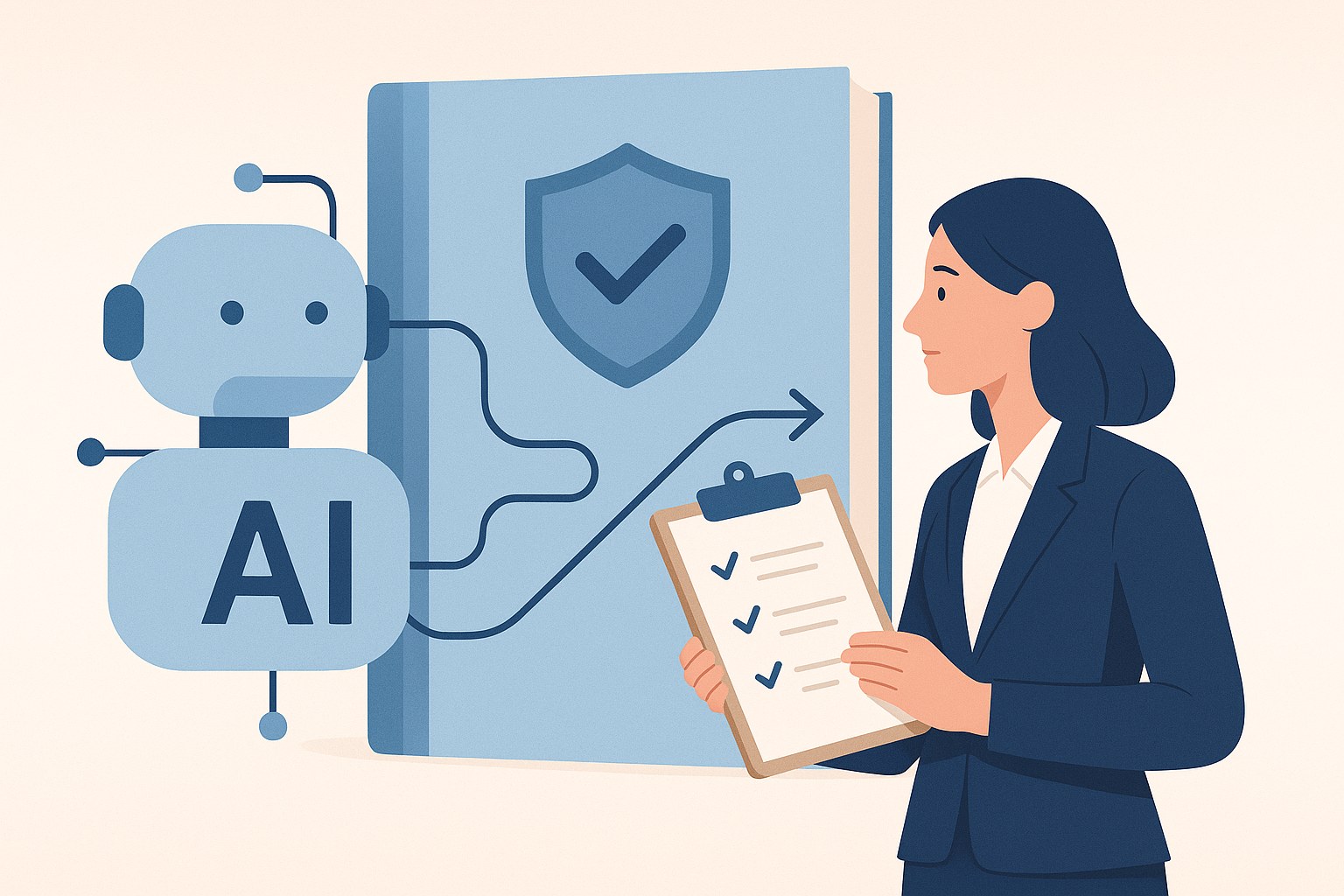
A candidate asks why they were screened out. A hiring manager questions an AI-generated score. Legal requests the evidence behind a high-volume selection decision. These are not edge cases for enterprise recruiting teams. ISO 42001 provides a management-system framework for answering them with documented controls, accountable ownership, and a clear record of how AI is used in hiring.
For talent leaders, the standard matters because recruitment AI is not just a productivity tool. It can influence who receives consideration, which candidates advance, how interview evidence is interpreted, and whether decisions can be defended across regions. Faster screening has real value, but only when the process remains consistent, transparent, and subject to human judgment.
What ISO 42001 Means for Recruitment AI
ISO 42001 is an international standard for establishing, implementing, maintaining, and improving an artificial intelligence management system. It gives organizations a structured way to govern AI-related risks and opportunities. The standard applies across industries, but its principles are especially relevant where AI informs employment decisions.
In a recruitment workflow, that means moving beyond broad claims that an algorithm is fair or that a vendor uses responsible AI. The organization needs defined policies, risk assessment methods, assigned responsibilities, operating controls, performance monitoring, incident handling, and evidence that these practices are reviewed over time.
This is a management discipline, not a one-time product test. A hiring platform may perform well during a pilot, then face different conditions when a company adds new job families, expands into additional countries, changes its competency framework, or adjusts candidate scoring thresholds. ISO 42001 creates a framework for managing those changes instead of treating governance as a pre-launch checklist.
Certification also needs to be interpreted carefully. It does not mean every recommendation produced by an AI system is correct, unbiased, or legally compliant in every jurisdiction. It means the certified organization has been independently assessed against a defined management system for governing AI. For enterprise buyers, the scope of certification, the AI functions covered, and the controls operating around those functions all matter.
Why AI Hiring Requires a Higher Standard of Control
Recruitment combines sensitive data, consequential decisions, and many human handoffs. A resume may be parsed and ranked automatically. Candidates may complete structured asynchronous video interviews. Hiring managers may compare competency evidence, interviewer notes, and scorecards across a multilingual pipeline. Each step can save time, but each also creates governance questions.
The first is purpose. Teams should be able to state exactly what the AI is designed to do. Is it prioritizing resumes against job-defined requirements? Summarizing structured interview responses? Identifying missing evidence against a competency? These uses have different risk profiles from a system that makes autonomous hiring decisions.
The second is data. Enterprise teams need clarity on what data enters the system, how it is retained, who can access it, how quality is monitored, and whether the data is appropriate for the stated hiring purpose. A scoring workflow cannot be treated as a black box when the input data is incomplete, inconsistent, or collected under different regional practices.
The third is oversight. Hiring managers should not receive a score without context. They need the underlying evidence, the relevant job criteria, and a controlled workflow for recording their own decision. This protects candidate experience and improves decision quality. It also prevents automation from becoming an unexamined substitute for professional judgment.
Finally, there is traceability. When a candidate asks for clarification or a senior leader reviews the outcome of a campaign, the organization should be able to reconstruct the process: the role criteria, the assessment stage, the evidence reviewed, the stakeholders involved, and the final decision rationale.
ISO 42001 Controls That Matter in Practice
A useful AI management system should show up in day-to-day recruiting operations, not only in compliance documentation. For talent acquisition leaders, five control areas deserve close attention:
- Clear intended use: Define what each AI capability can and cannot do, including whether it recommends, ranks, summarizes, or triggers workflow actions.
- Documented risk assessments: Evaluate risks tied to job type, candidate population, geography, data source, model behavior, and the consequences of an incorrect recommendation.
- Human review points: Set clear decision gates where recruiters or hiring managers review evidence before candidates are advanced, rejected, or offered a role.
- Monitoring and change control: Review performance when job requirements, scoring logic, language coverage, or candidate volumes change. Maintain approval records for material changes.
- Incident and feedback handling: Create a route for candidates, recruiters, and managers to flag suspected issues, then investigate, document, and correct them where necessary.
These controls should fit the actual recruitment workflow. A global campus hiring program may require stronger consistency checks across thousands of applicants and multiple languages. An executive search process may prioritize detailed evidence trails, confidentiality controls, and role-specific human review. The framework is the same, but the control design should reflect the decision’s impact and scale.
Building ISO 42001 Into the Hiring Workflow
The strongest implementation begins before a tool is deployed. Start with an inventory of every AI-enabled recruitment activity, including third-party platforms, internal analytics, interview assessment systems, and automated communications. Many organizations discover that AI use is already spread across recruiting operations without a single owner or consistent review process.
Next, establish accountability. HR cannot carry this alone. Talent acquisition leaders understand process design and candidate impact; legal and privacy teams understand regulatory obligations; information security manages access and vendor assurance; business leaders define role requirements; and technology teams oversee integrations and data flows. Someone must own the AI management system, but the operating model has to be cross-functional.
Then map every use case to a defined decision point. For example, an AI resume analysis capability may rank applicants against required experience and skills, while a structured video interview may produce competency evidence and standardized assessment outputs. The organization should document what the system produces, who reviews it, what evidence is visible, and what action can follow.
This is where workflow design becomes a business advantage. When candidate reports, score explanations, interview evidence, reviewer comments, and final decisions are held in one auditable workspace, managers spend less time reconstructing the hiring process. They can focus on comparing qualified candidates against the requirements that actually matter.
MIND Interview applies this approach by pairing AI-supported resume analysis and structured interview assessment with documented evidence, collaborative review, and governance-led controls. The objective is not to remove the hiring manager from the process. It is to reduce first-round screening work while giving decision-makers more consistent information before a live interview.
Questions to Ask an AI Recruitment Vendor
Enterprise procurement teams should assess more than feature breadth and claimed time savings. Ask the vendor to explain the intended use of each AI function in plain language. Ask how results are monitored, how material changes are governed, and what happens when users identify an unexpected outcome.
Request evidence of role-based access controls, data handling practices, audit records, and the specific scope of any certification or assurance program. If a vendor says its system is transparent, determine what a recruiter or manager can actually see: a score alone, a general explanation, or the underlying job-linked evidence that supports the recommendation.
It is also worth testing the workflow with realistic scenarios. Can a manager override a recommendation and record why? Can the team compare candidates consistently across languages? Can the organization identify who reviewed a decision, when they reviewed it, and which criteria were in effect at the time? These questions reveal whether governance is embedded in the product or added later through manual workarounds.
Governance Should Increase Hiring Speed, Not Create Drag
Some teams assume stronger AI governance means slower hiring. Poorly designed controls can create friction, especially if every exception requires a separate email chain or compliance review. But a well-designed system reduces rework. It standardizes what good evidence looks like, makes approvals visible, and gives managers a faster path to a defensible decision.
The trade-off is deliberate design work upfront. Organizations need to define their hiring criteria, establish ownership, train users, and maintain review routines. In return, they gain a more controlled way to scale AI-assisted screening without losing visibility into candidate treatment or decision quality.
The practical next step is to select one high-volume hiring workflow and examine it from the candidate application through the final decision. If your team cannot clearly show the purpose, evidence, reviewer, and rationale at each AI-influenced stage, that workflow is ready for stronger governance. ISO 42001 offers a credible structure for building it.