
Executive summary
In real estate, “good at tours” does not automatically mean “good at closing.” The gaps that cause low conversion and high dispute risk usually appear at specific stages: the first greeting (trust), needs discovery (budget and decision chain), negotiation (evidence-based concessions), contract explanation (disclosures and boundaries), and handover (checklists and aftercare).
This article proposes a practical internal assessment SOP based on a repeatable rubric with three layers: Required (baseline completeness), Forbidden (hard fail red lines), and Excellence (what great looks like). Agents submit async video roleplays; managers get stage-level reports and training actions. (Not legal advice; align obligations and wording with your policies and local regulations.)
Why stage-based assessment fits real estate workflows
- Long journey: from first contact to closing spans weeks; a single “overall score” won’t pinpoint where the breakdown happens.
- Manager variance: different branches and mentors teach different styles; you need a consistent baseline.
- Risk concentration: disclosure, promises, contract clauses, and handover steps are where disputes happen.
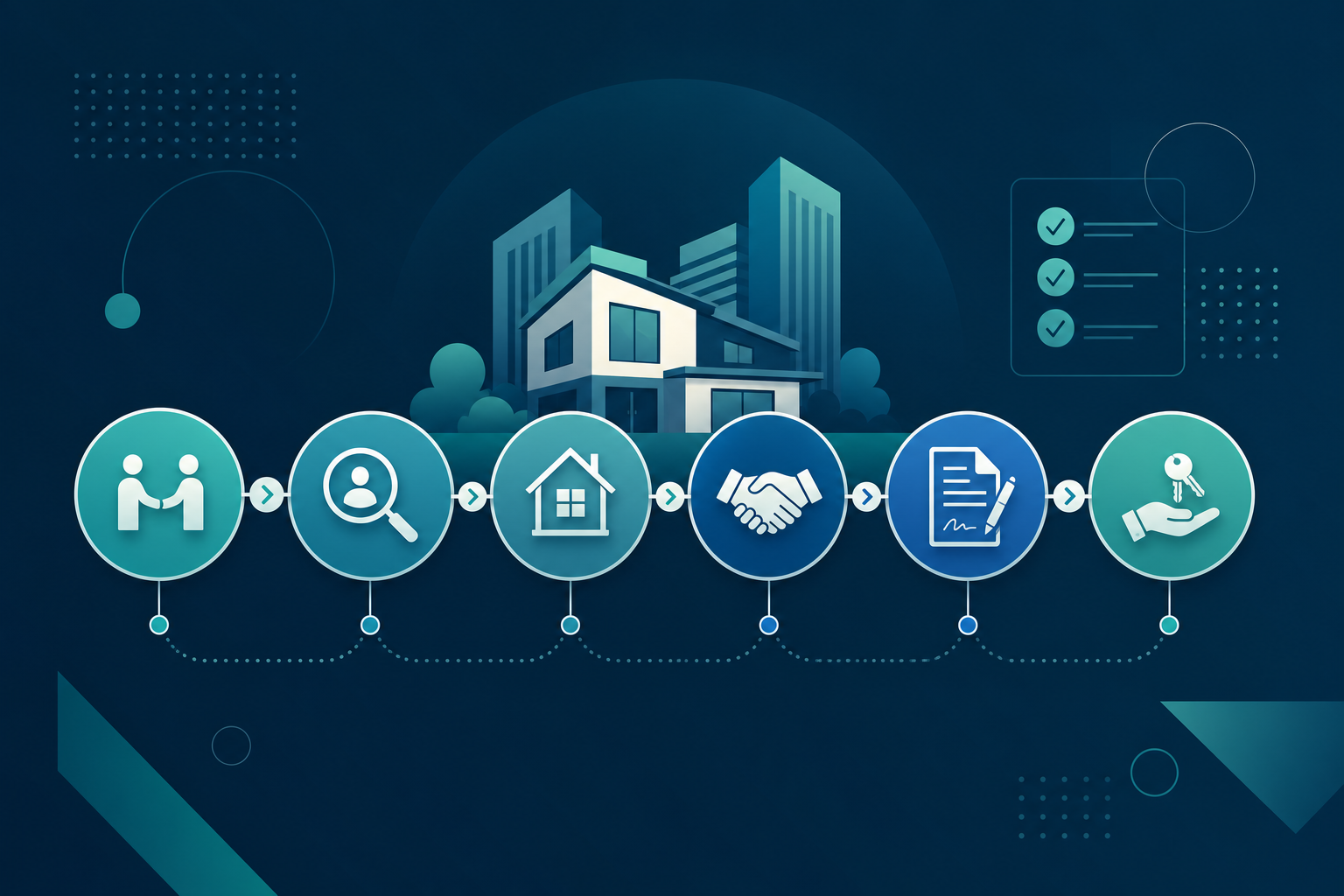
Stage design: 6 stages from greeting to handover
- Greeting & trust
- Needs discovery & qualification
- Property matching & tour guidance
- Pricing communication & negotiation
- Contract / offer process & compliance disclosures
- Pre-handover inspection, handover, and aftercare
Rubric: Required / Forbidden / Excellence
- Required: missing any item triggers training + retest.
- Forbidden: any hit is a hard fail (risk first).
- Excellence: separates Good vs Excellent for promotion and coaching.
Copy-ready stage checklist
1) Greeting & trust
- Required: clear self-intro; set the process; confirm the customer’s goal and timeline.
- Forbidden: disrespectful language; misleading claims.
2) Needs discovery & qualification
- Required: must-have vs nice-to-have; budget range; timing; decision makers; basic feasibility check.
- Forbidden: encouraging falsification or illegal bypasses.
3) Property matching & tour guidance
- Required: set tour expectations; guide environment + property condition; close with a next step and documented preferences.
- Forbidden: hiding material defects or misrepresenting key facts.
4) Pricing communication & negotiation
- Required: separate asking price vs comps vs negotiable range; tie offers to terms and conditions; set response timing.
- Forbidden: fake comps, fabricated competing offers, guaranteed outcomes.
5) Contract / offer process & compliance disclosures
- Required: explain document types per your process; key clauses (payments, breach, contingencies, handover scope); close with “subject to contract.”
- Forbidden: urging customers to sign without reading; oral promises beyond the contract; hiding breach risk.
6) Handover & aftercare
- Required: inspection and handover checklist; documentation; aftercare contact and follow-up schedule.
- Forbidden: unclear handover responsibilities; skipping critical steps leading to customer loss.
Why async “one-take” video roleplay is recommended
Real estate sales is about flow and transitions—greeting into discovery, tour into next-step commitment, negotiation into contract boundaries. Over-fragmented per-question recordings can turn into “answering” instead of “selling.” A one-take roleplay keeps the rhythm intact while still enabling stage scoring via transcript and rubric.
Frequently Asked Questions
Key questions often raised by business leaders and HR teams:
Do we need video for real estate sales assessment?
Not always. But if you need to evaluate pacing, depth of needs discovery, negotiation handling, and contract/disclosure language, video creates an auditable evidence chain (video + transcript) closer to real scenarios than multiple-choice tests.
Should we decide pass/fail by total score?
Prefer stage-based decisions. Set Required points and Forbidden red lines per stage; use the total score mainly for sorting. Keep contract/compliance as hard gates.
How do we handle AI scoring disputes?
Review the same video and transcript as the source of truth, keep a sampling-based human calibration process, and iterate the rubric and scenarios based on disputes.